
- Location and elevation of the building
- Original room layout and building perimeter plan
- Location, size and design of front veranda (reconstructed in 1995), double doors (circa 1900) and two display windows with angled sills to allow for rain run-off (circa 1900)
- Exterior brick façade
- Interior tongue and groove wood floors, walls and ceilings
- Unobstructed views of the east, south and north sides of the building
Heritage at Home
Discover Springwater's rich history without leaving your home! Our virtual tours offer an immersive experience of our heritage properties. Enjoy captivating videos and photographs that highlight architectural details and unique stories that have shaped our community. Connect with our Township's vibrant past as you explore these stunning historical properties from anywhere in the world.
Crossland General Store
Date of Official Heritage Designation: July 9, 2001 as per By-law 2001-085
Crossland General Store is located on the southwest corner of Crossland Road (Simcoe County Road 29) and Flos Road Seven West. Its prominent location encroaching onto the crossroads is typical of the many general stores which were once a common feature of the rural Ontario landscape.
Built in 1874, the general store was originally constructed on the northeast corner of the property. This "A" frame wood structure was erected by Henry Crossland for his wife Martha Webster and their family. The hamlet of Crossland bears the name of Henry Crossland even though he only remained in the community for a dozen years or so. In 1904, Mr. T. Martin moved the building to the southwest corner for the new owner Mr. W.E. Graham. That same year, a house was added immediately to the southwest of the store together with a large framed garage.
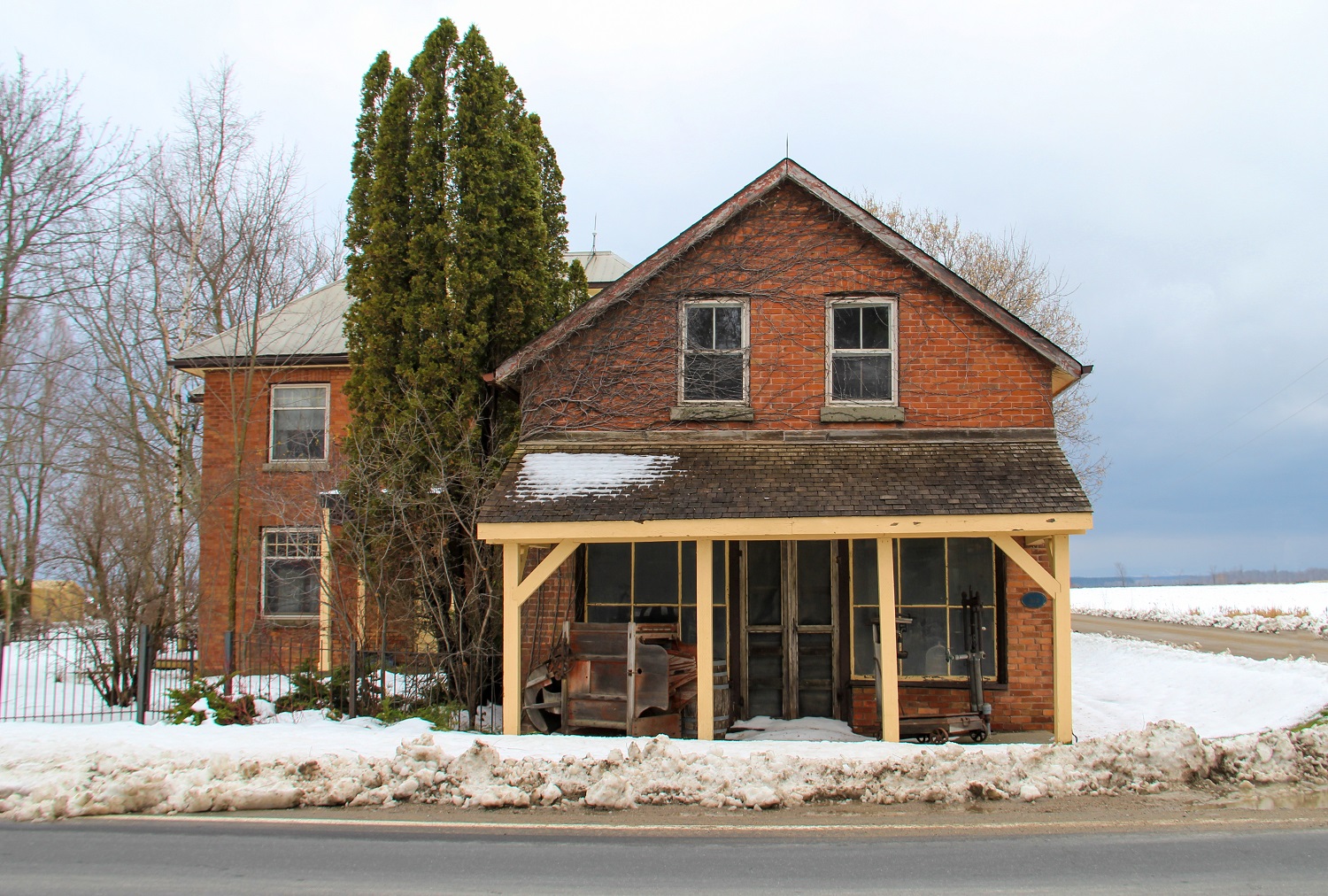
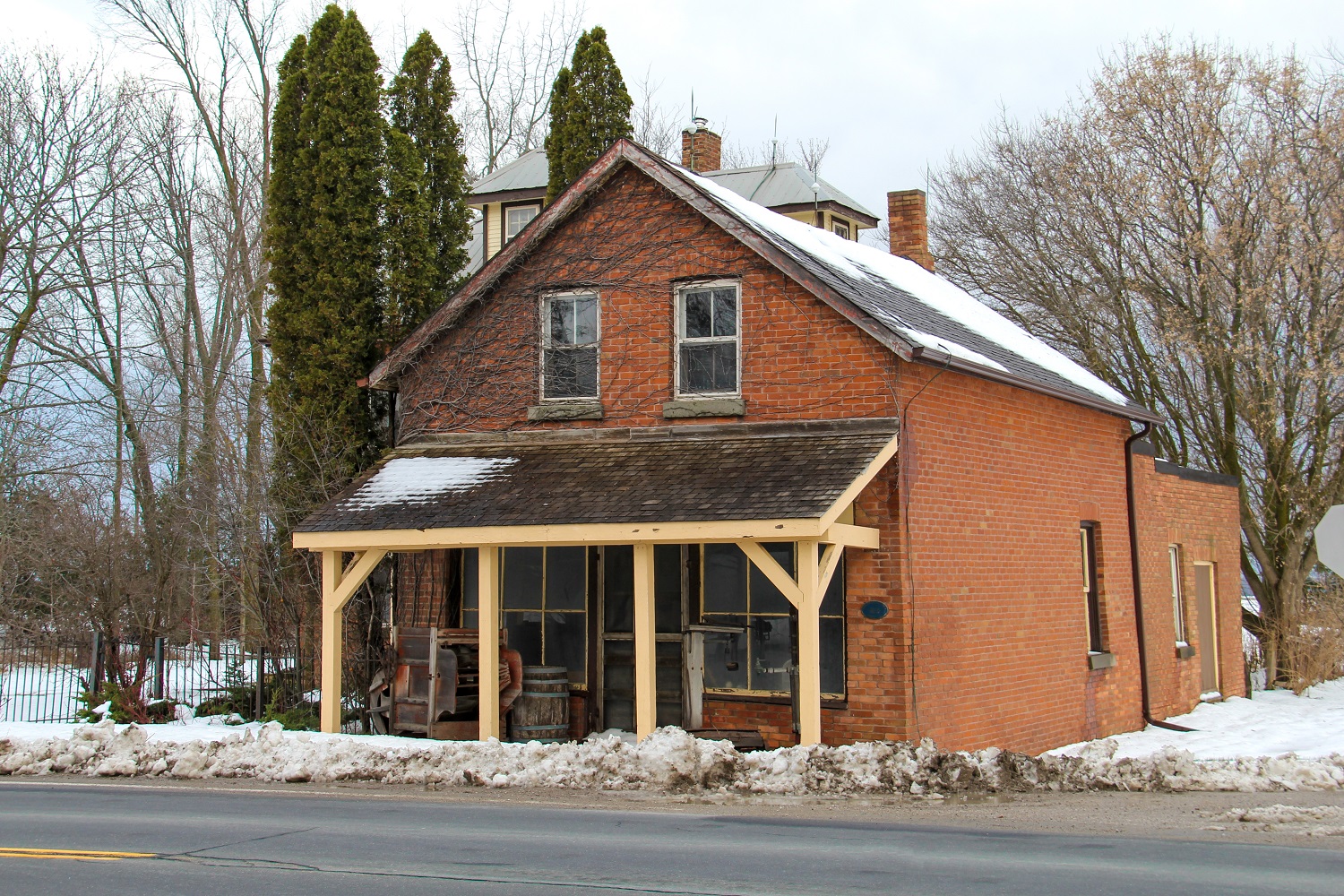
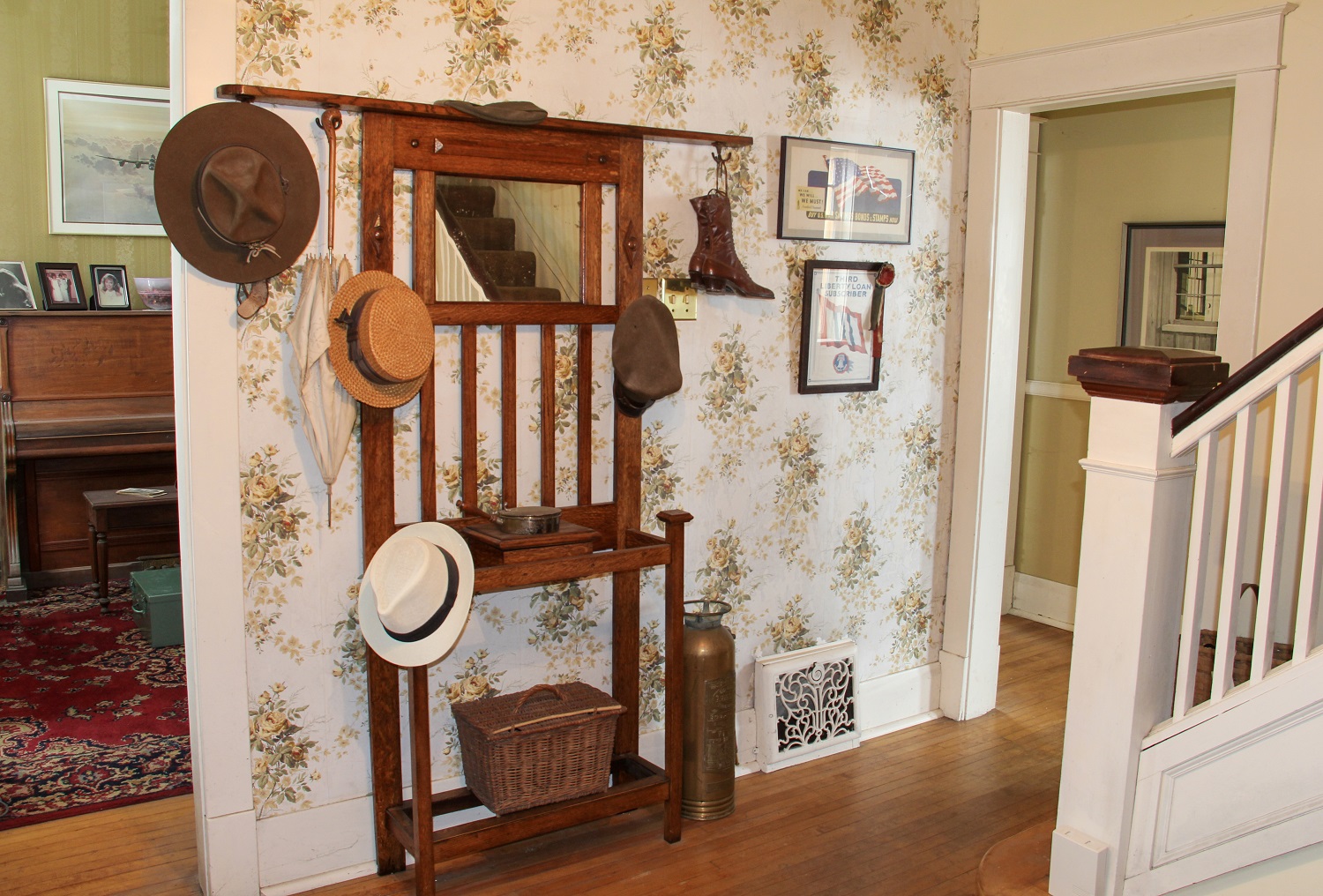
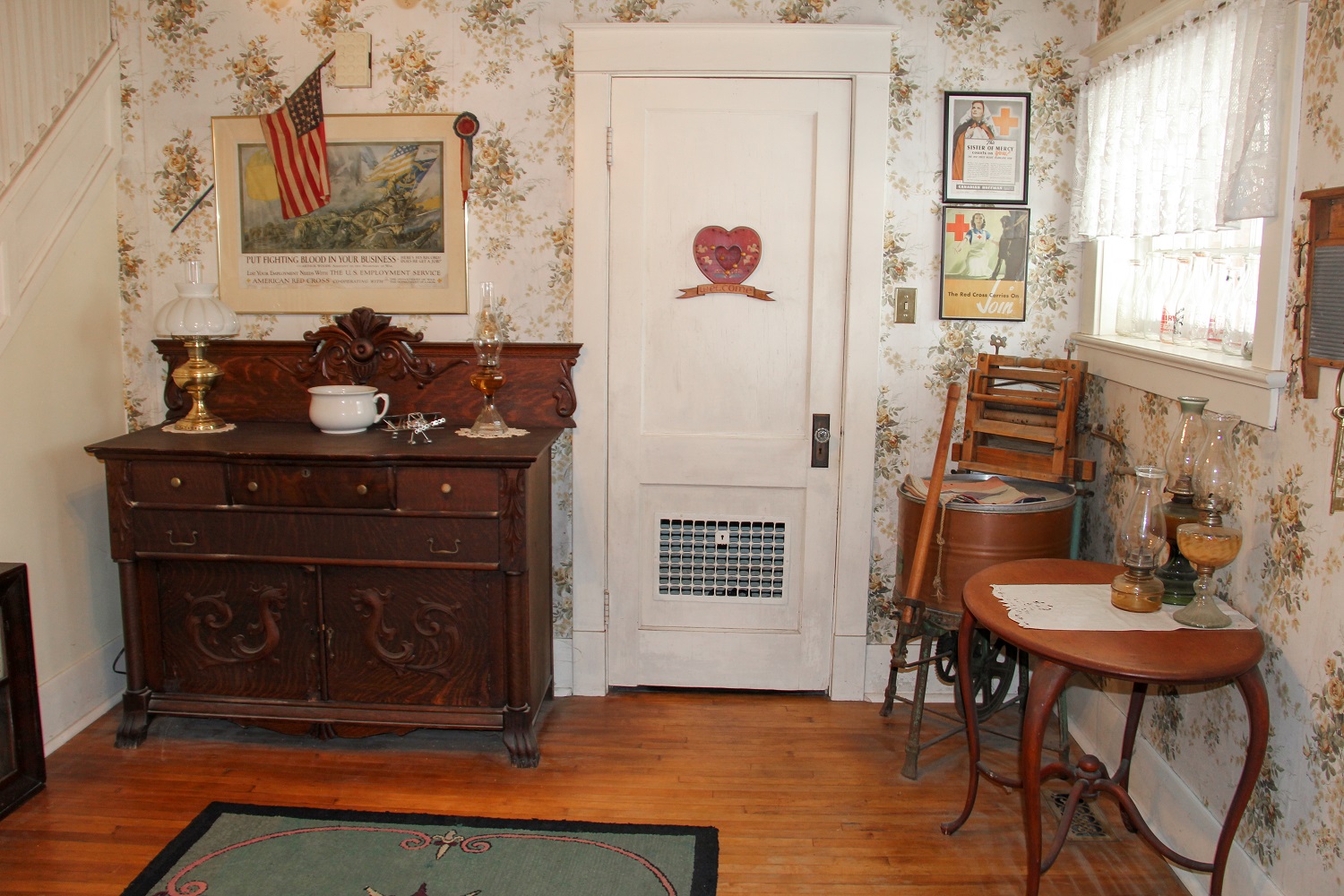
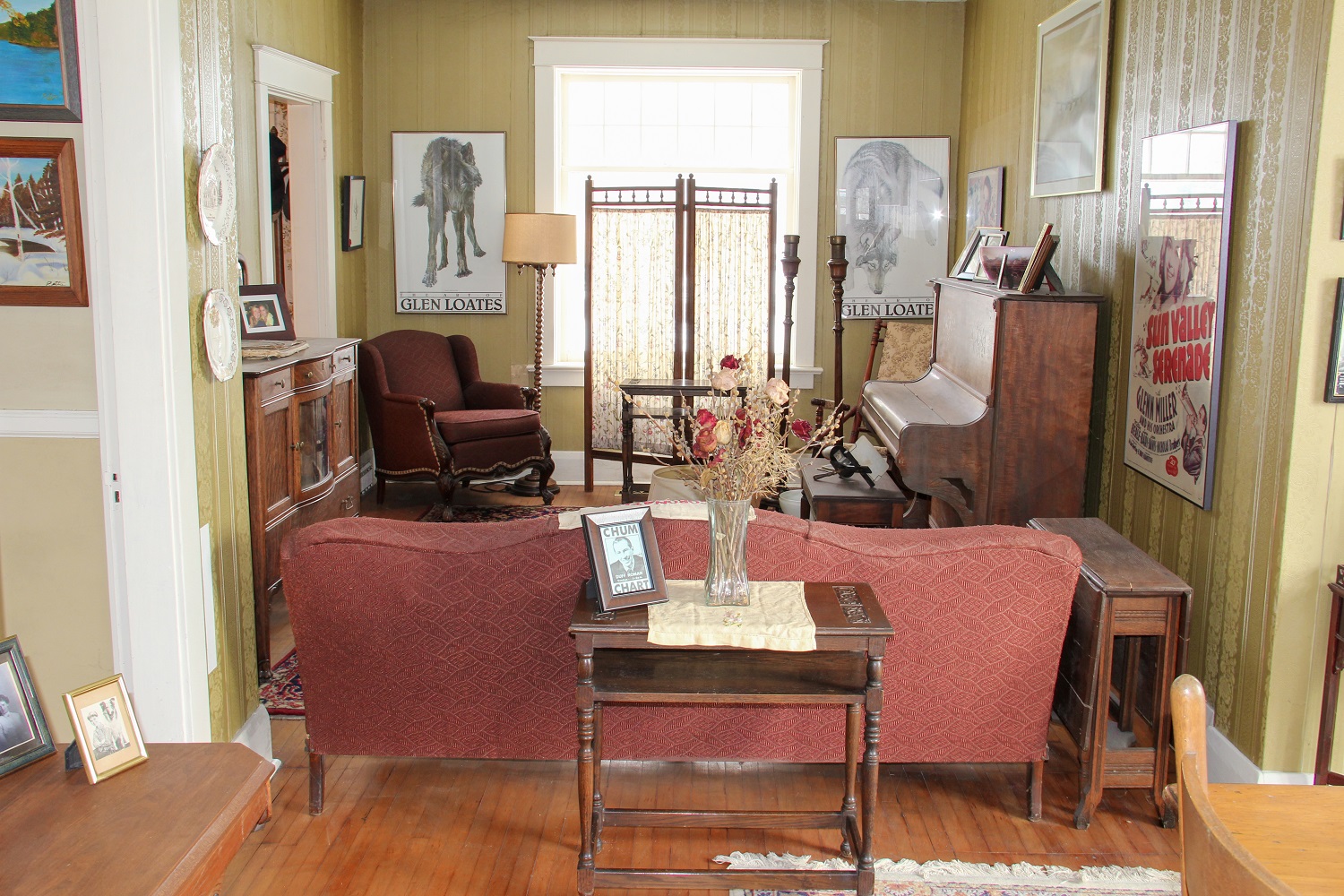
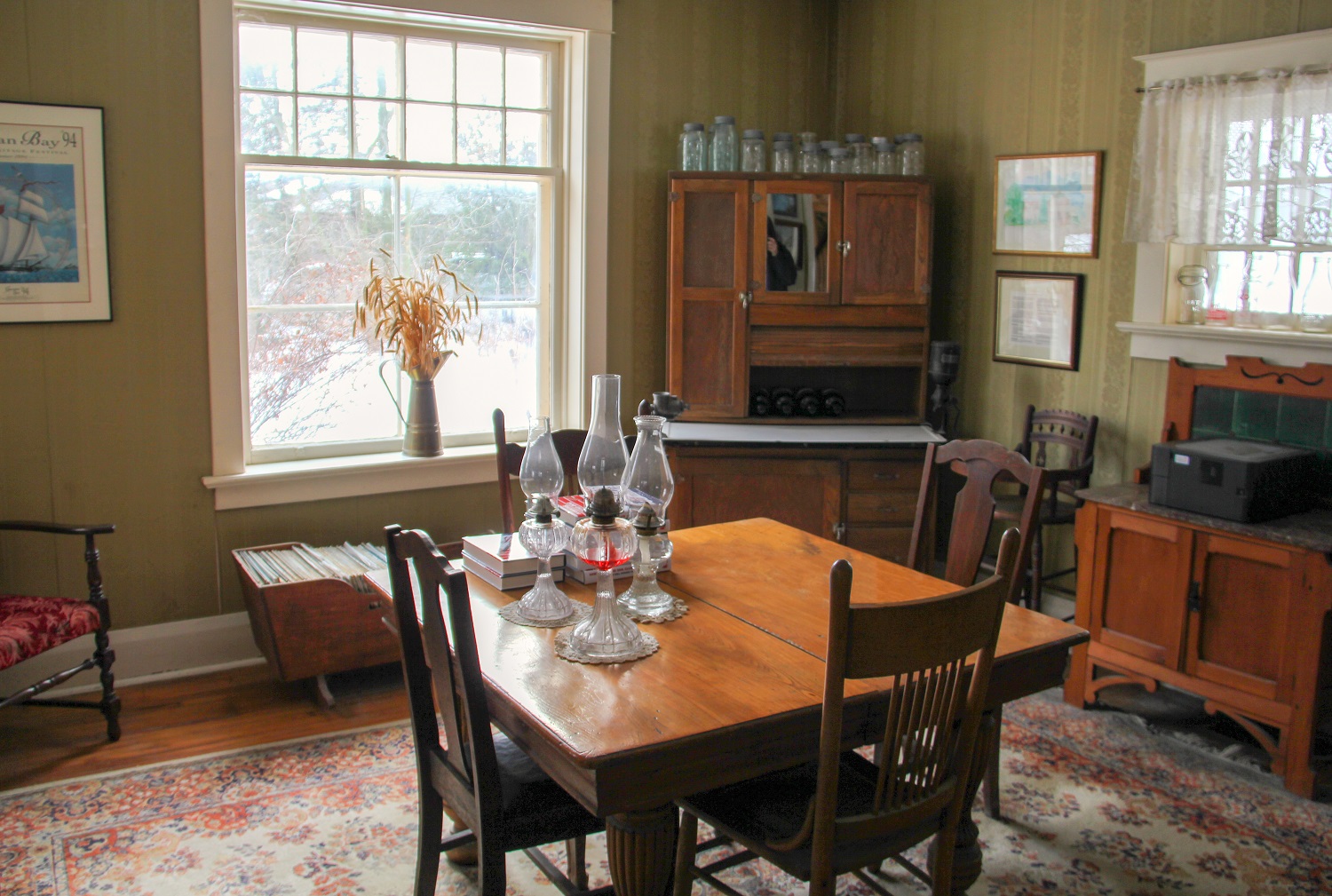
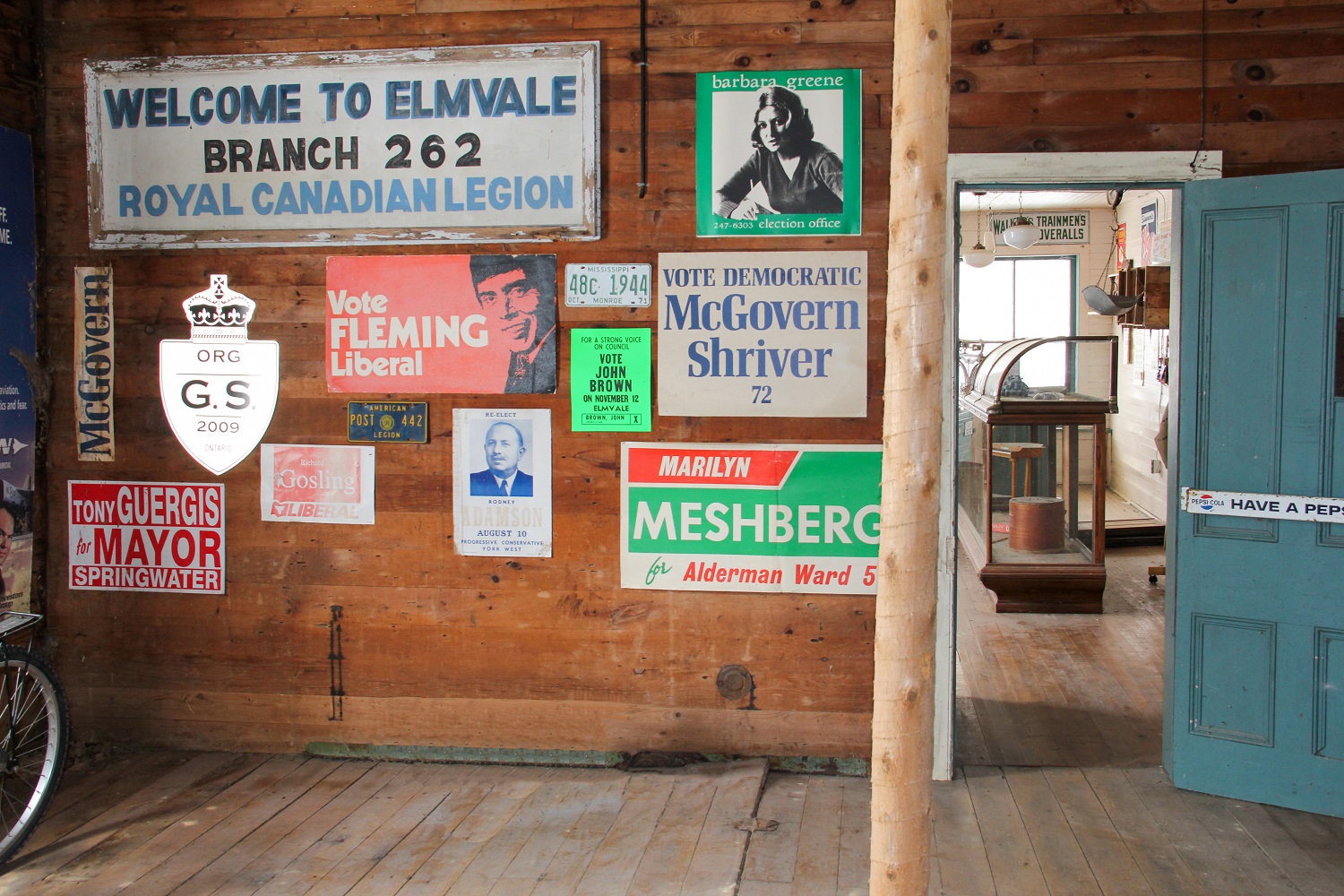
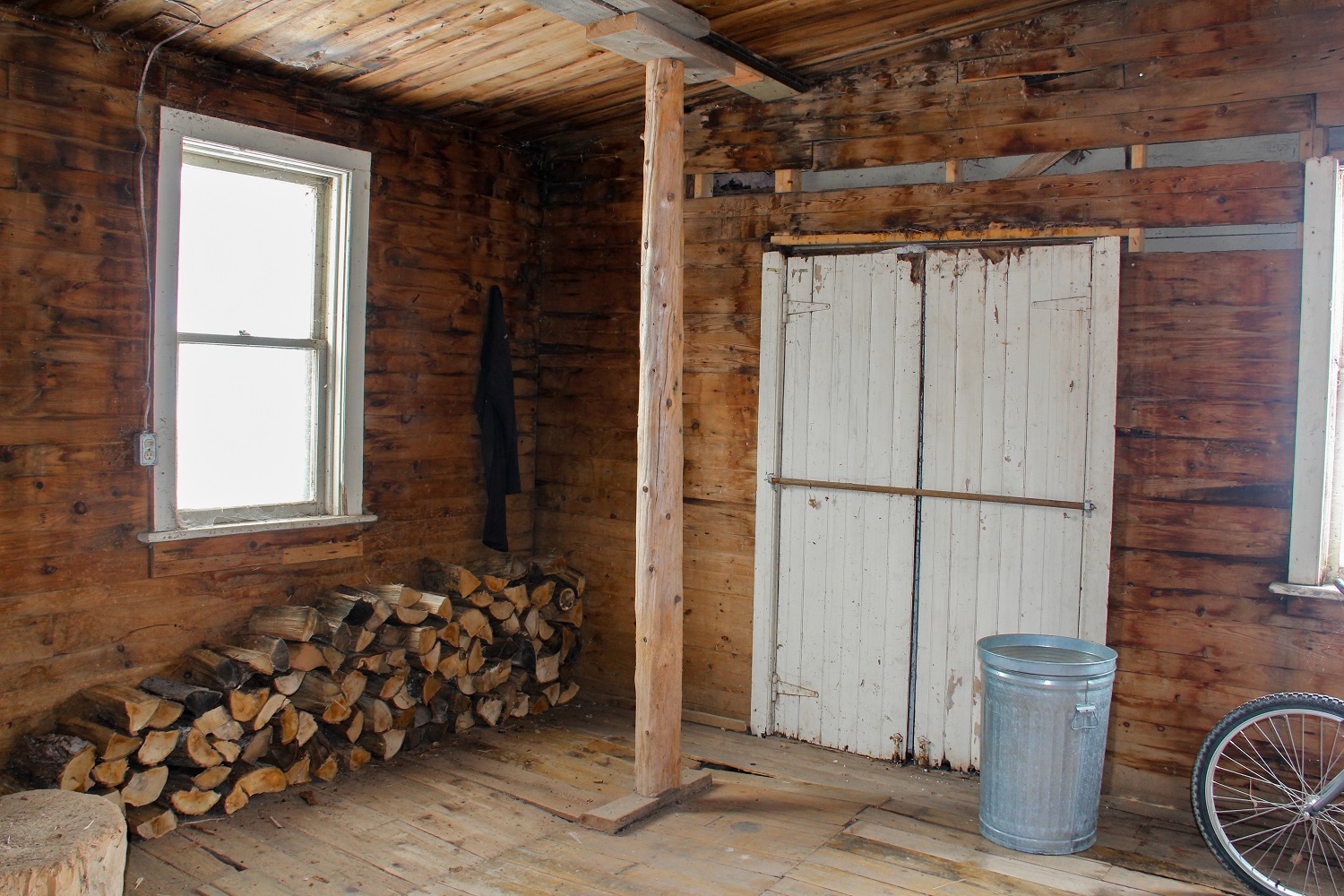
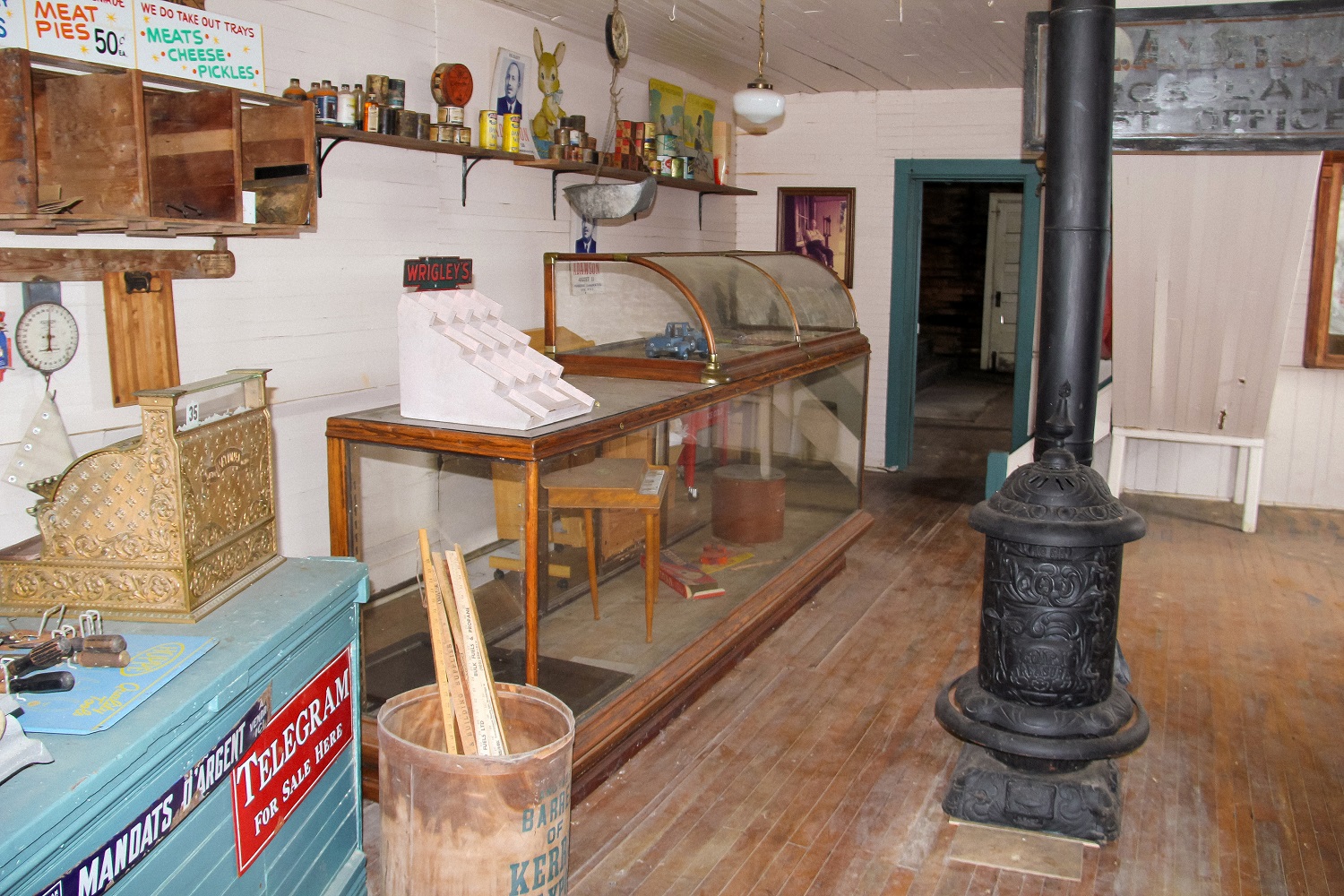
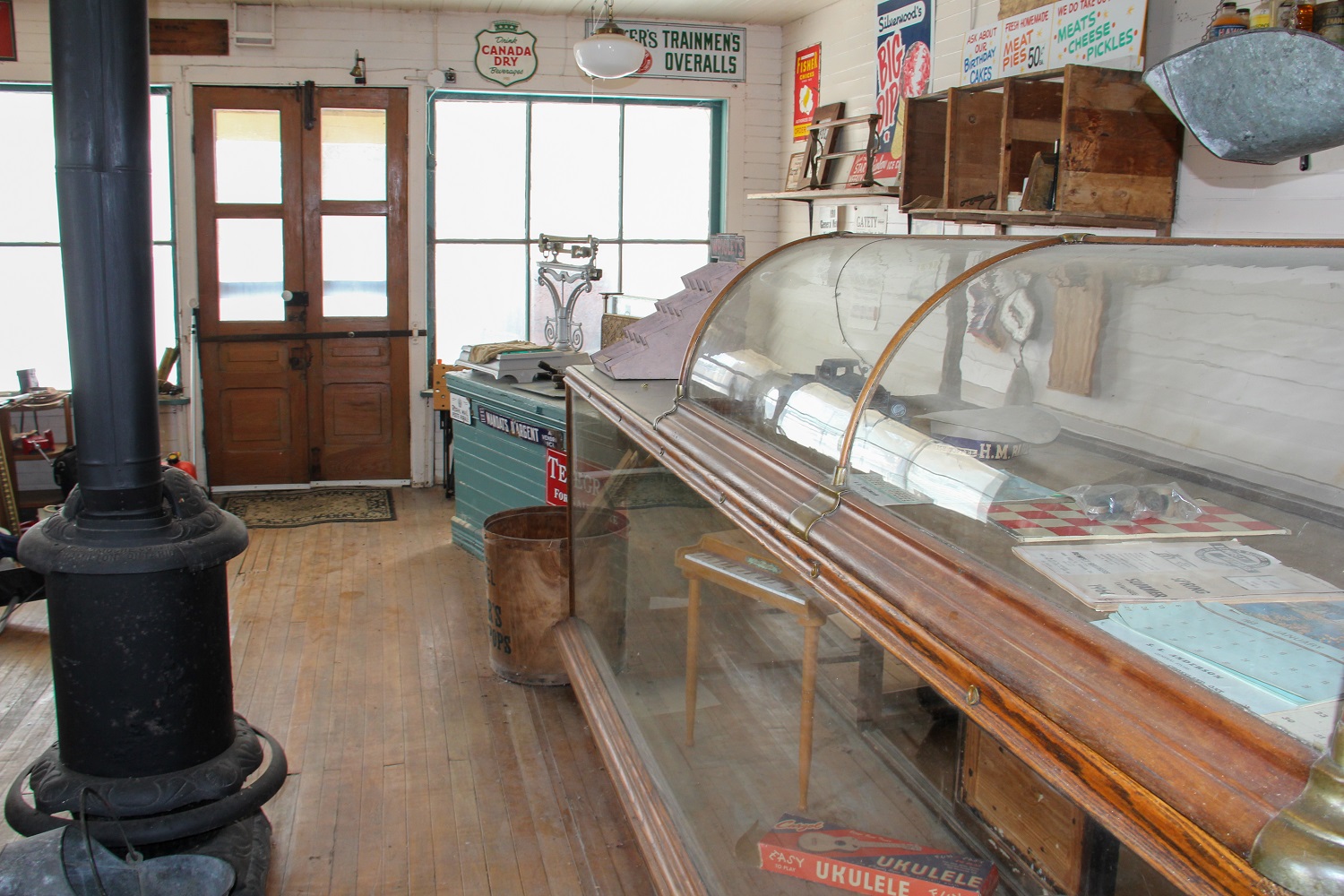
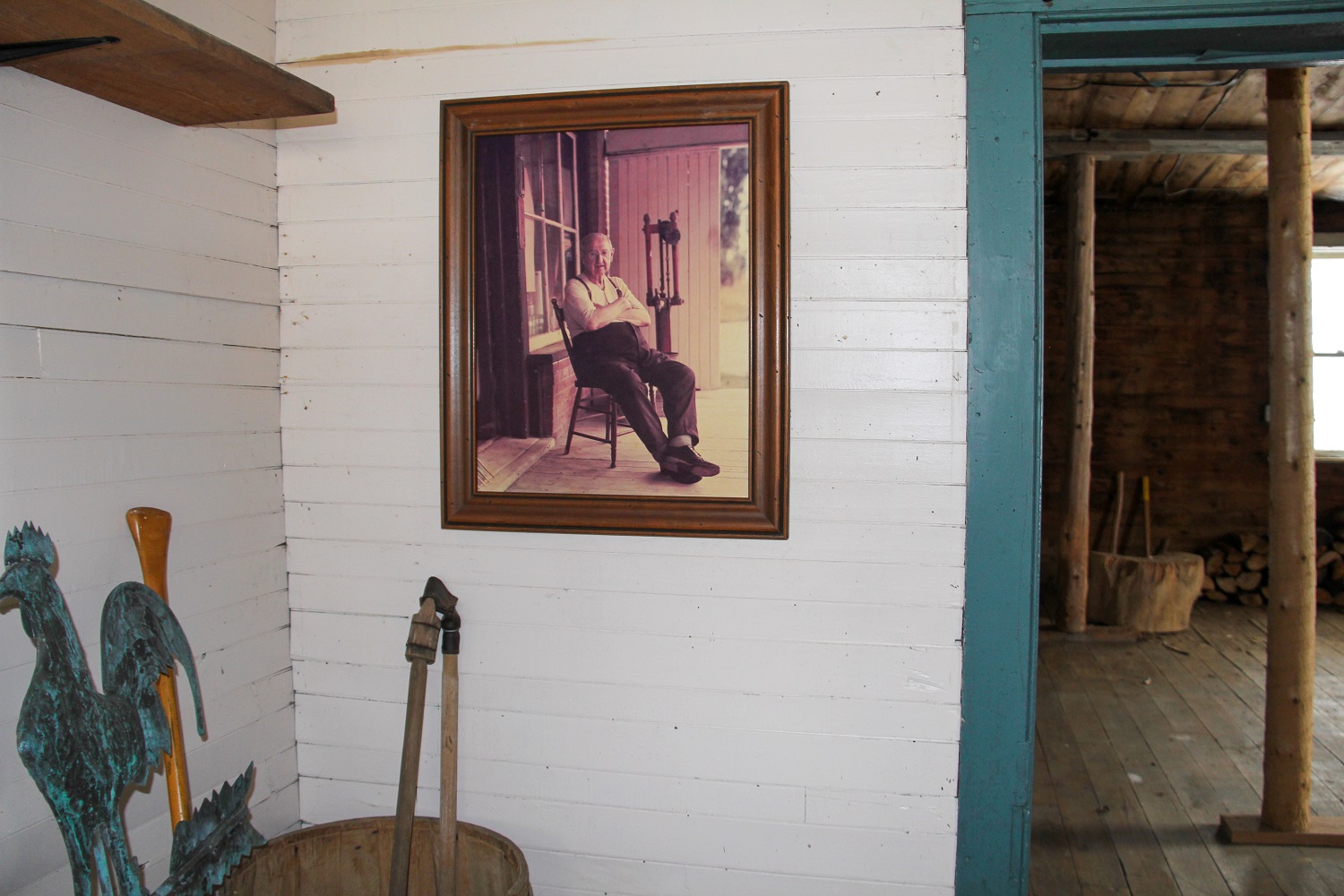
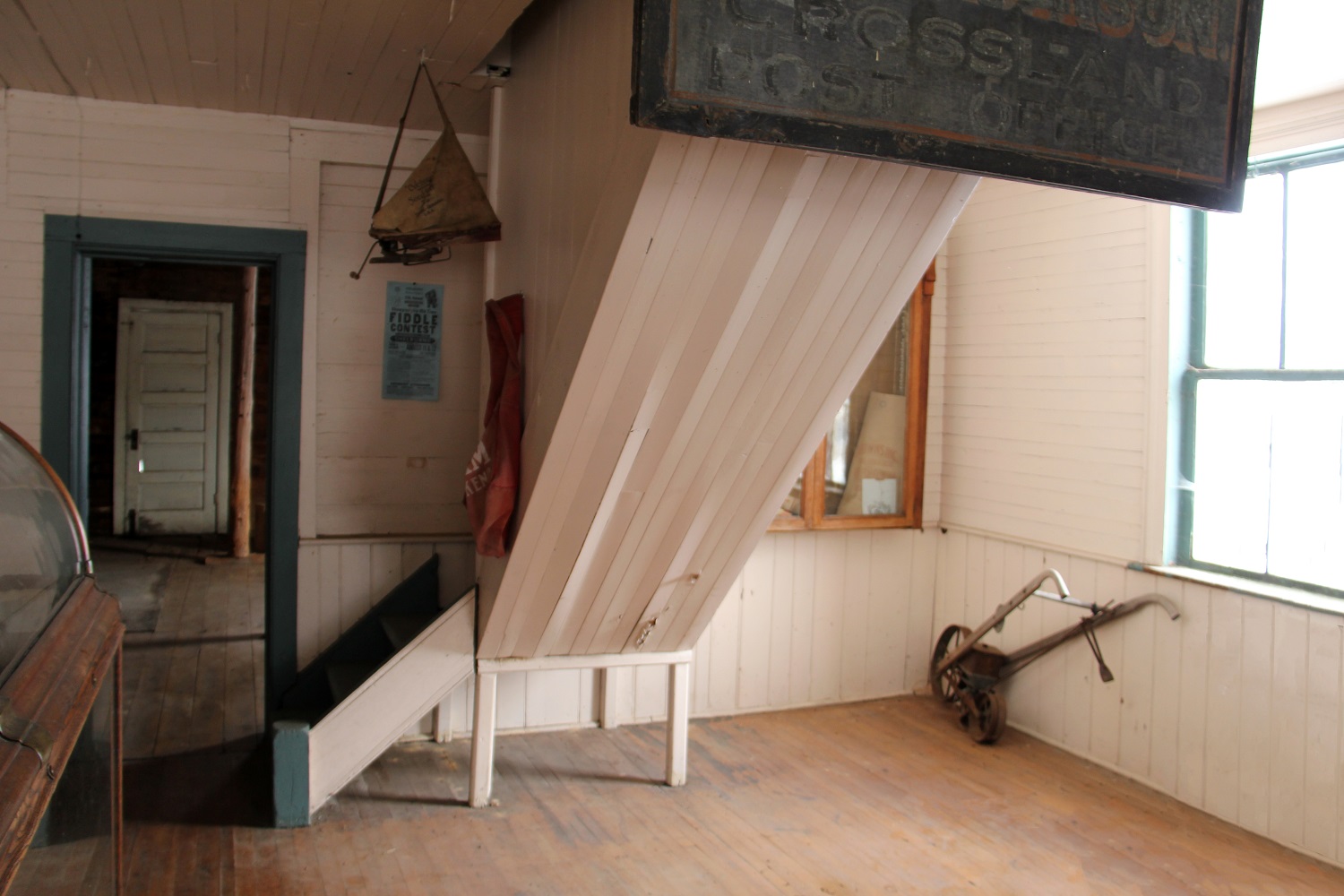
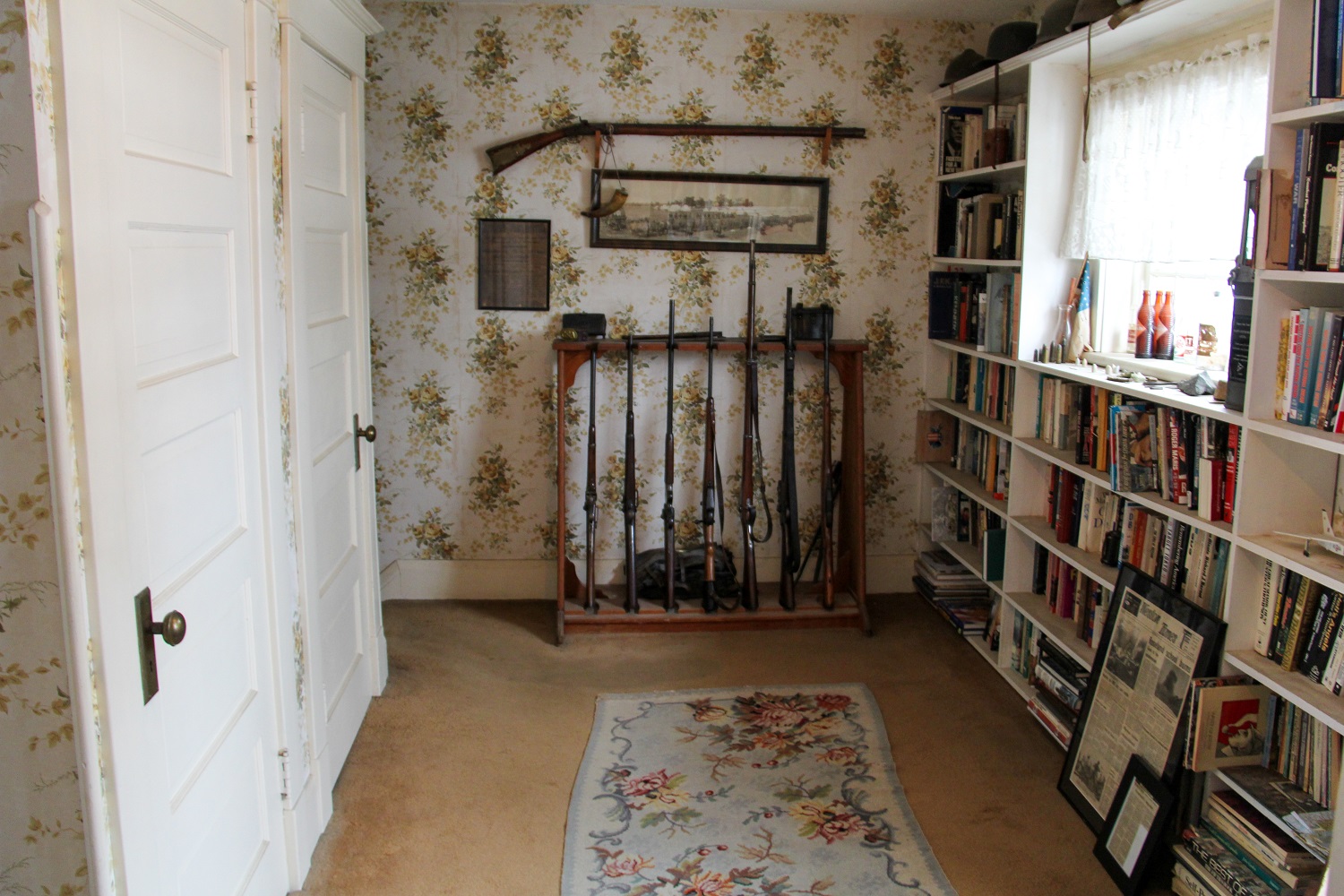
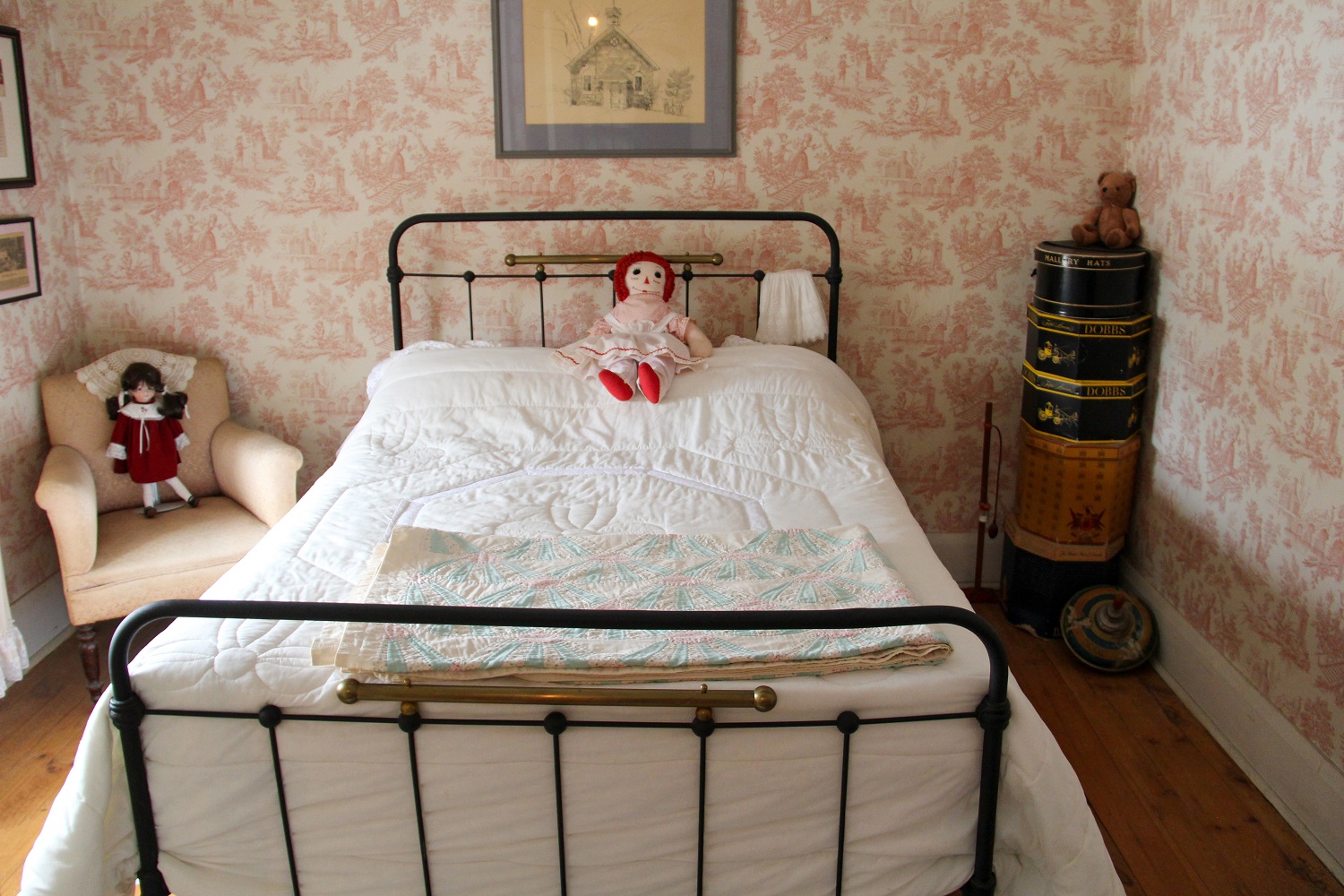
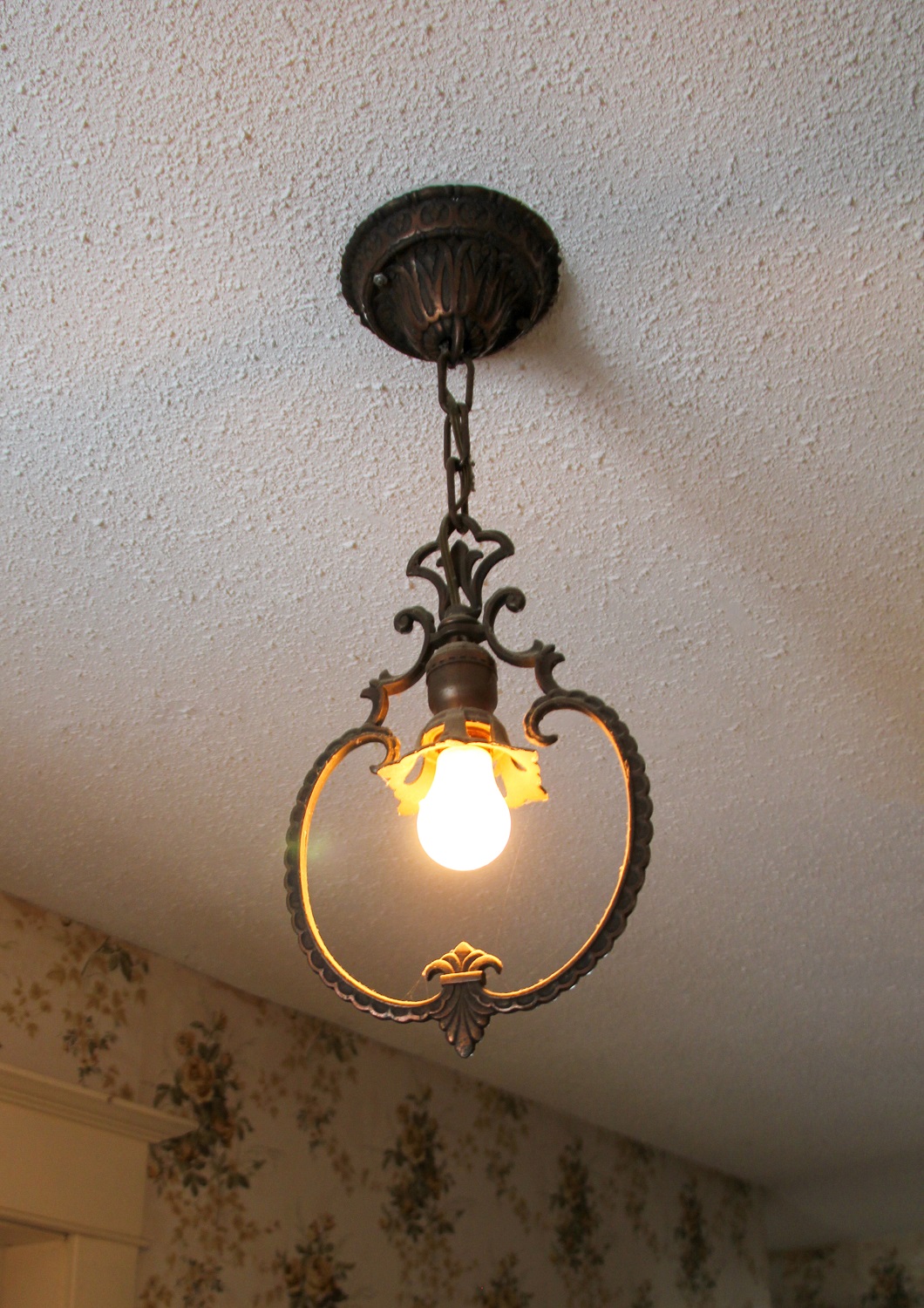
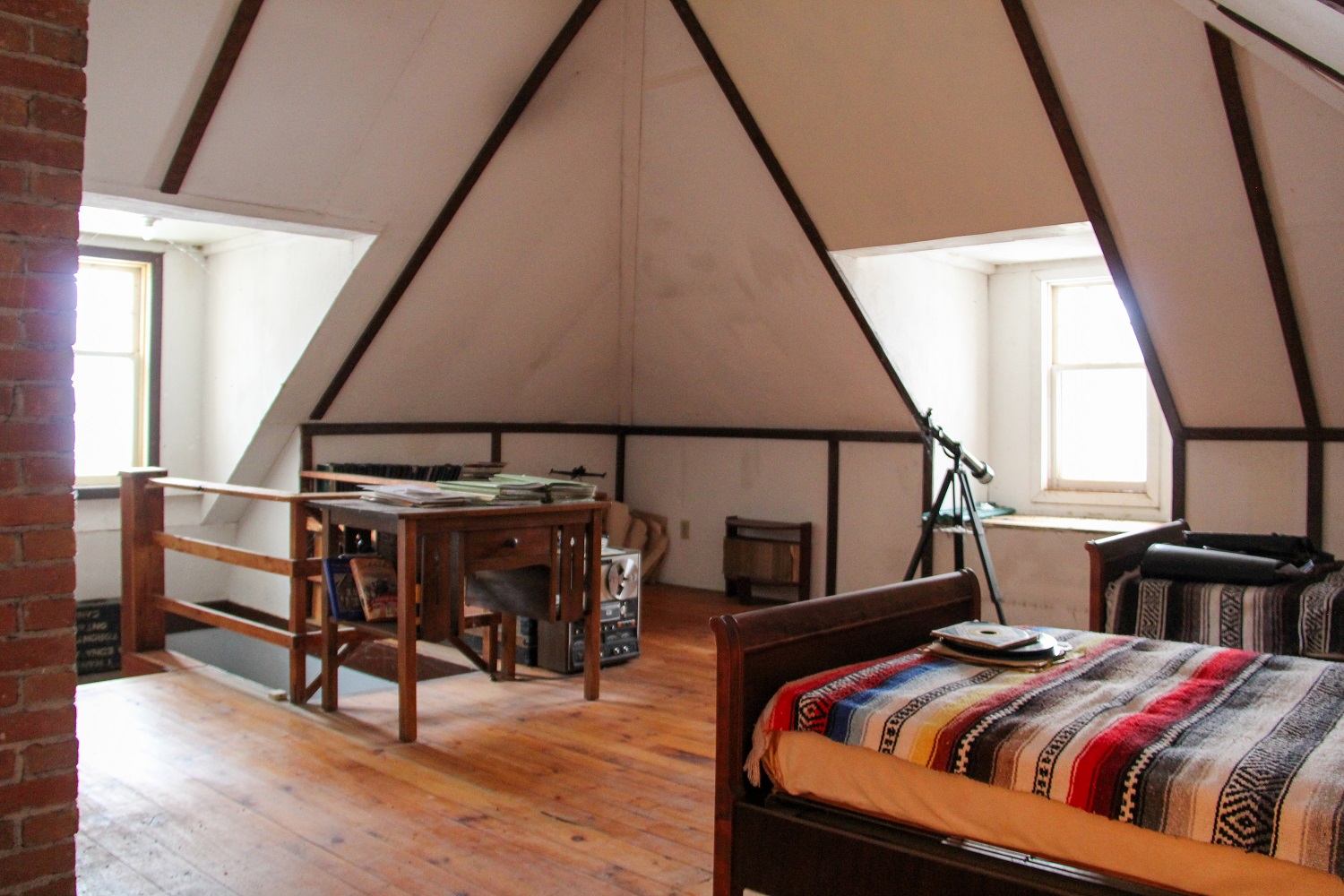
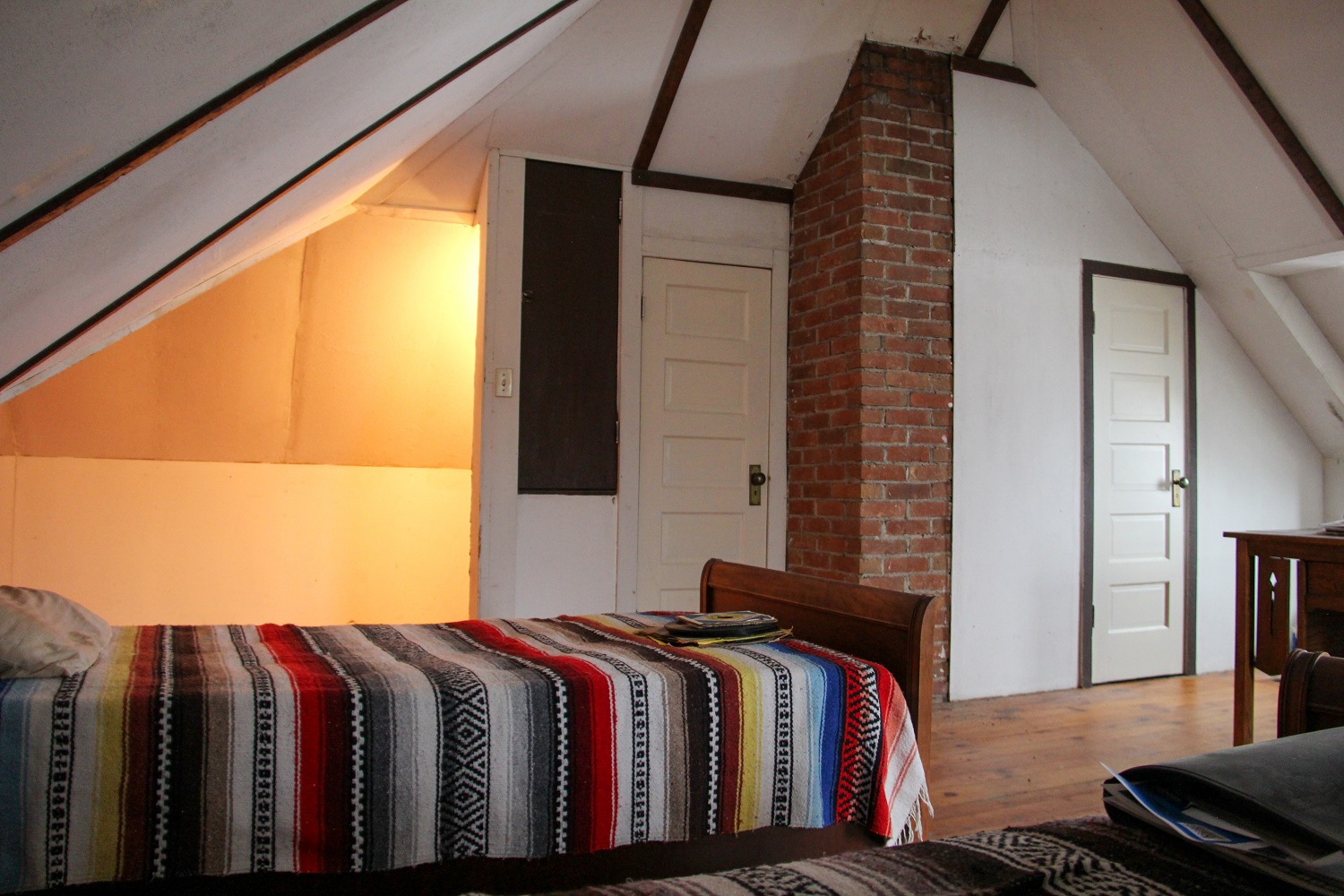
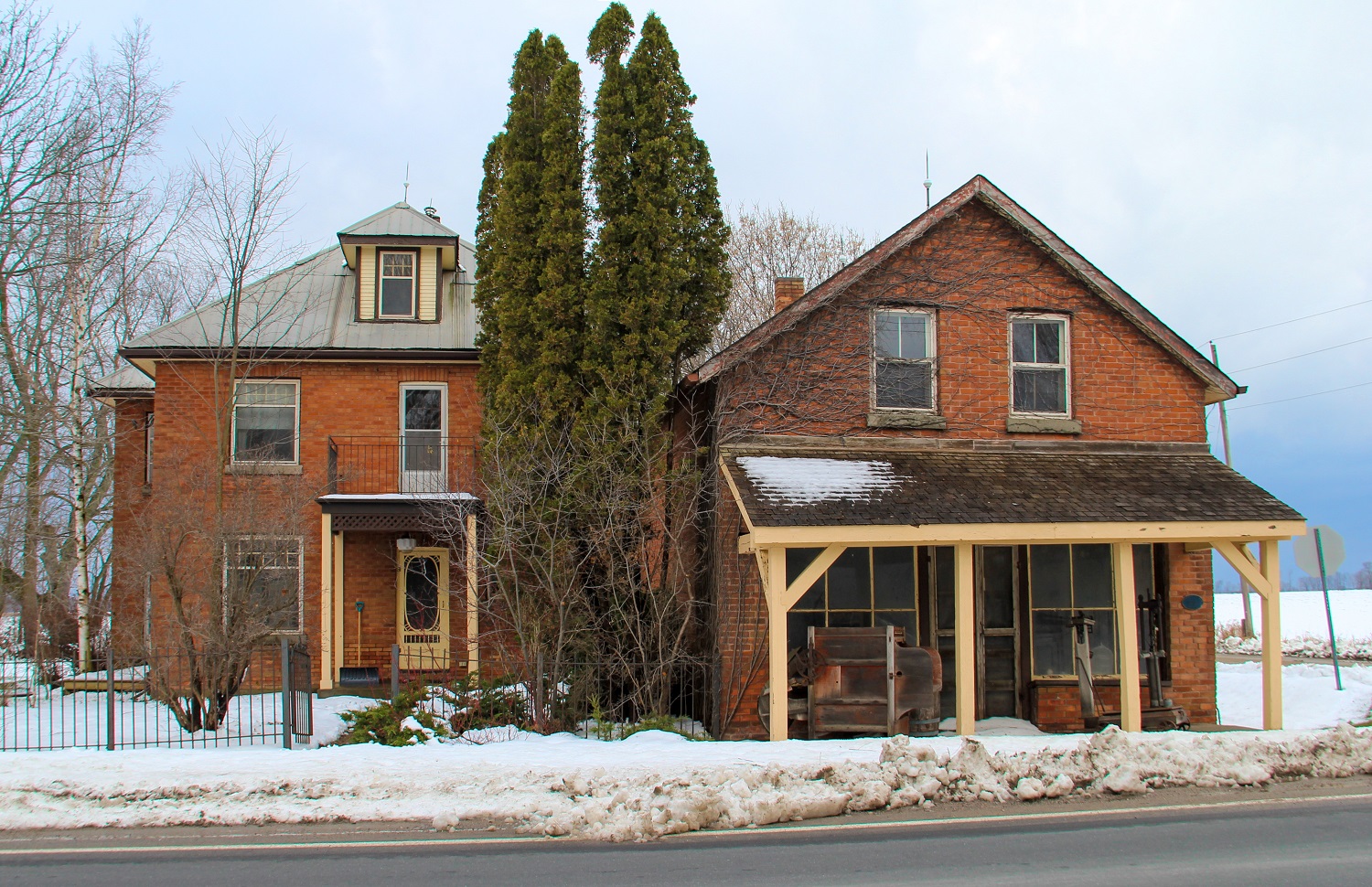
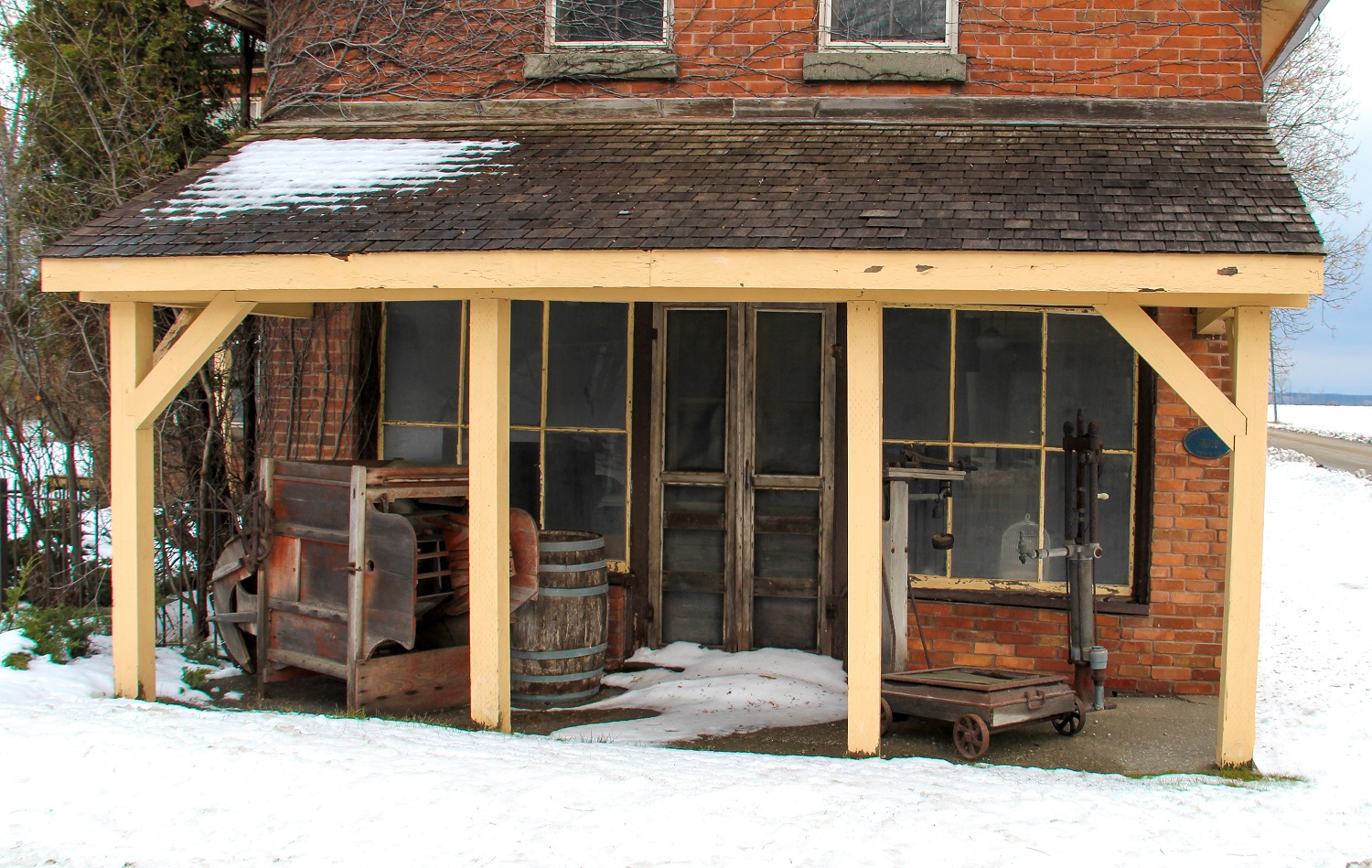
Crossland General Store acted as the centre of the community for many years. In addition to selling the usual assortment of dry goods, the store served as the local post office, gas station and gathering place for local news and information. As well, the store served as a stopping off point for travelers heading to the beaches of Georgian Bay. Next door to the store was Dow's and later Allen's blacksmith shop. With one stop to the southwest corner, travelers could do their shopping, barter any goods they might have, pick up their mail, fill their tank with gas, get their horses shod and their wagons fixed, and catch up on neighbourhood information with a good dose of political debate as well.
The original house tragically burned down in 1914 and was replaced with a large 3 story structure which remained attached to the general store. Undamaged material salvaged from the first house was incorporated into the interior of the store. The store was added on to and bricked during the 1930s.
Martingrove House
Date of Official Heritage Designation: January 16, 2012 as per By-law 2012 -002
The Martingrove House is located at 1407 Flos Road 8 West, former Township of Flos. The house was built around 1906 and is of cultural heritage value as an example of an Ontario farmhouse, aptly named in honour of the Martin family who farmed the property for many years. Agriculture was very important and vital to the Township of Flos.
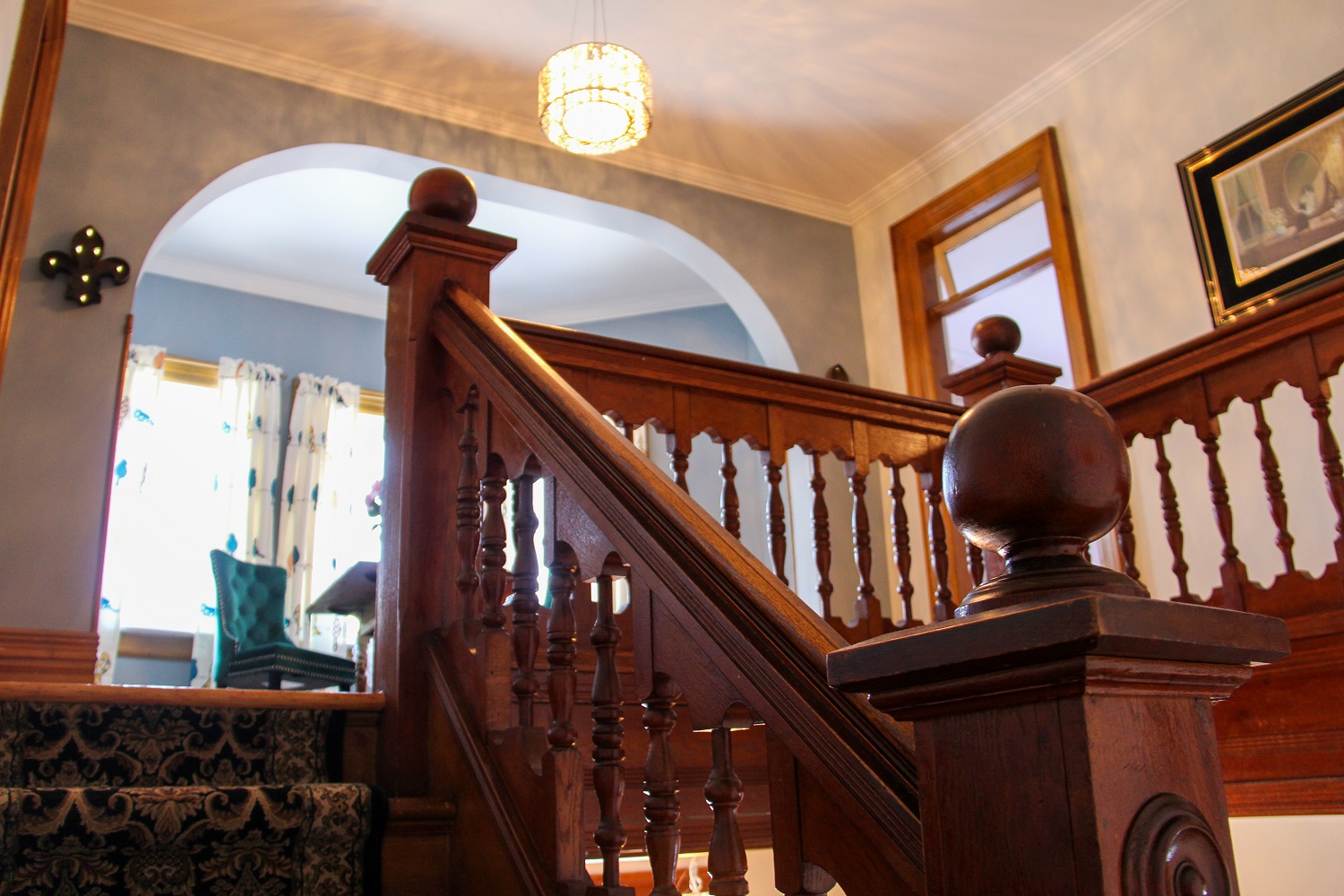
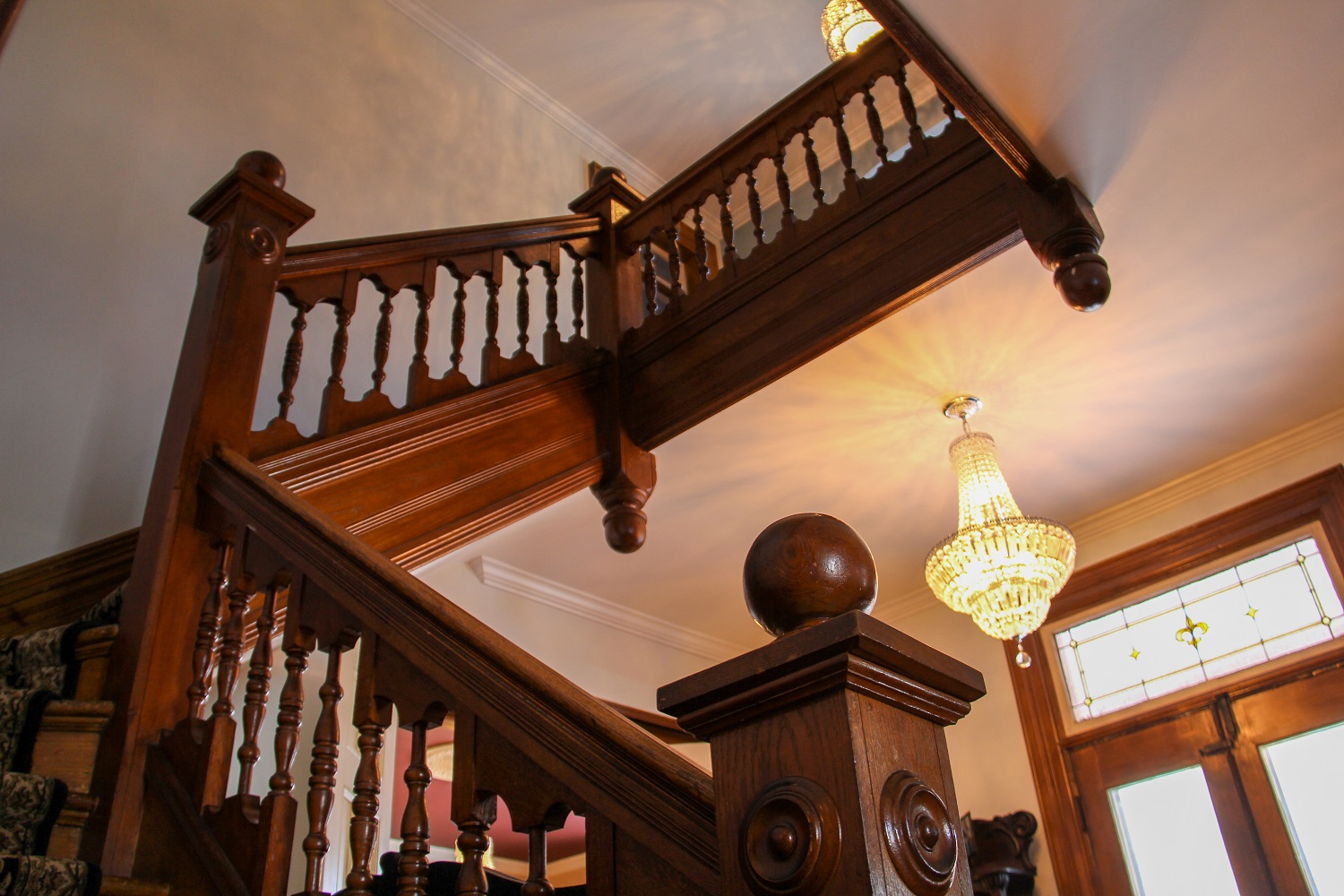
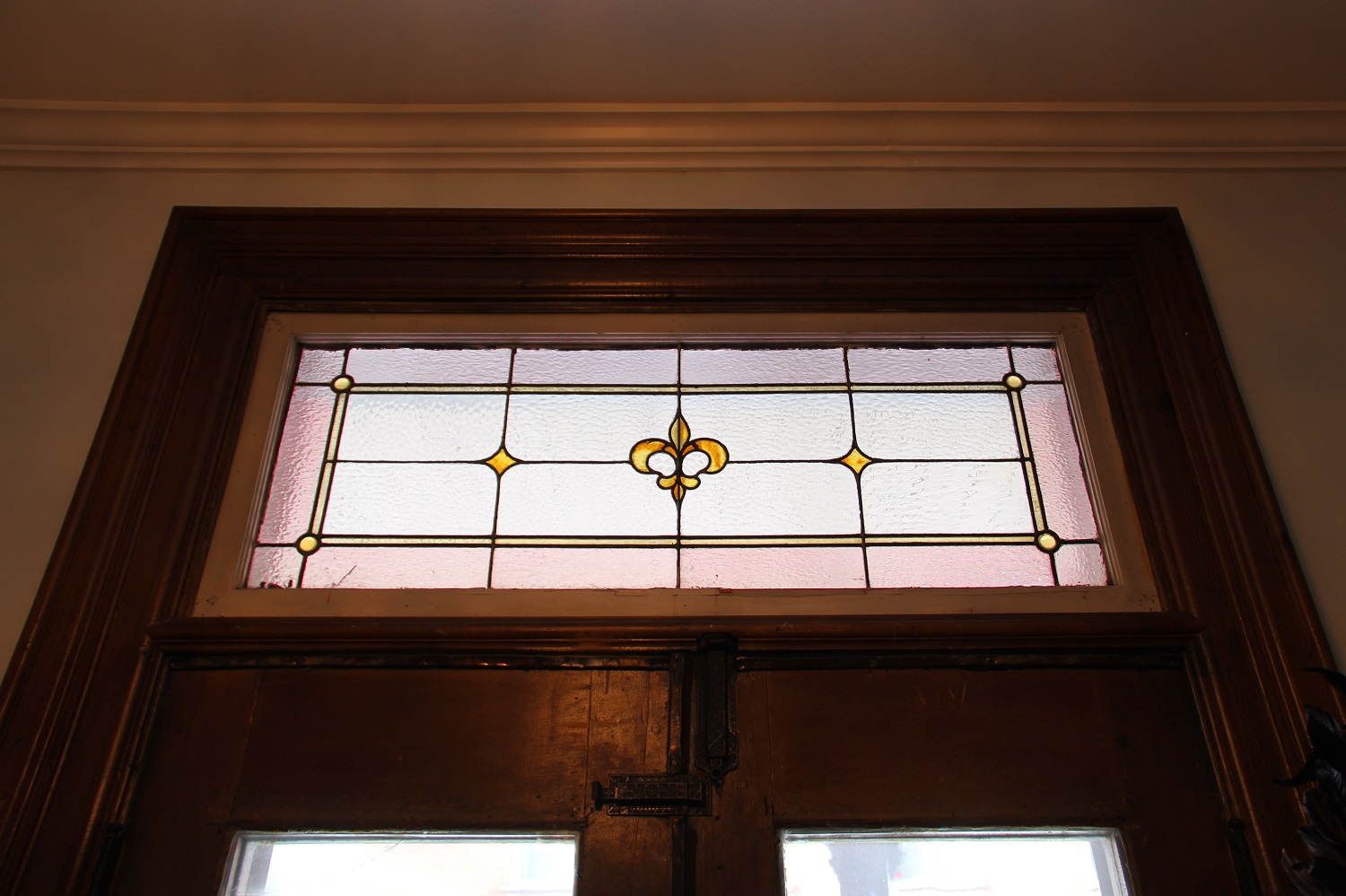
The Martin family came from the Eastern Townships in Quebec. Joseph Martin bought the house around 1917 with his son Harold, owning the house and property until 2002. Throughout the home there are fleur-de-lis pattern stained glass windows, a stylized lily composed of three petals bound together near their bases. It is especially known from the former royal arms of France. These stained glass windows allowed the Martin family to keep their Quebec connection with them at all times.
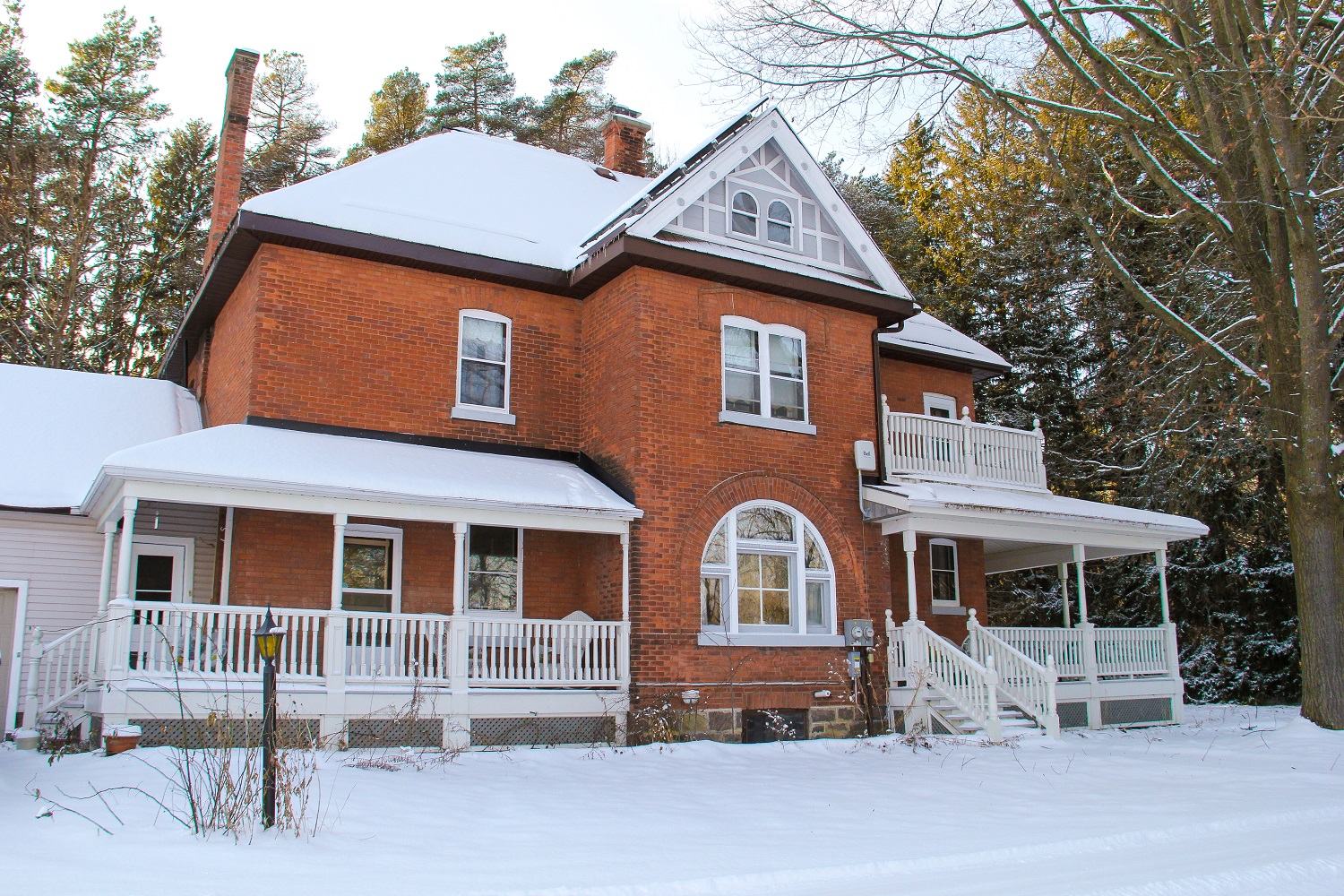
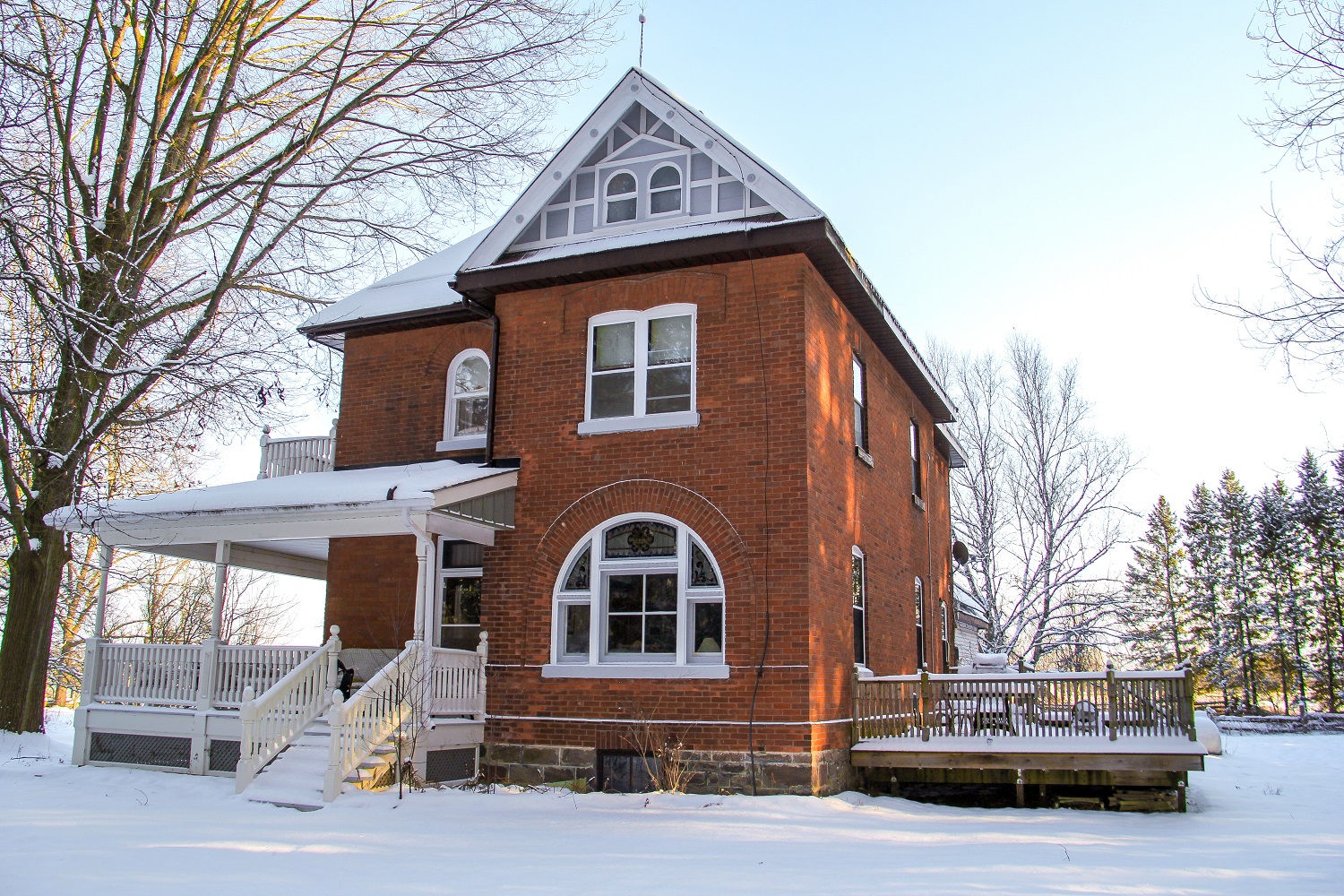
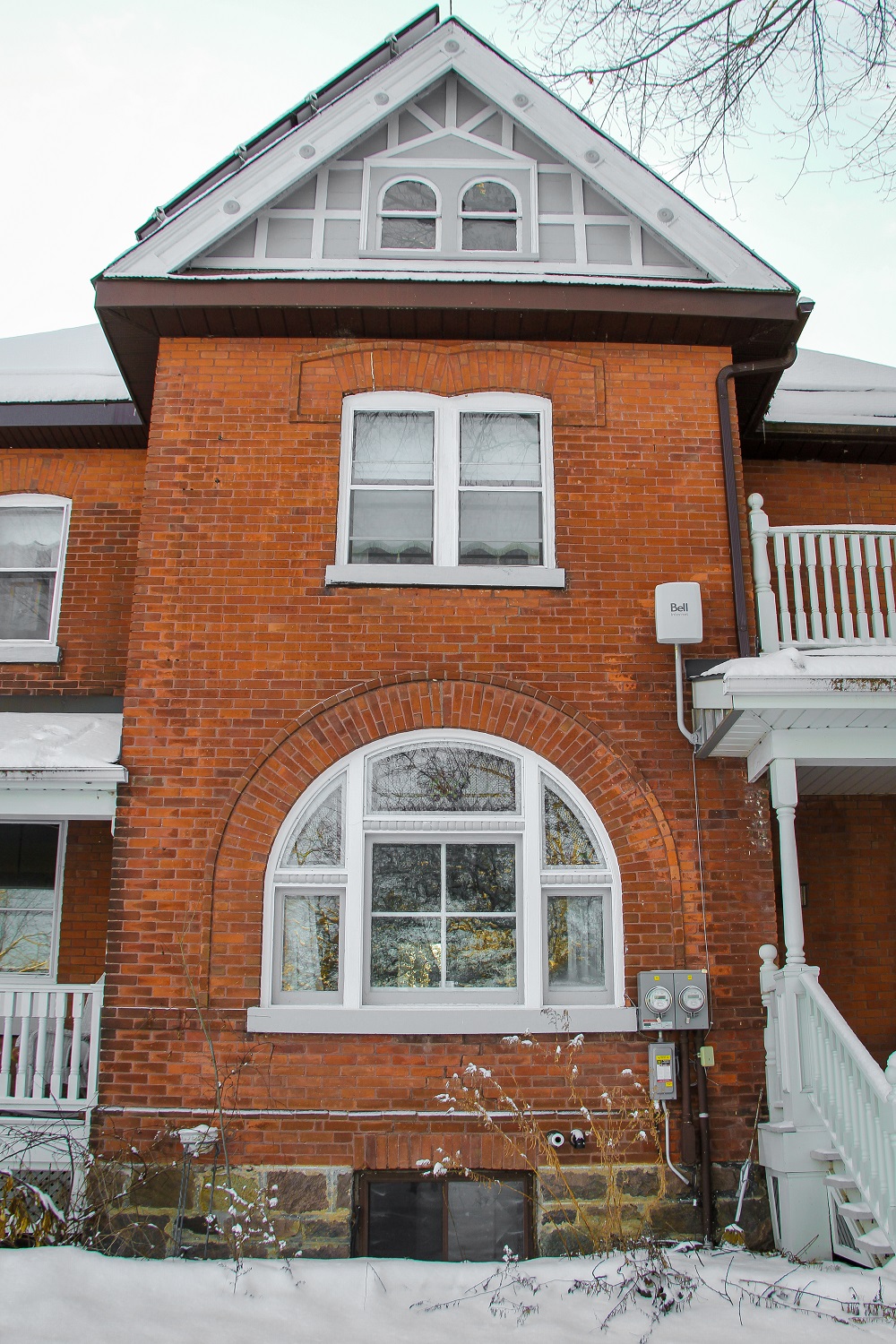
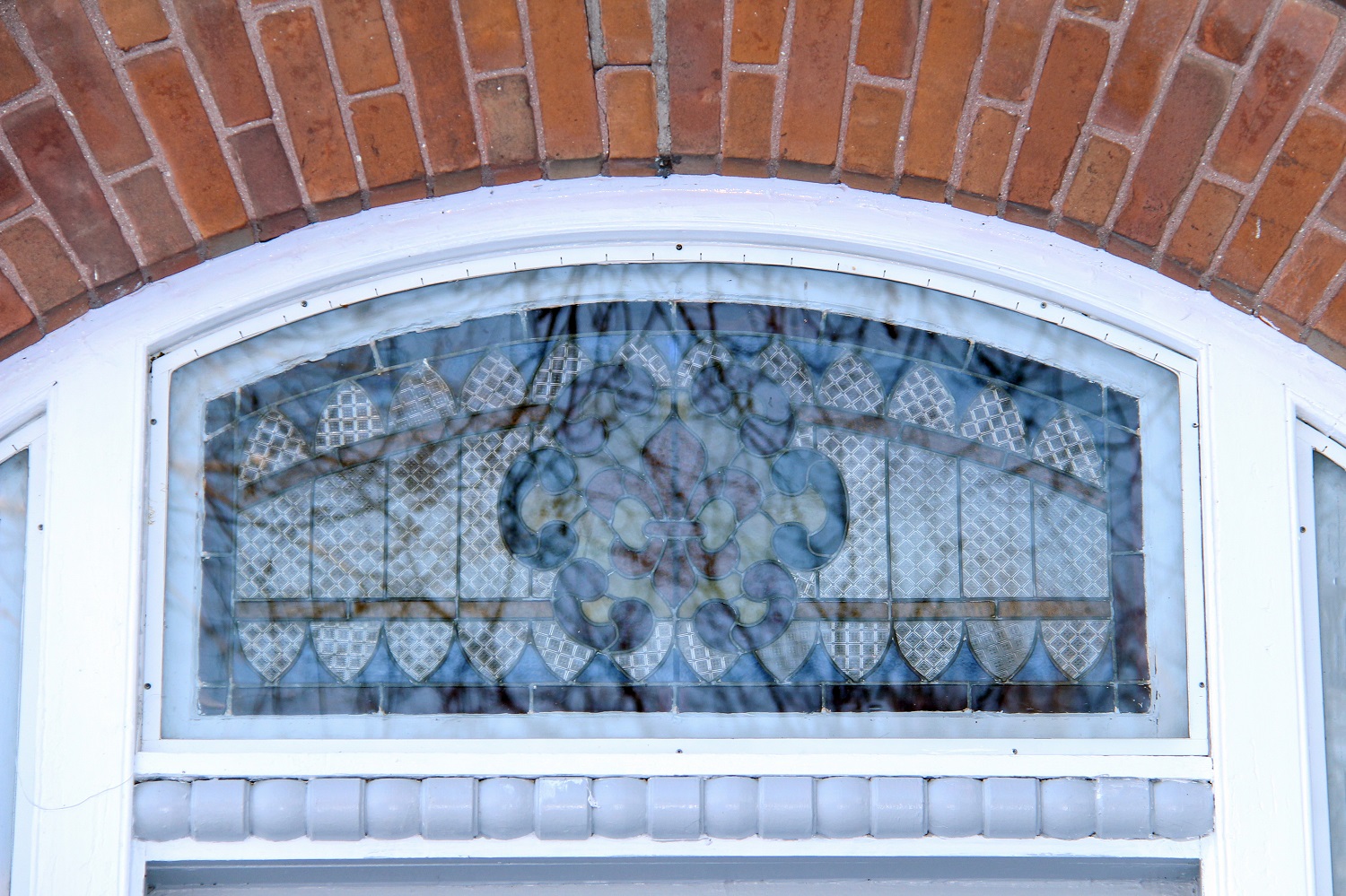
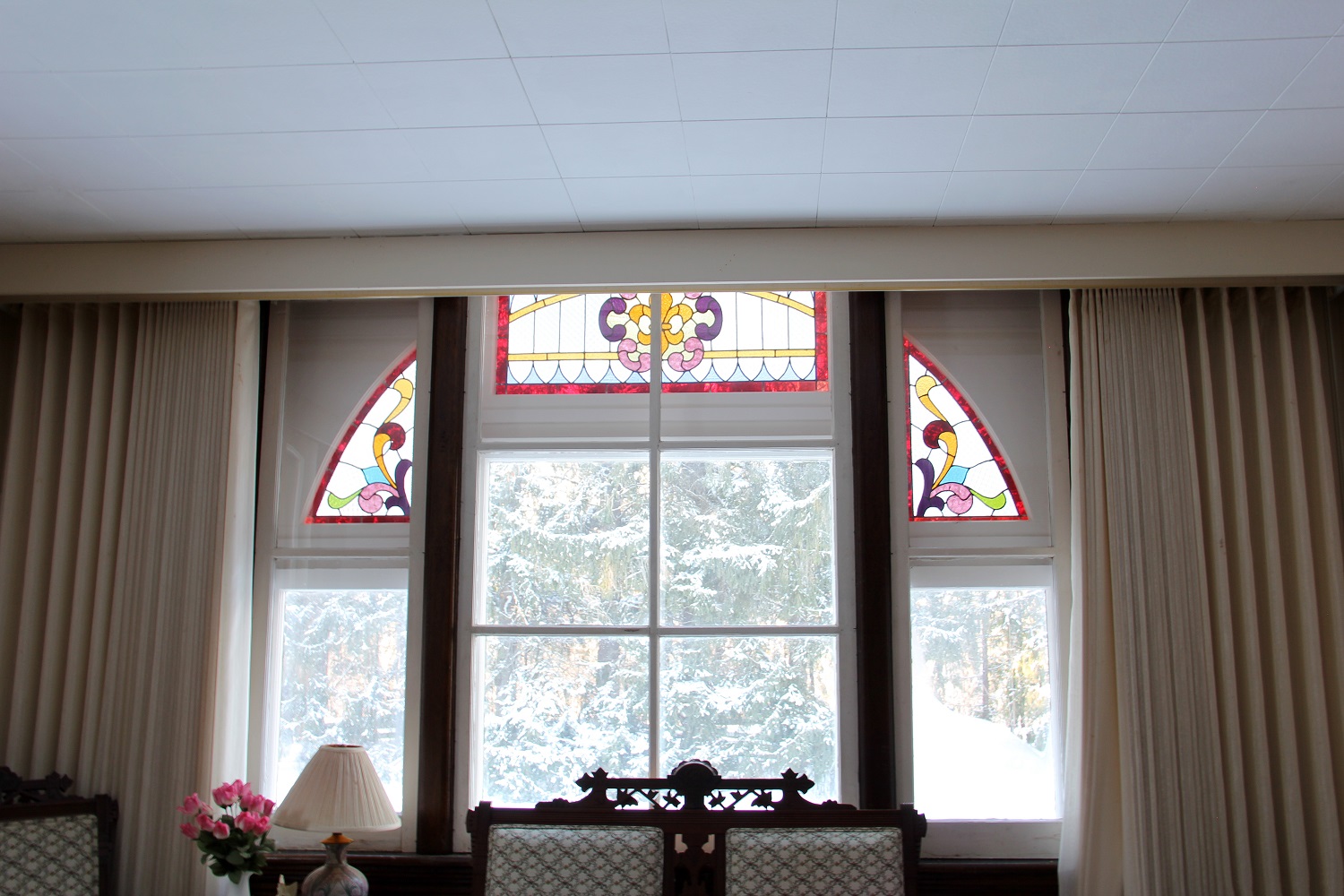
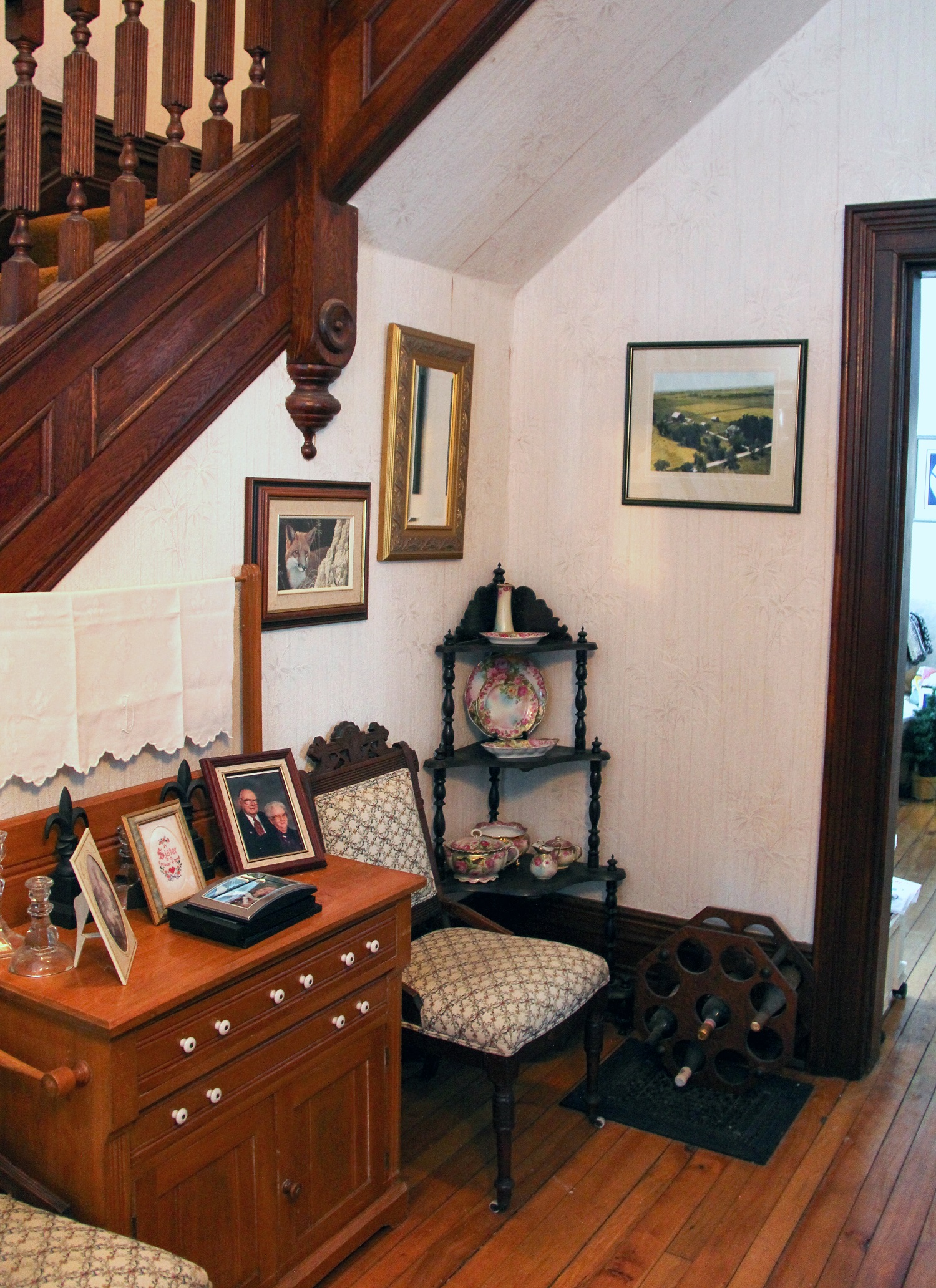
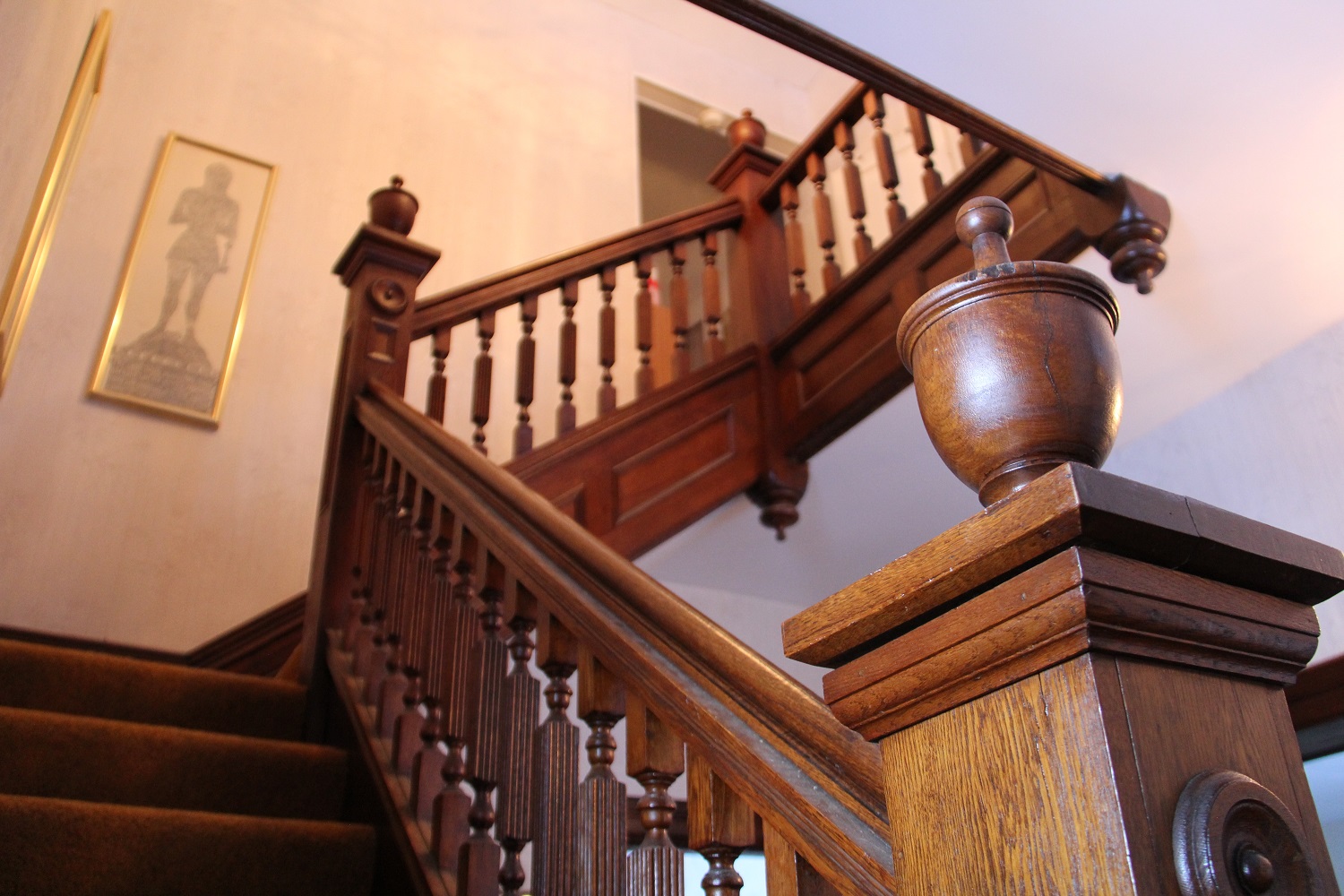
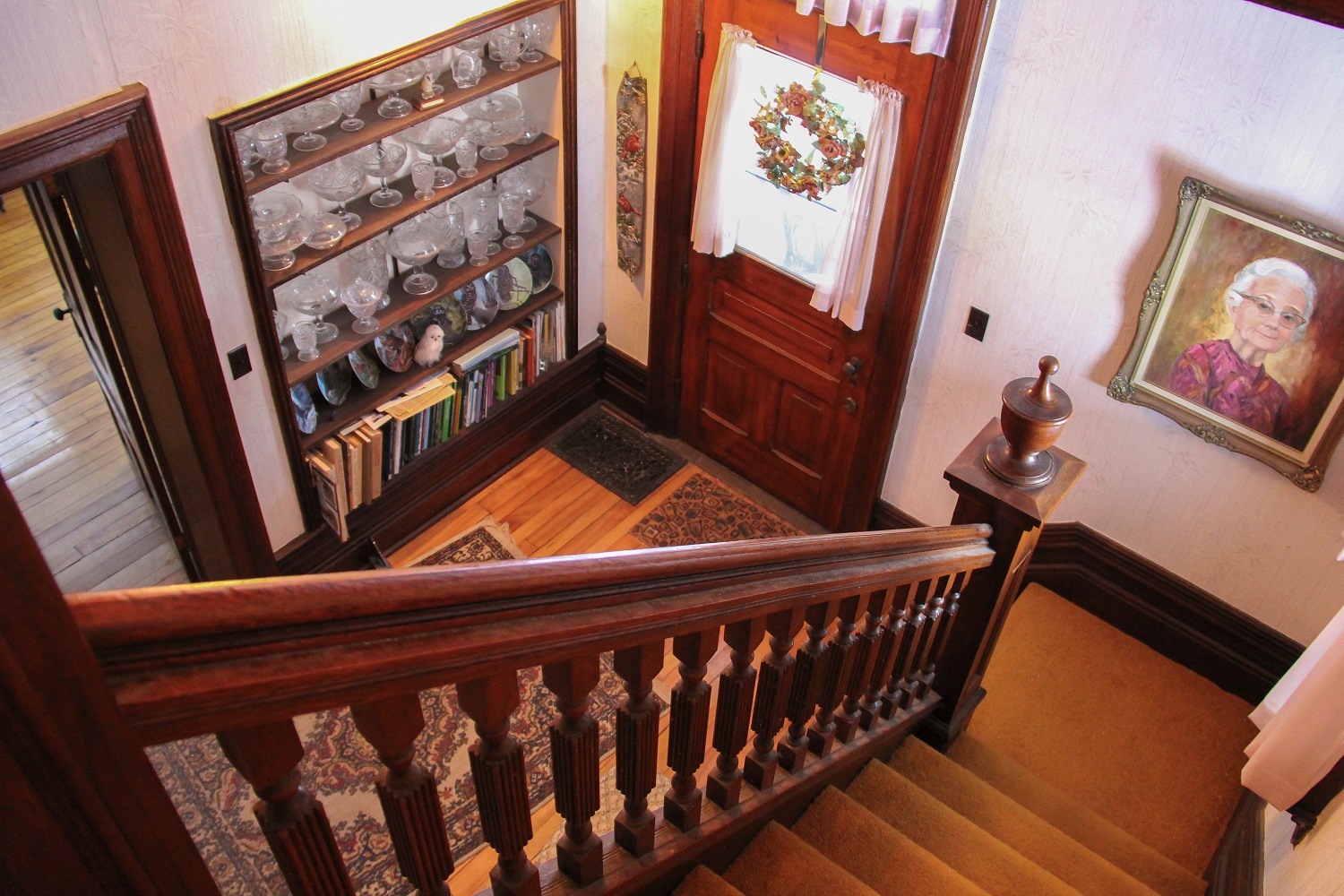
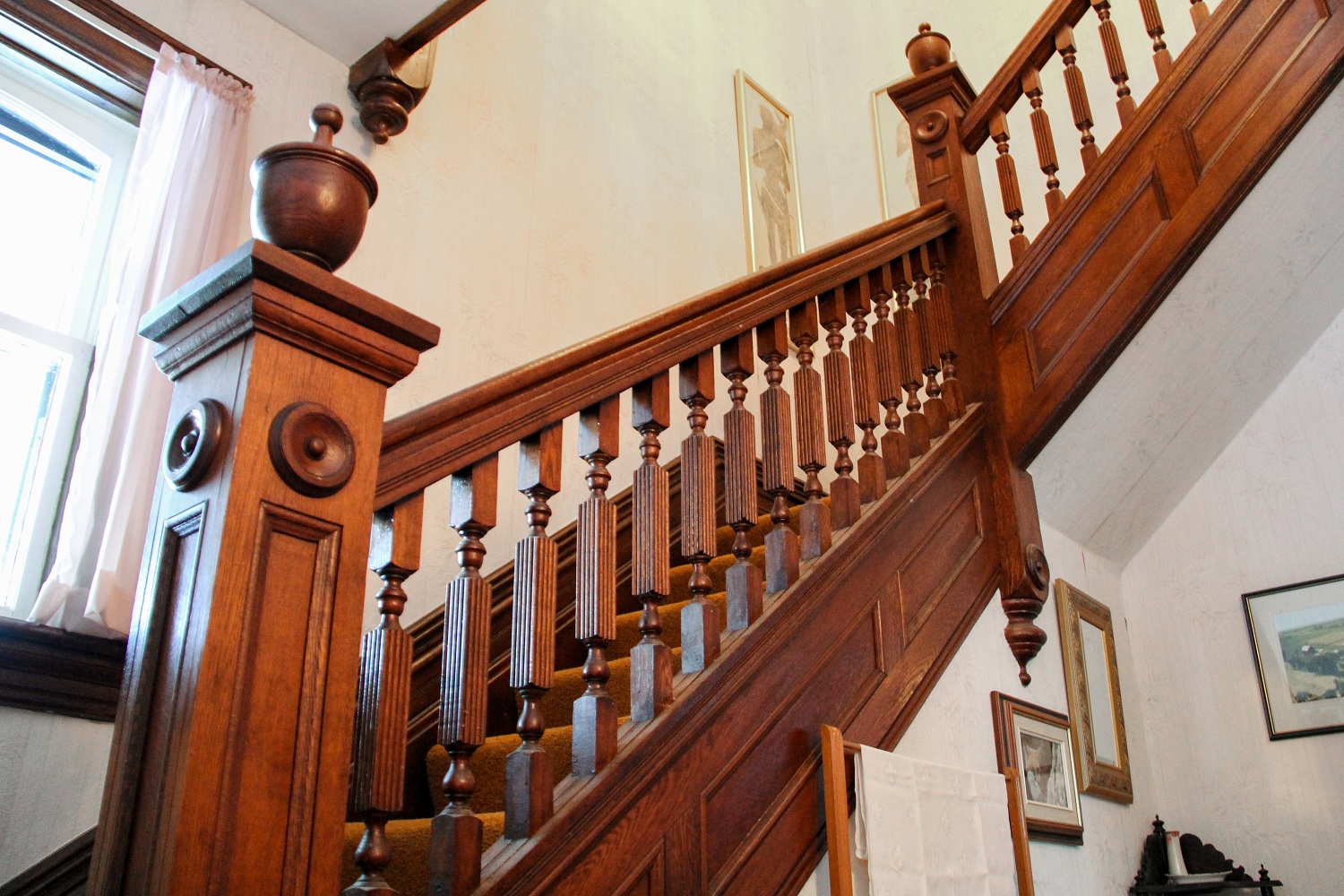
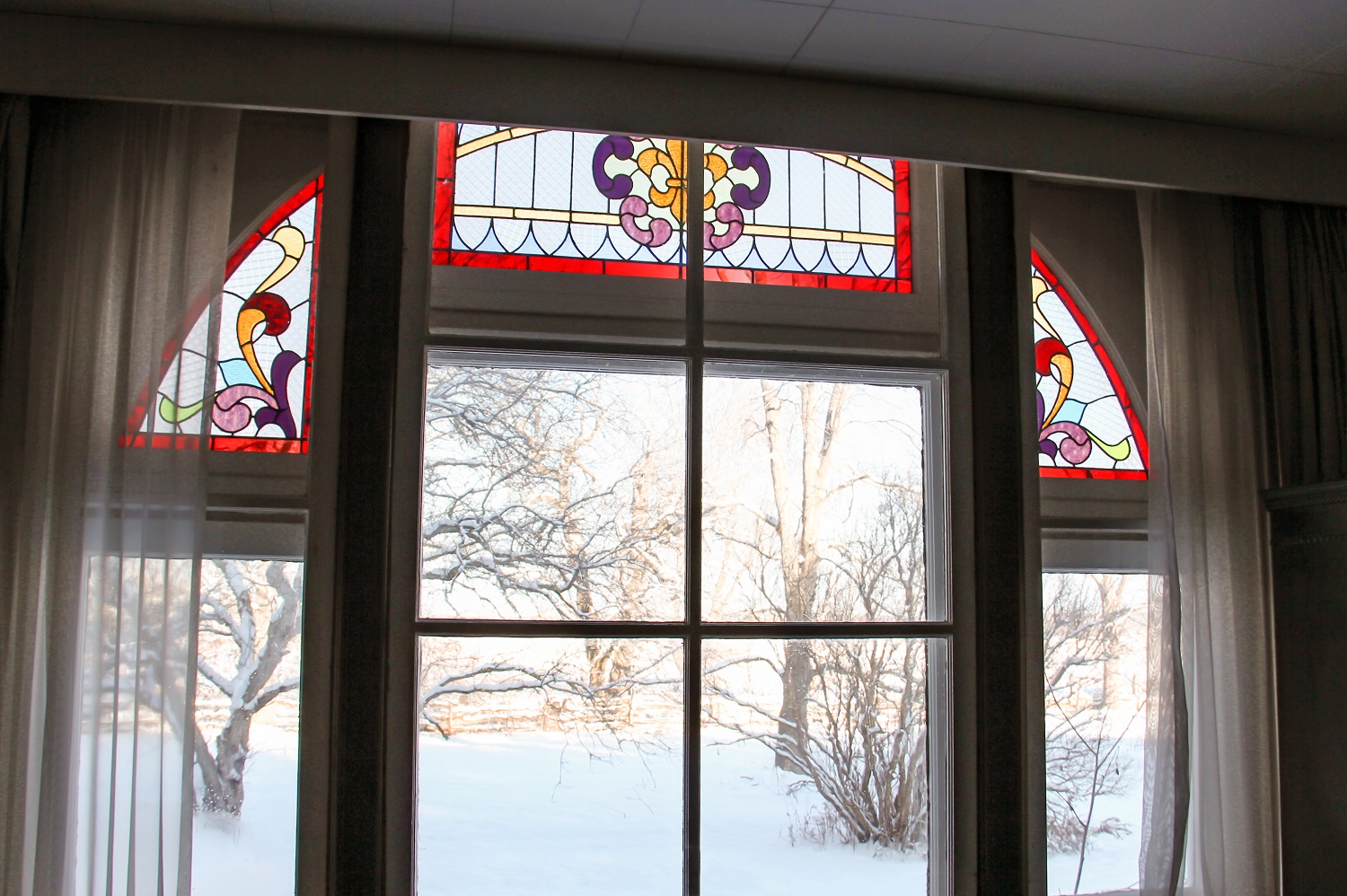
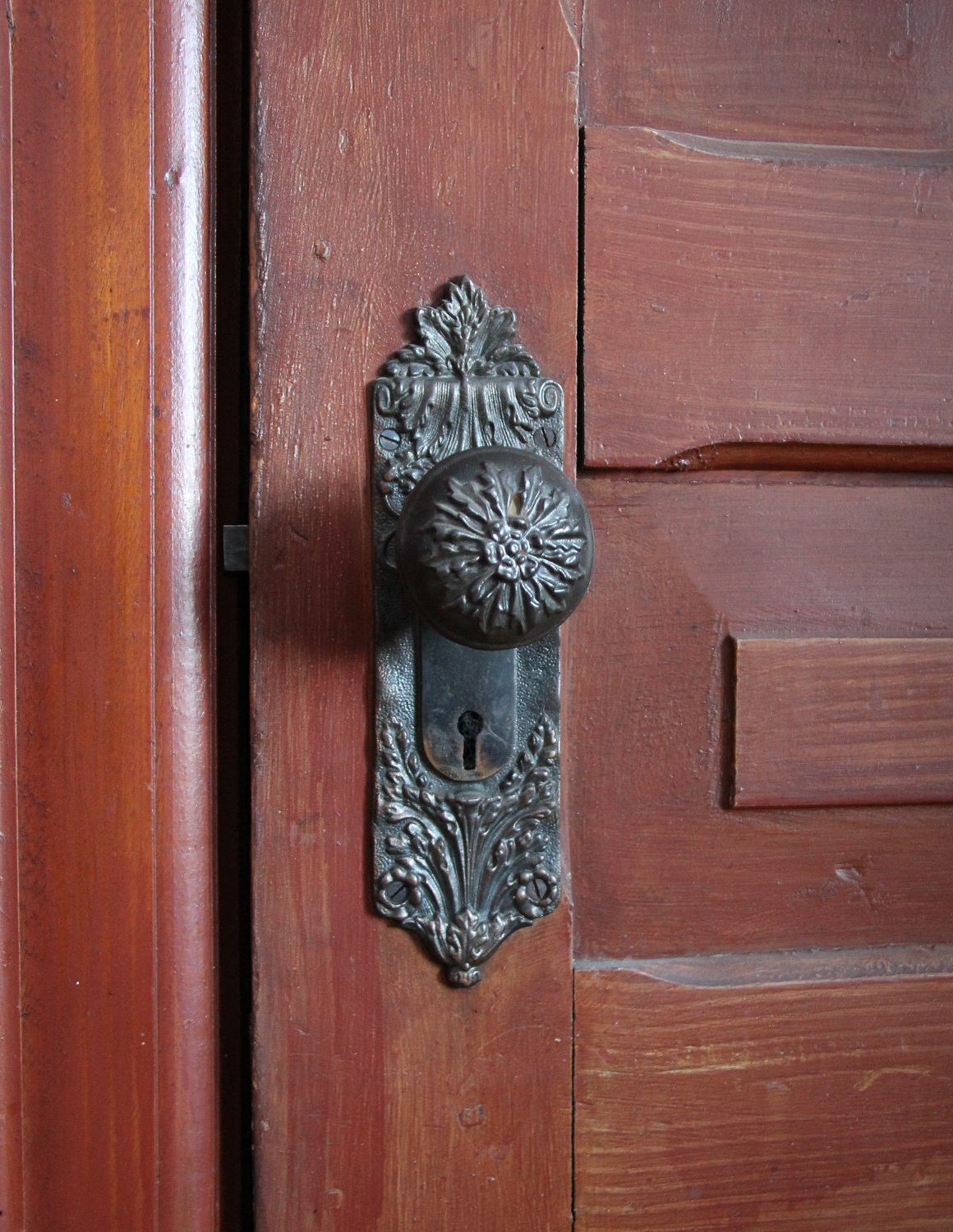
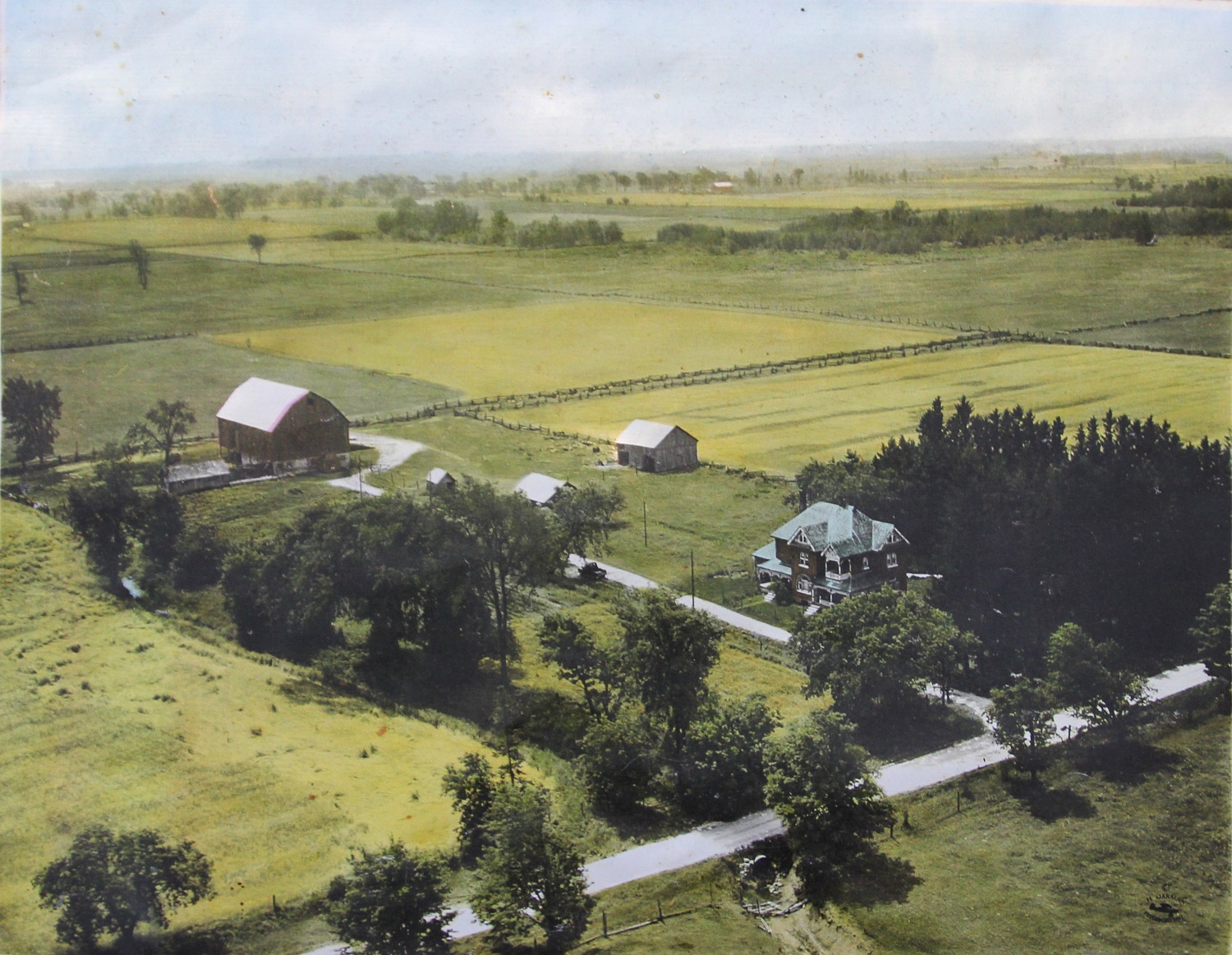
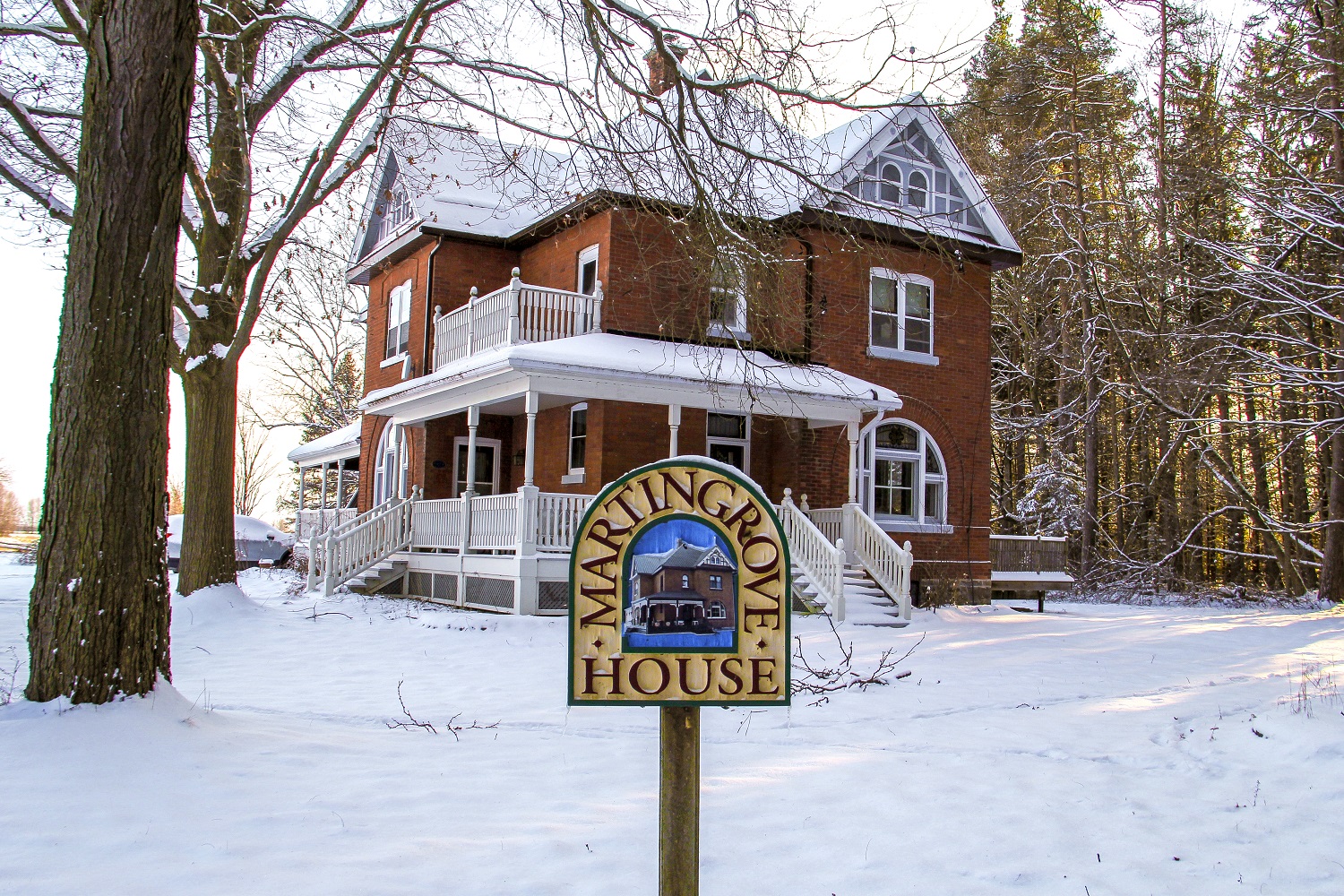
The home displays unique architectural features including corbelling brick work around the foundation, uniquely shaped attic windows, detailed brick work, and transom windows above the doors. In a beautiful agricultural area, Joseph and Harold planted the wind break of evergreen trees along the north and west edges of the property, thus keeping the house sheltered from the stormy winters.
Exterior Features:
- Portions of the brick finish including the corbelling rows and detail around the windows
- Parlour window
- Uniquely shaped attic window
- Original lightning rods
- Exterior wood trim
Interior Details:
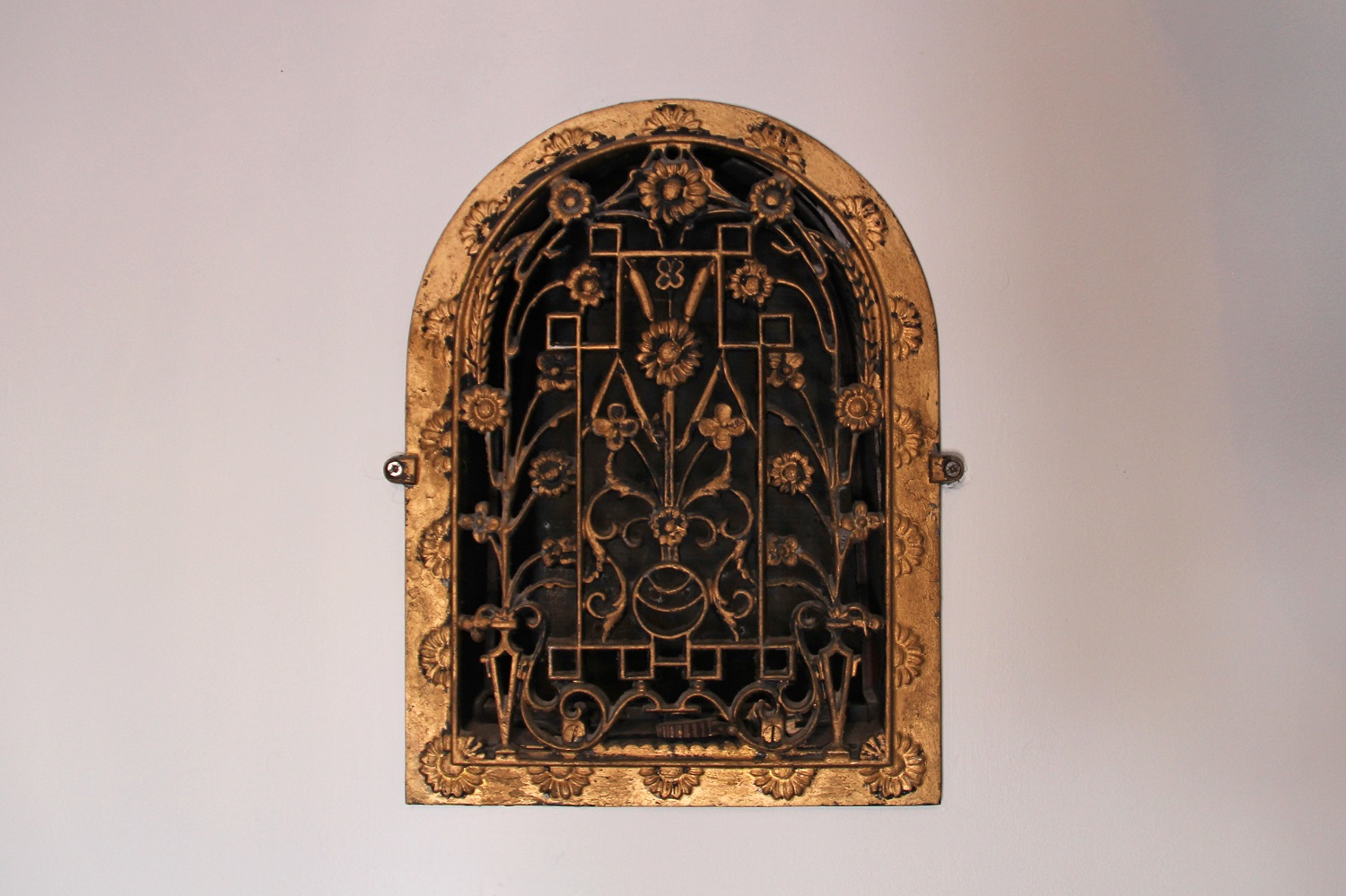
- Original heating vent covers
- Transom windows over bedroom doors
- Wood worked trims and door frames
- Door hardware;
- Stairways
- Unusual placing of door in upper hallway
Parker House
Date of Official Heritage Designation: October 18, 1999 as per By-law 99-117
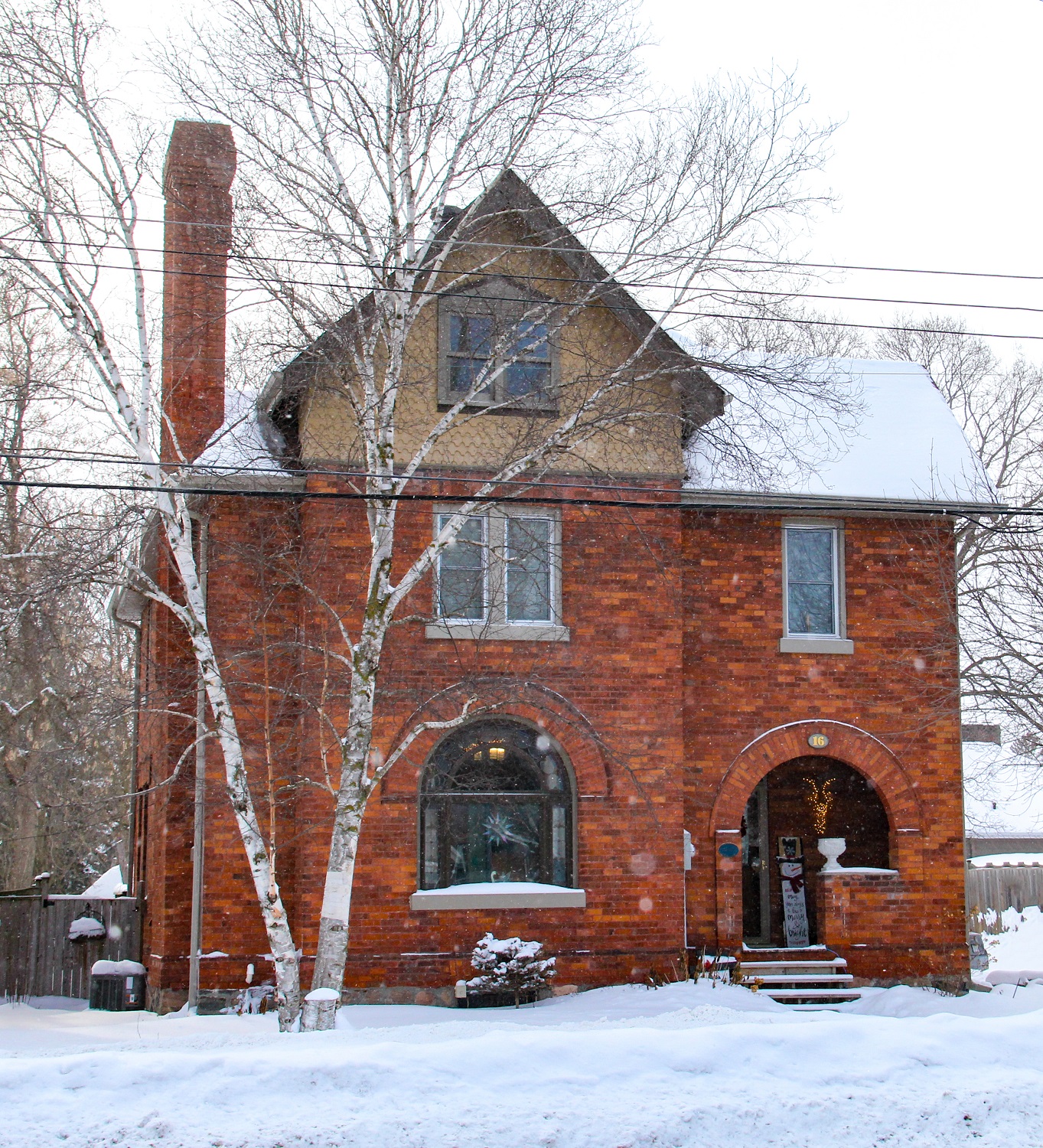
The Parker House, located at 16 Yonge Street South in Elmvale, was built in 1899 for Albert Parker and his wife Jennie (nee Drysdale). The Parkers likely built the house as a showplace. Albert Parker was a stone and brick mason who became well known for building fine brick homes in the Elmvale/Flos area at the turn of the century. The Parkers purchased the vacant lot where the Parker House now stands in the year of their marriage, 1897. His wife Jennie was the daughter of James Drysdale and Mary Ritchie.
The Parker House is constructed of solid brick supplied by Thomas McGrath of Saurin (24,000 bricks at $7.00 per thousand). The carpenter is not known, but can be tentatively attributed to John R. Graham of Elmvale. The architect was very probably Smith & Bird of Barrie.
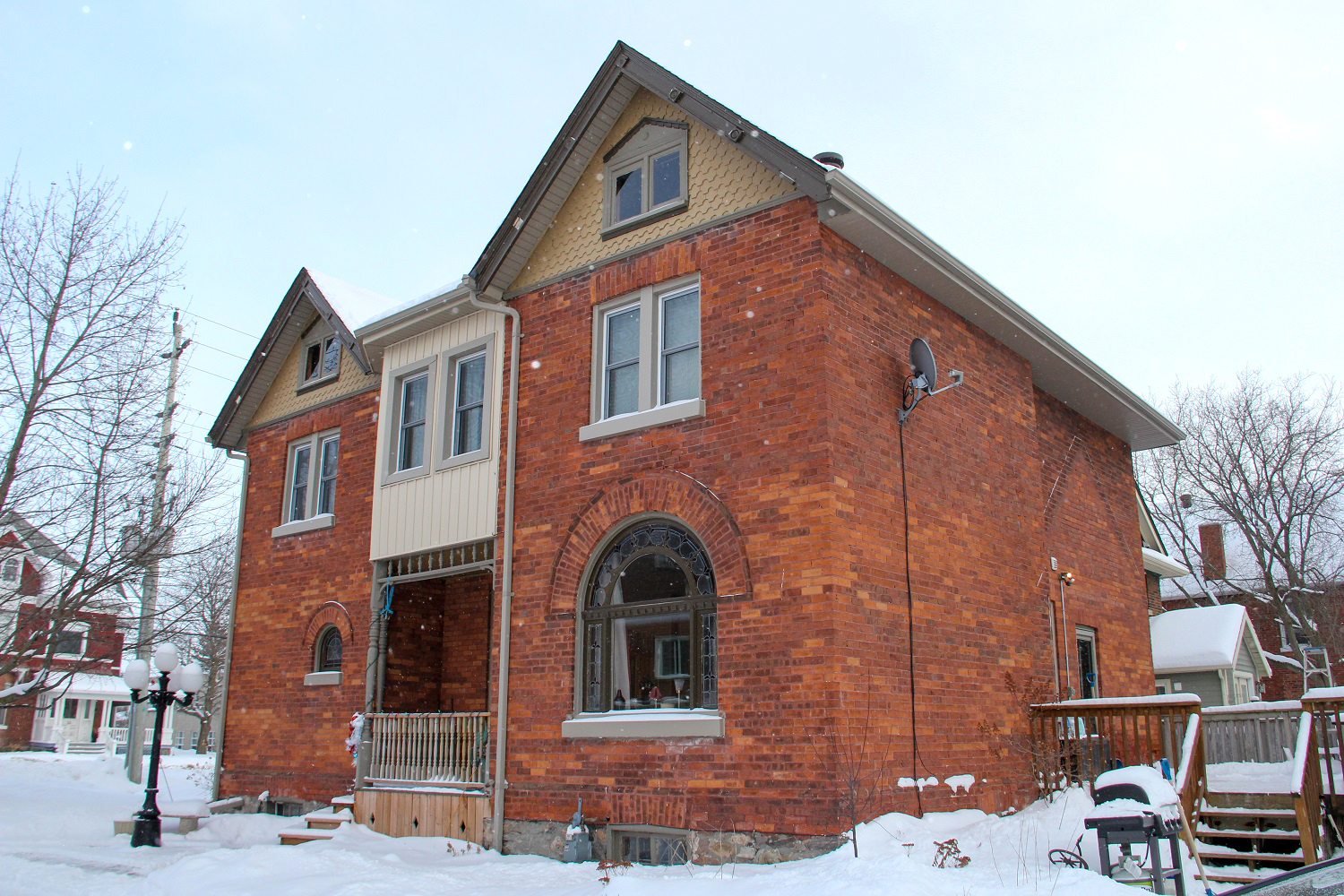
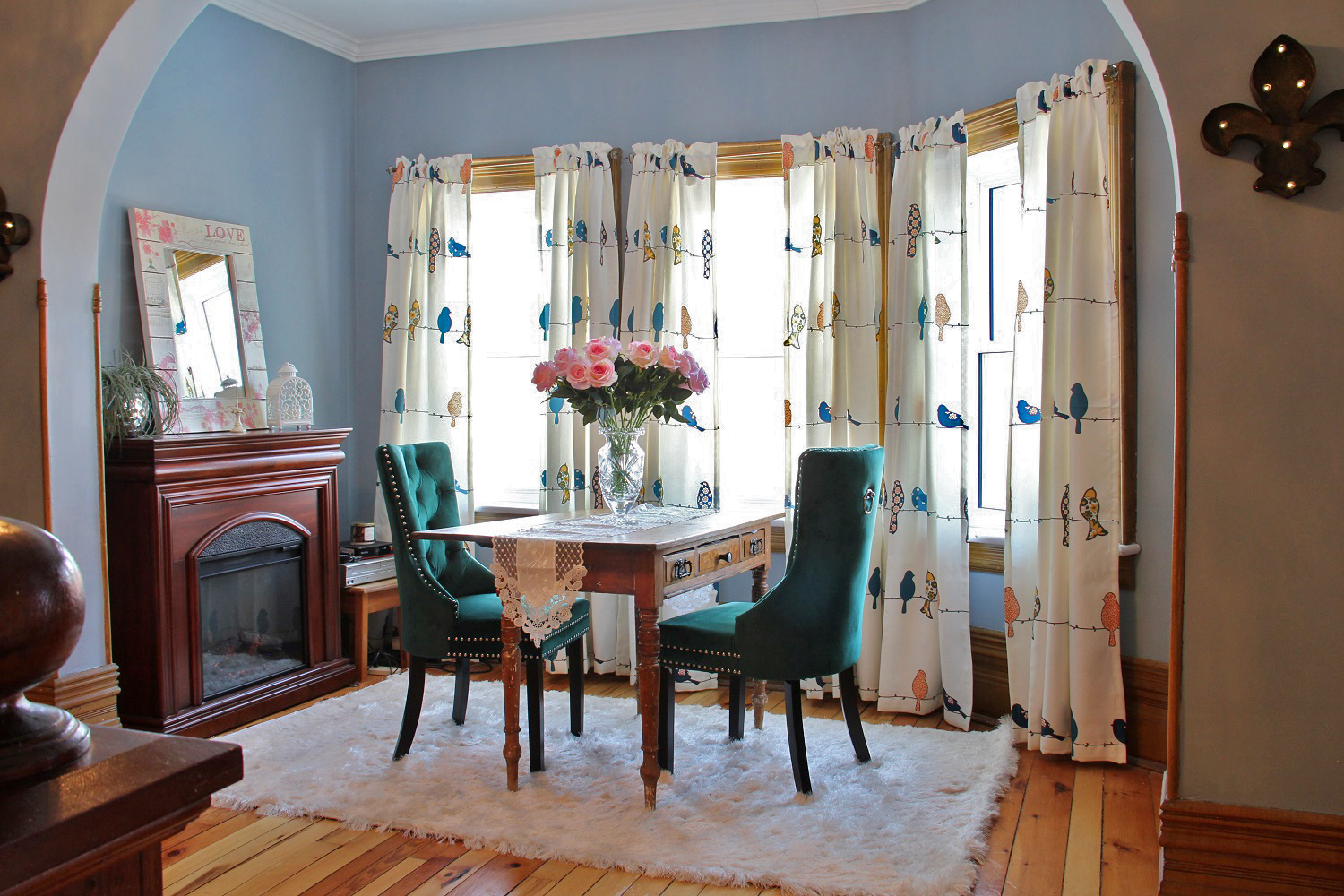
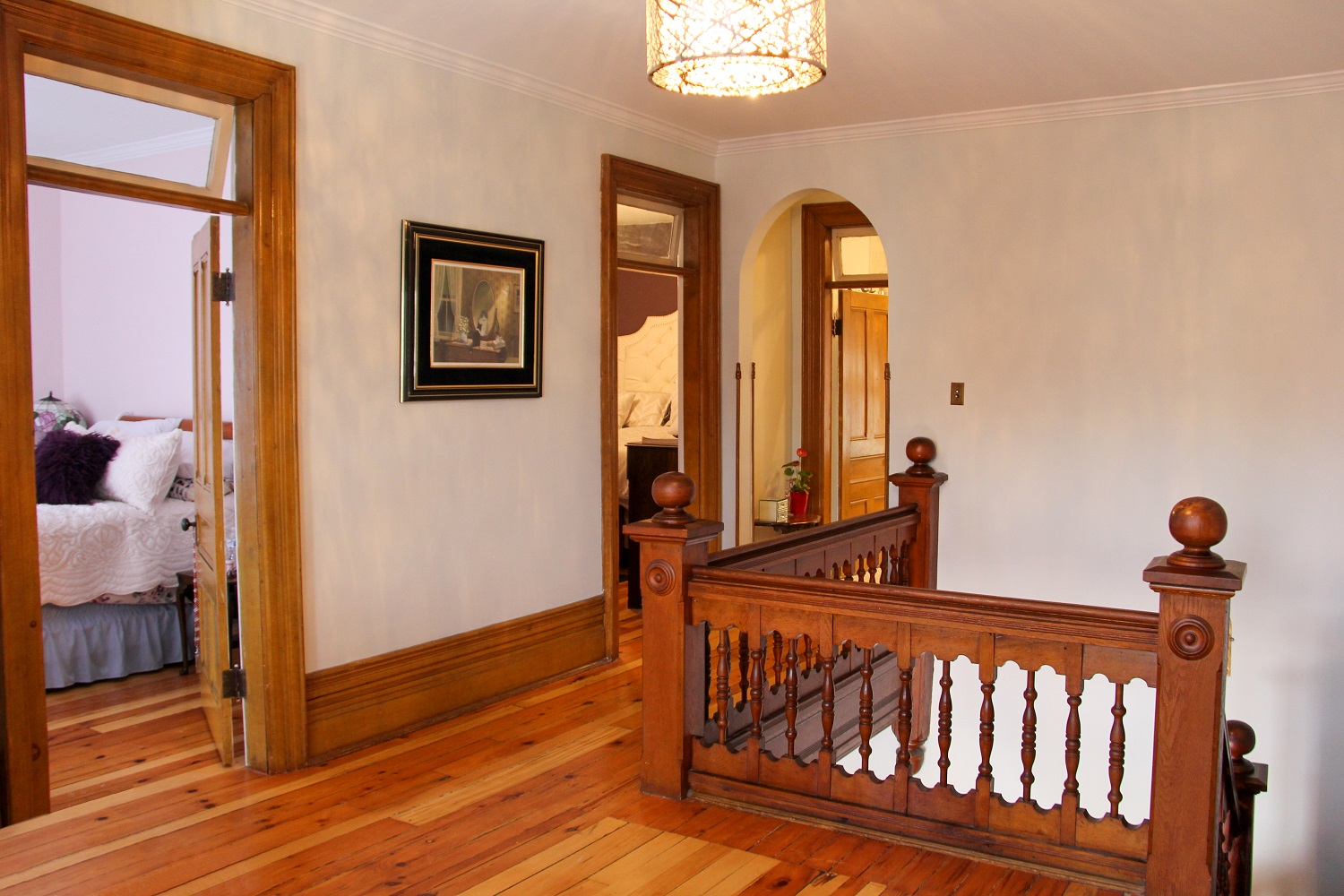
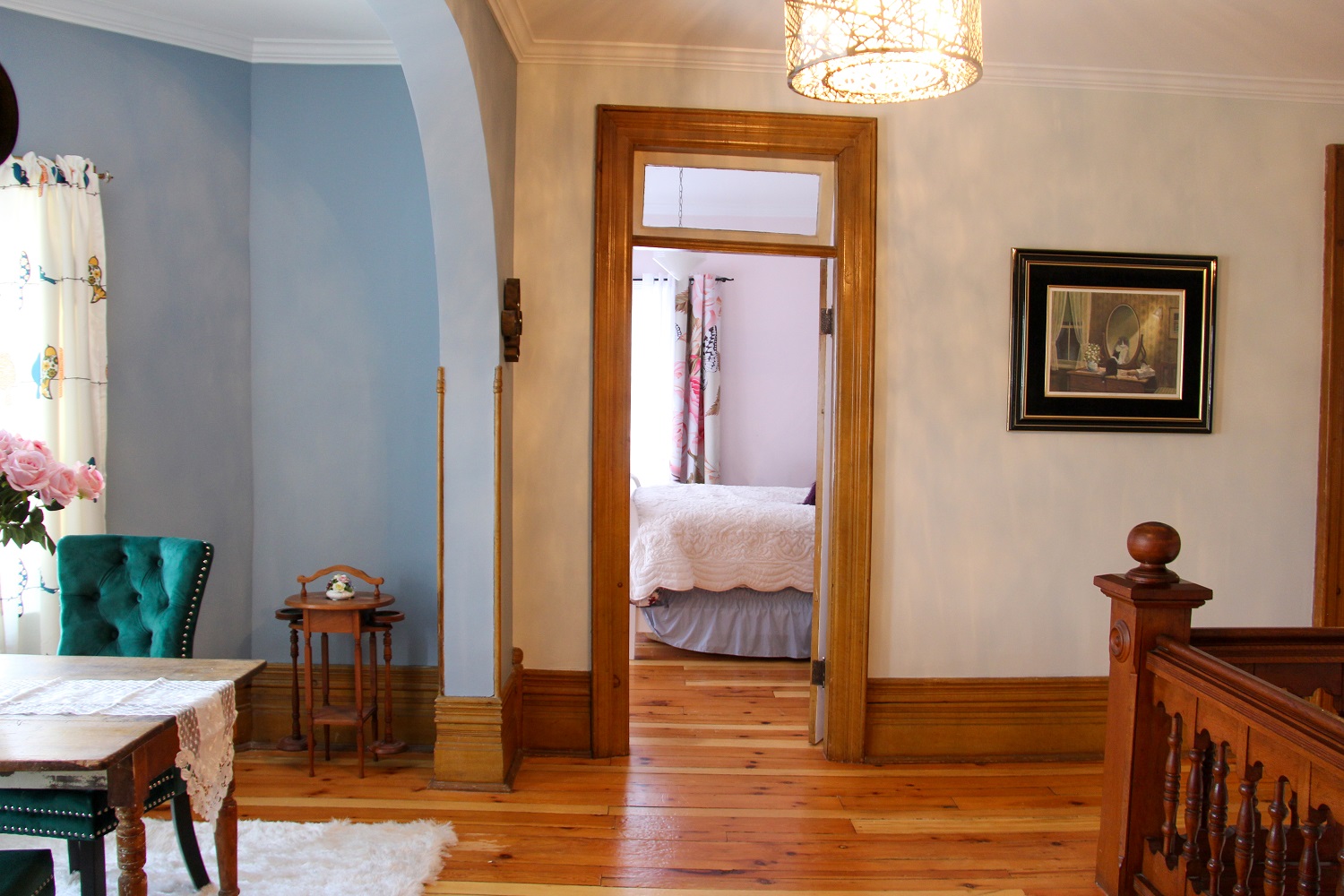
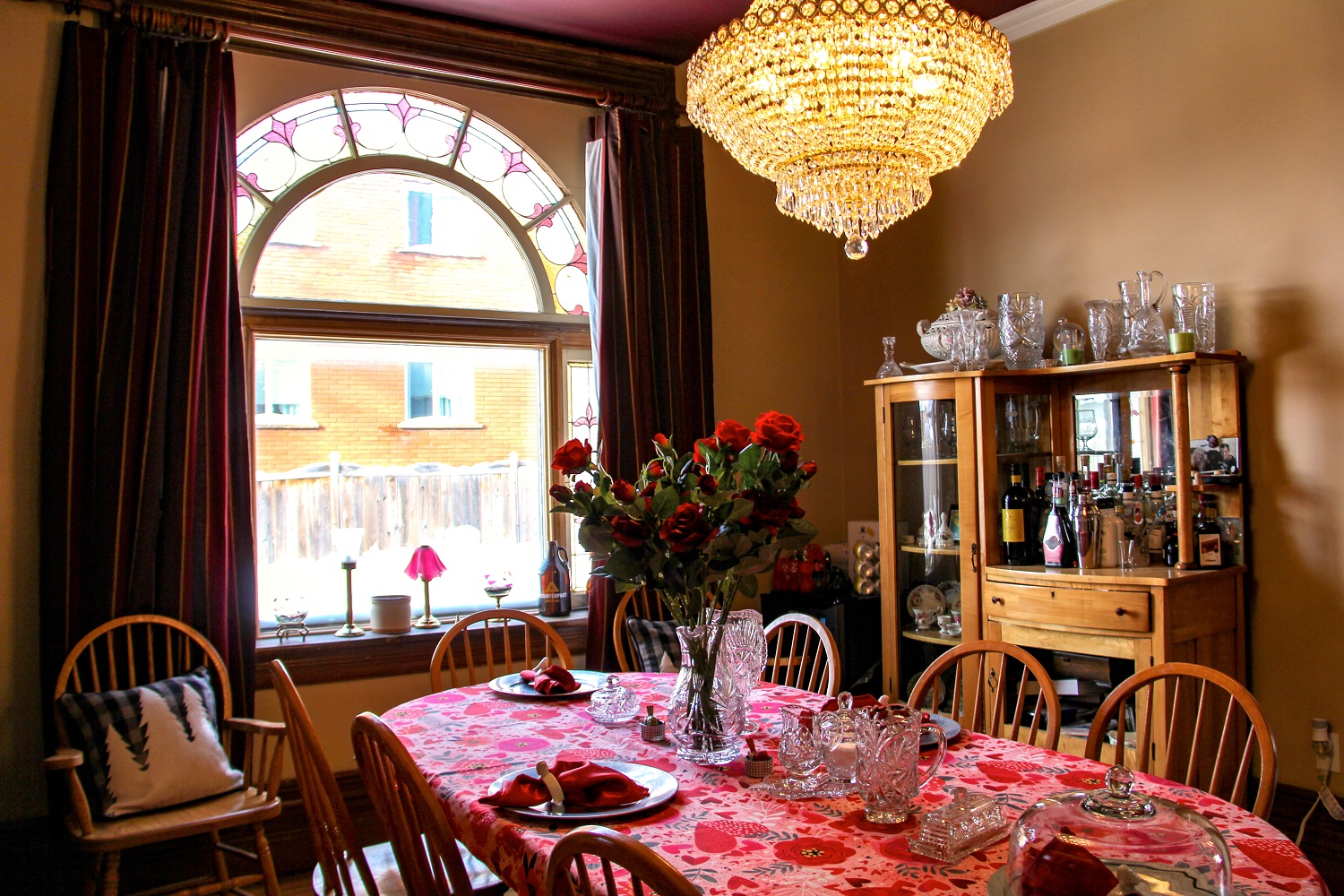
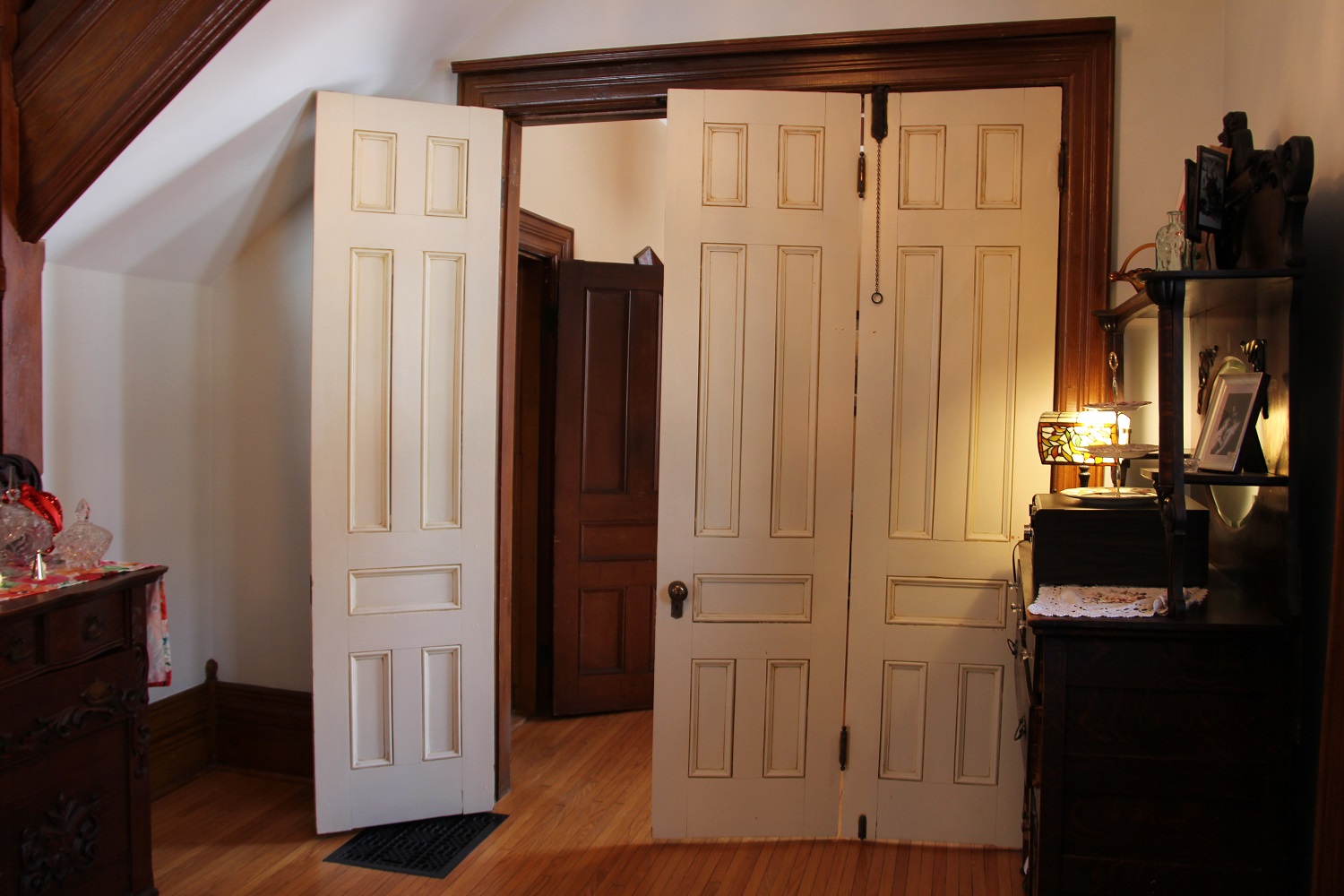
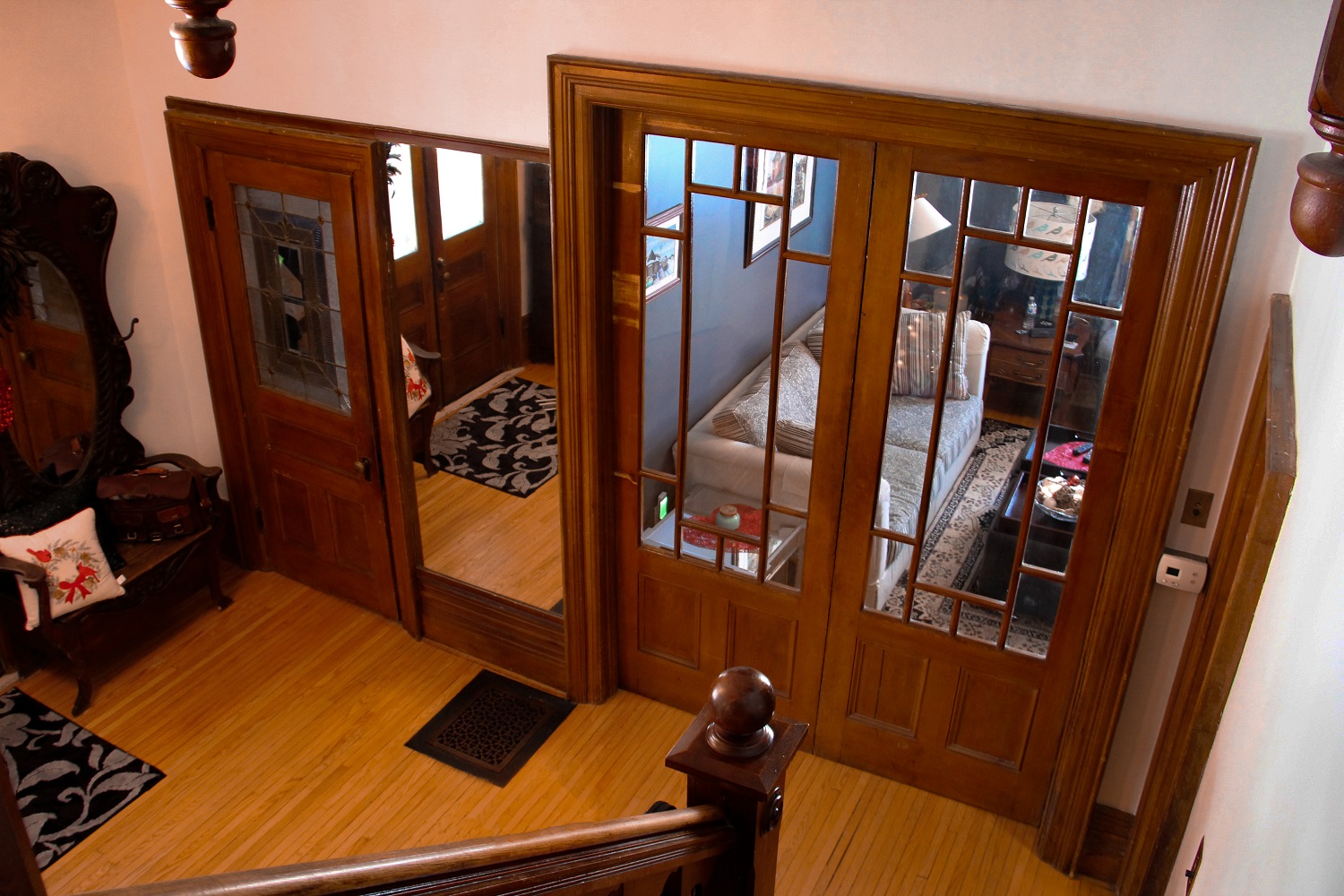
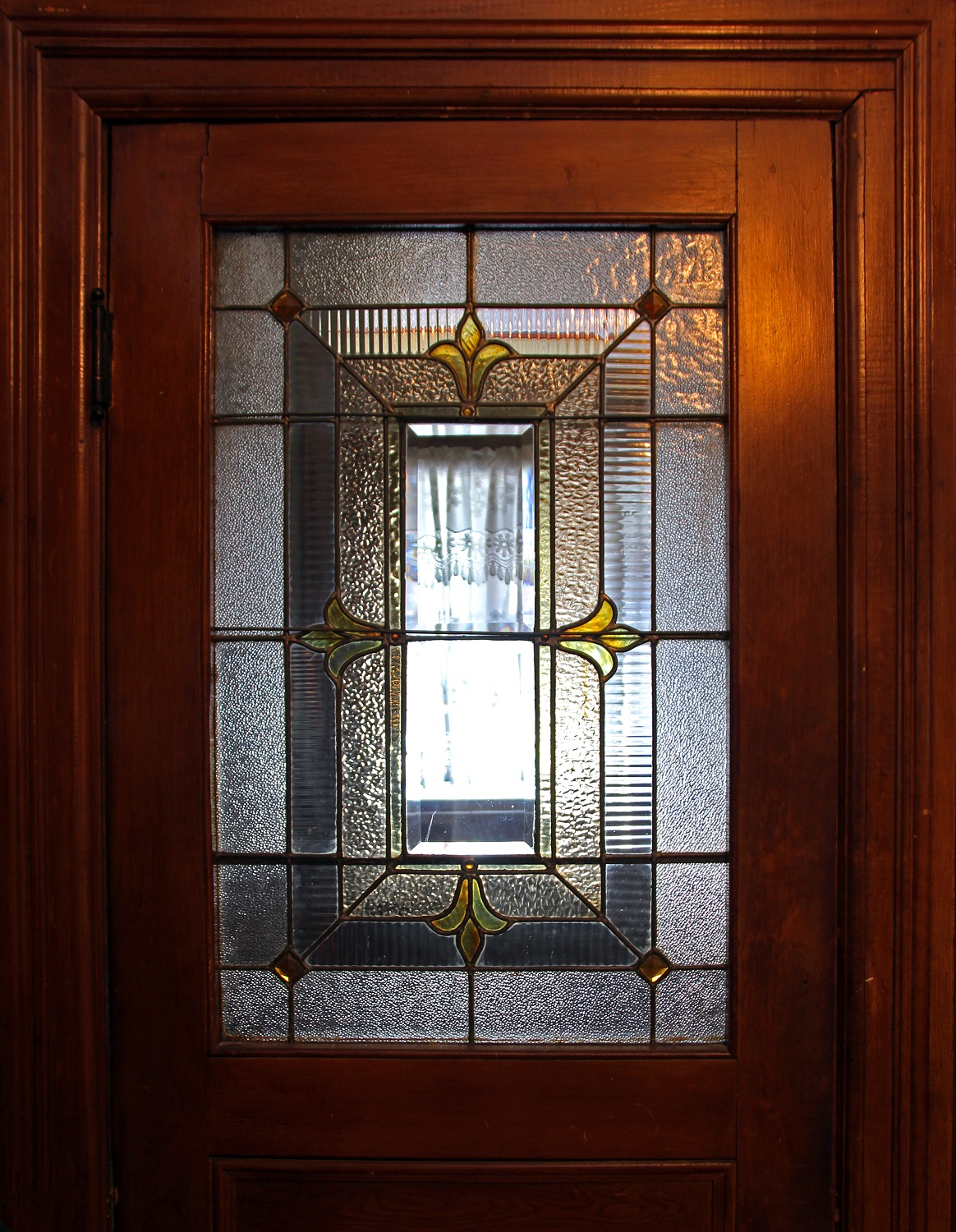
In 1902, the house was conveyed to Isabella (nee Thompson) Preston-Presney, who at the same time, purchased adjoining Block C with the wagon shop. Not long after, the shop was moved from Block C to the rear of Block D to be used as a stable in connection with the Parker House. The shop remained there until it was moved to another location in about 1981.
Isabella and her husband William Presney-Preston retired to the Parker House. In 1904, the Prestons had the brick kitchen added to the Parker House. The large double lot was developed into lawns and gardens.
After the couple passed away, the house was owned by their widowed daughter Minnie (Mrs. Albert) Chesley and later transferred to her sister Violet (Letty) who had married William Drysdale at Willow Bank in 1898. After the Drysdales died in 1961, the house was left to their son Earl. Ten years later, Earl Drysdale sold Block C, reserving an easement, and an apartment building was built where the wagon shop had once been.
Upon his death, the house passed to his cousin Isobel (daughter of William and Isabella Preston's son Charles). Miss Preston took great care of the house, which contained most of her grandparents original furnishings. She was careful to preserve the historic character of the house, in particular, during the rebuilding of the chimney by John and Peter Tinney. After her death, the house was bequeathed to her nephew and a short time thereafter was sold to David and Anne Robbins in 1999.
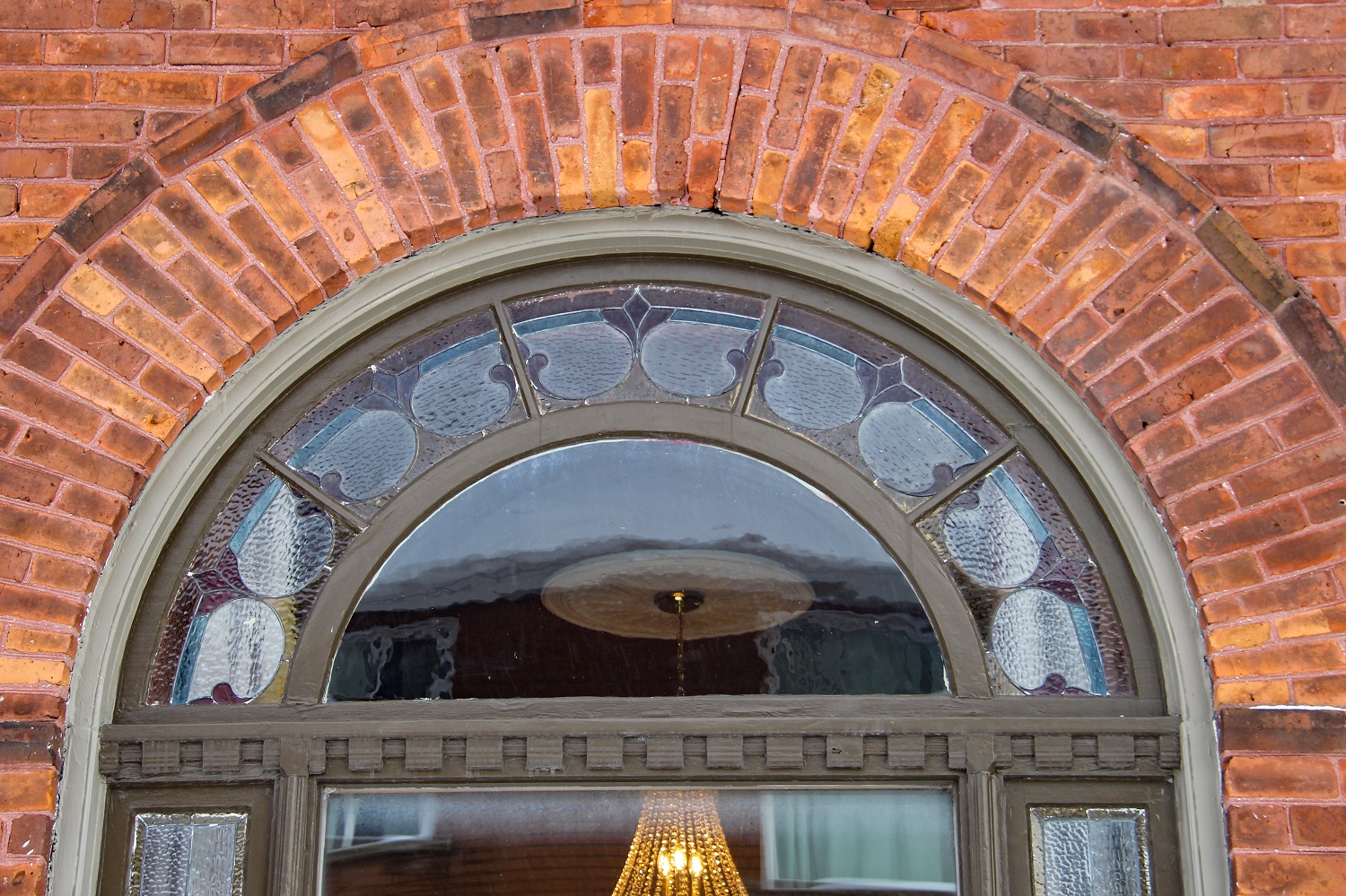
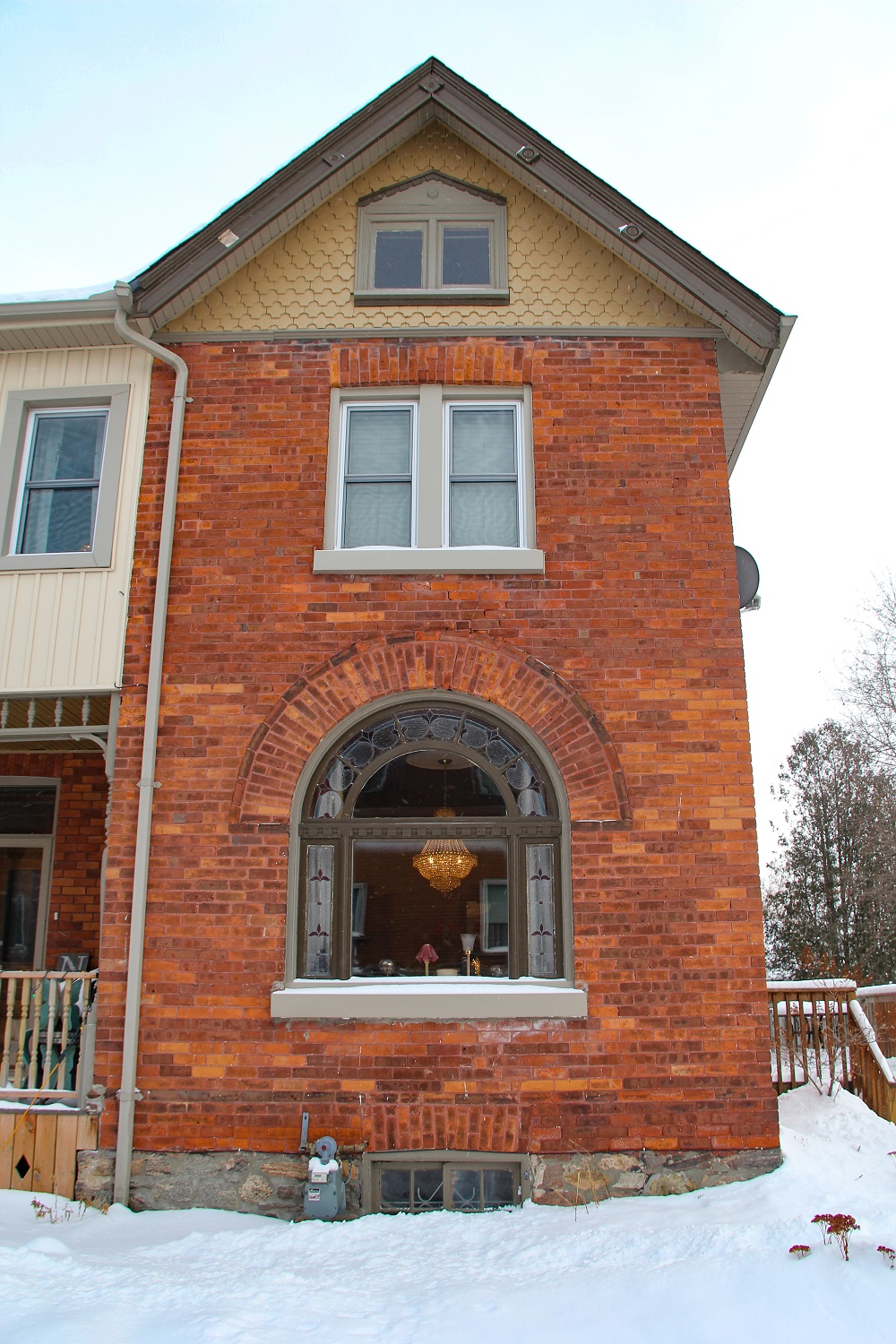
- Use of arches throughout including exterior brickwork at front entrance
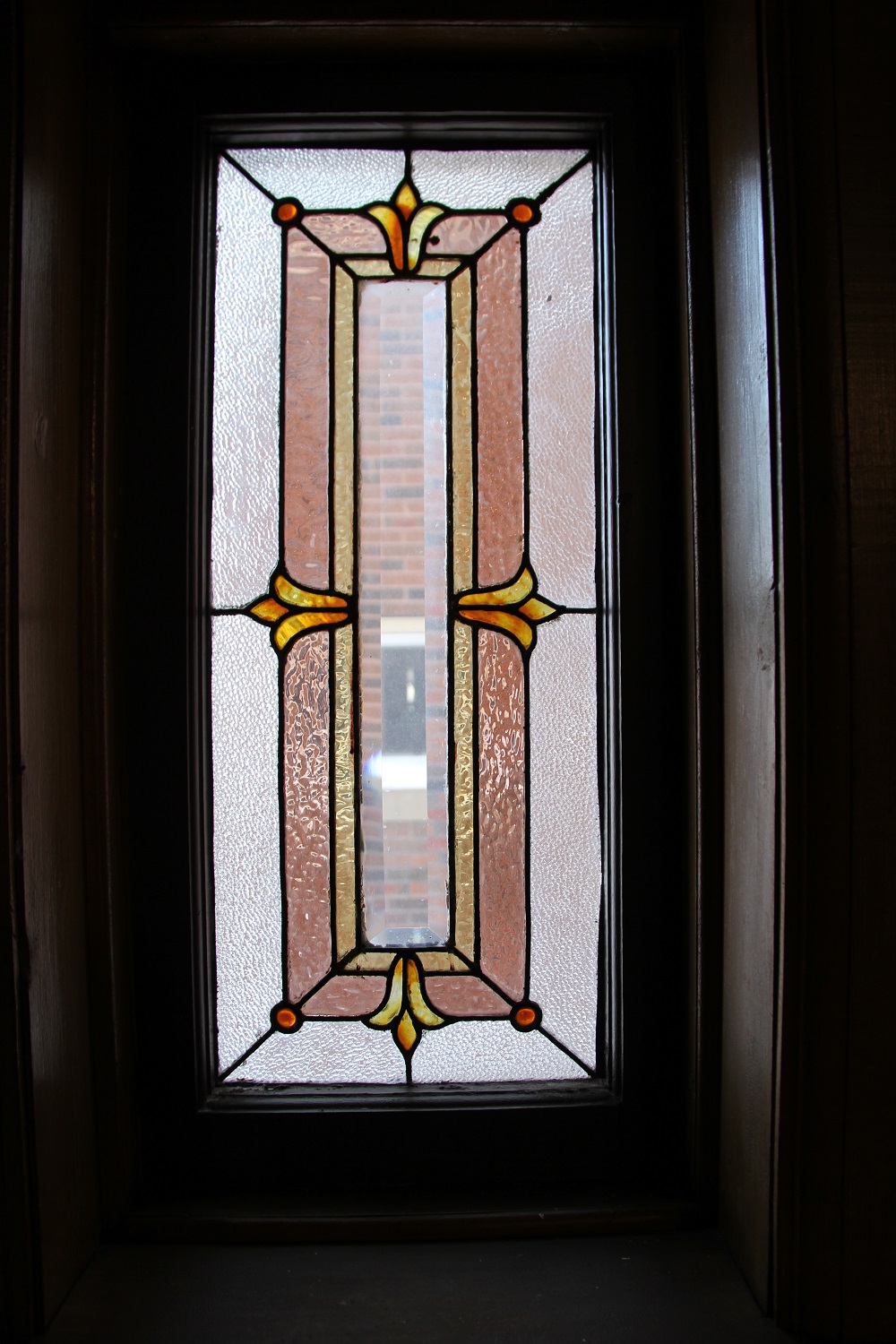
- Stained glass windows in front living room, dining room and entranceway alcove
- Faux arches above windows
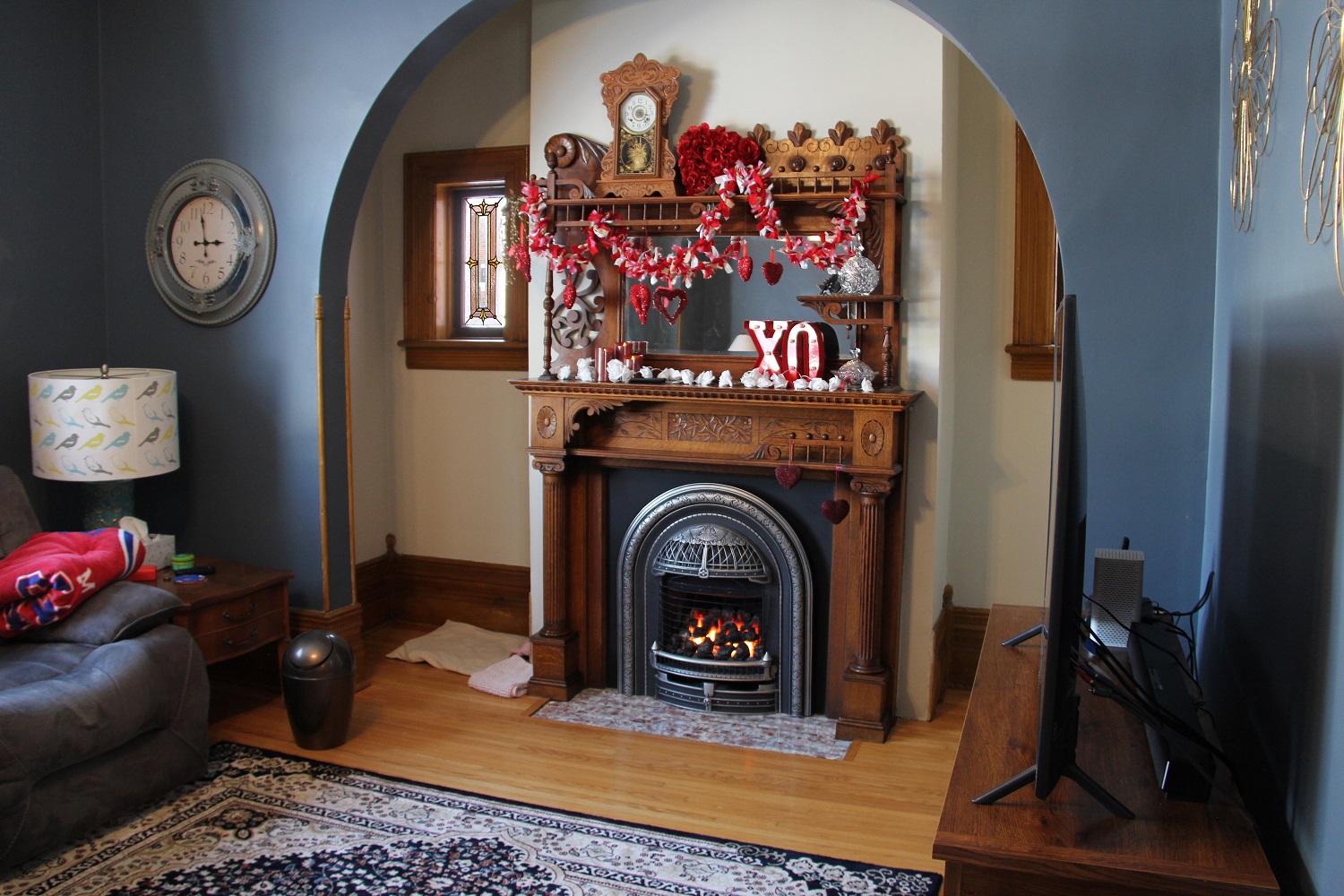
- Recessed alcove over the fireplace and both the upper and lower alcoves
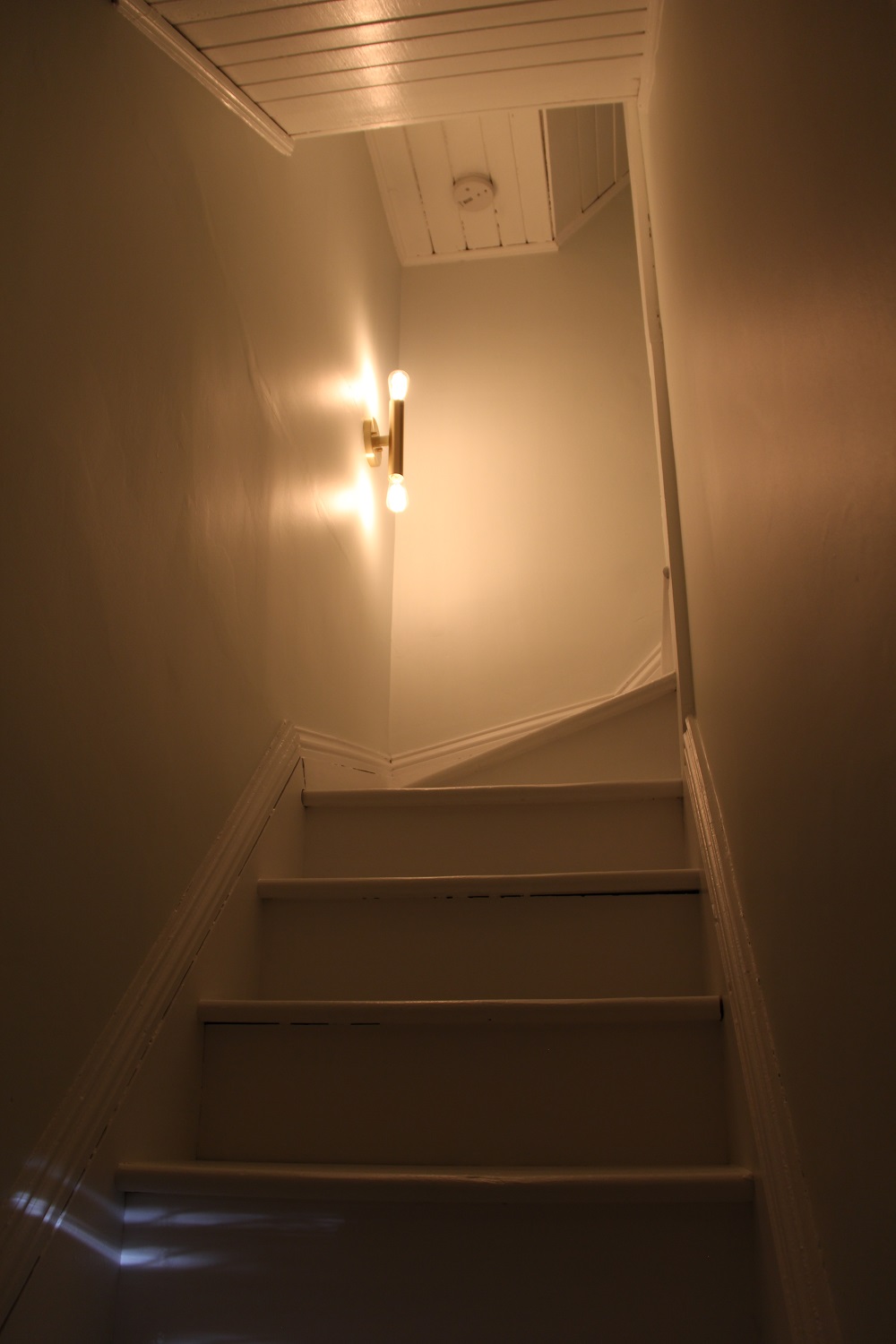
- Original central box hall layout, including original room layout for the front entranceway, central box hall, front living room, dining room and upper hall as well as the building perimeter plan on the north, south and east sides
- Location, size and designs of the doors and windows
- Pocket doors leading to the front living room and movable transoms on upper level
- Interior wood trim, including asymmetrical carved fireplace mantle, central staircase, original baseboard, wooden floors, mouldings and doors including unique crown mouldings, corner blocks and dados
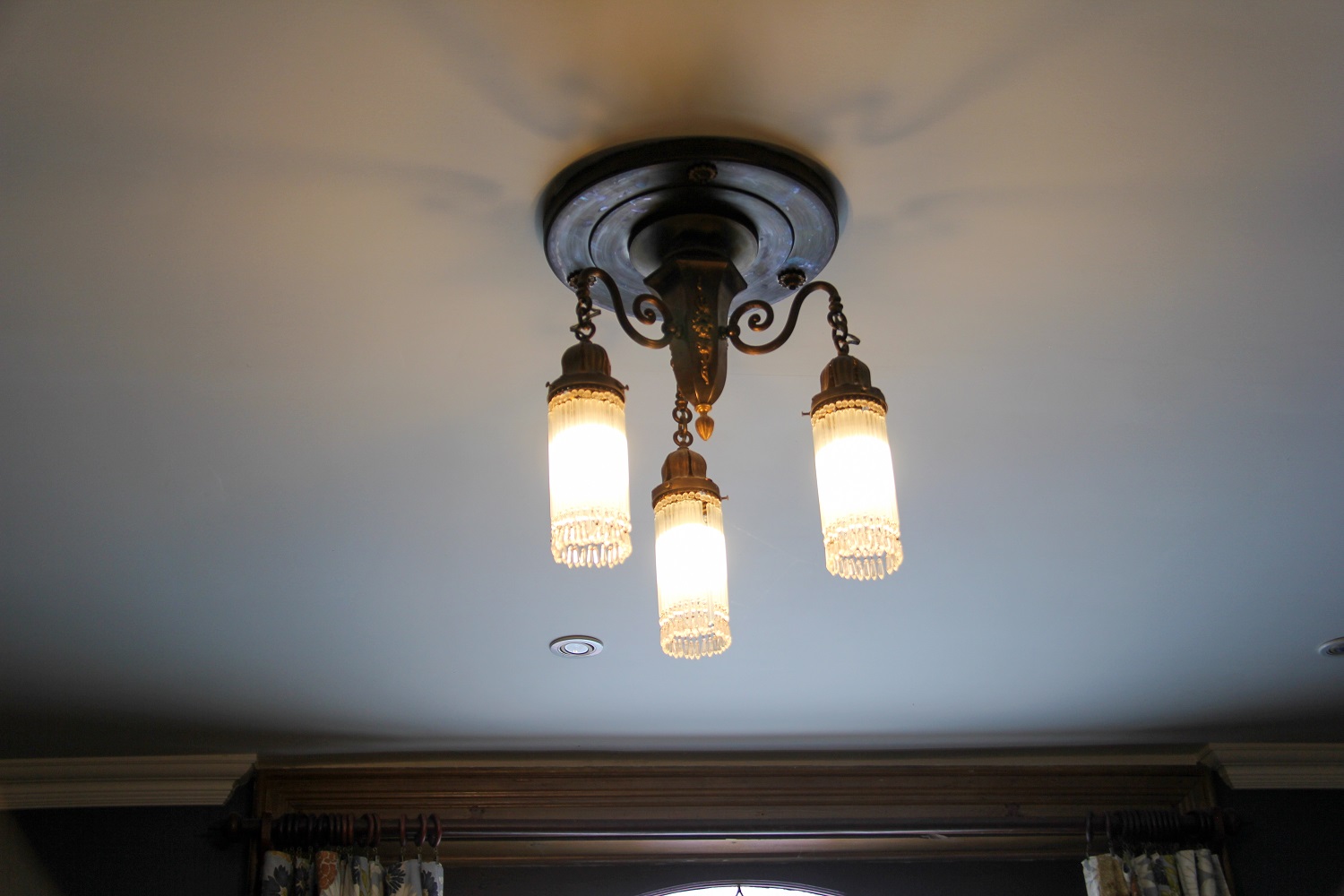
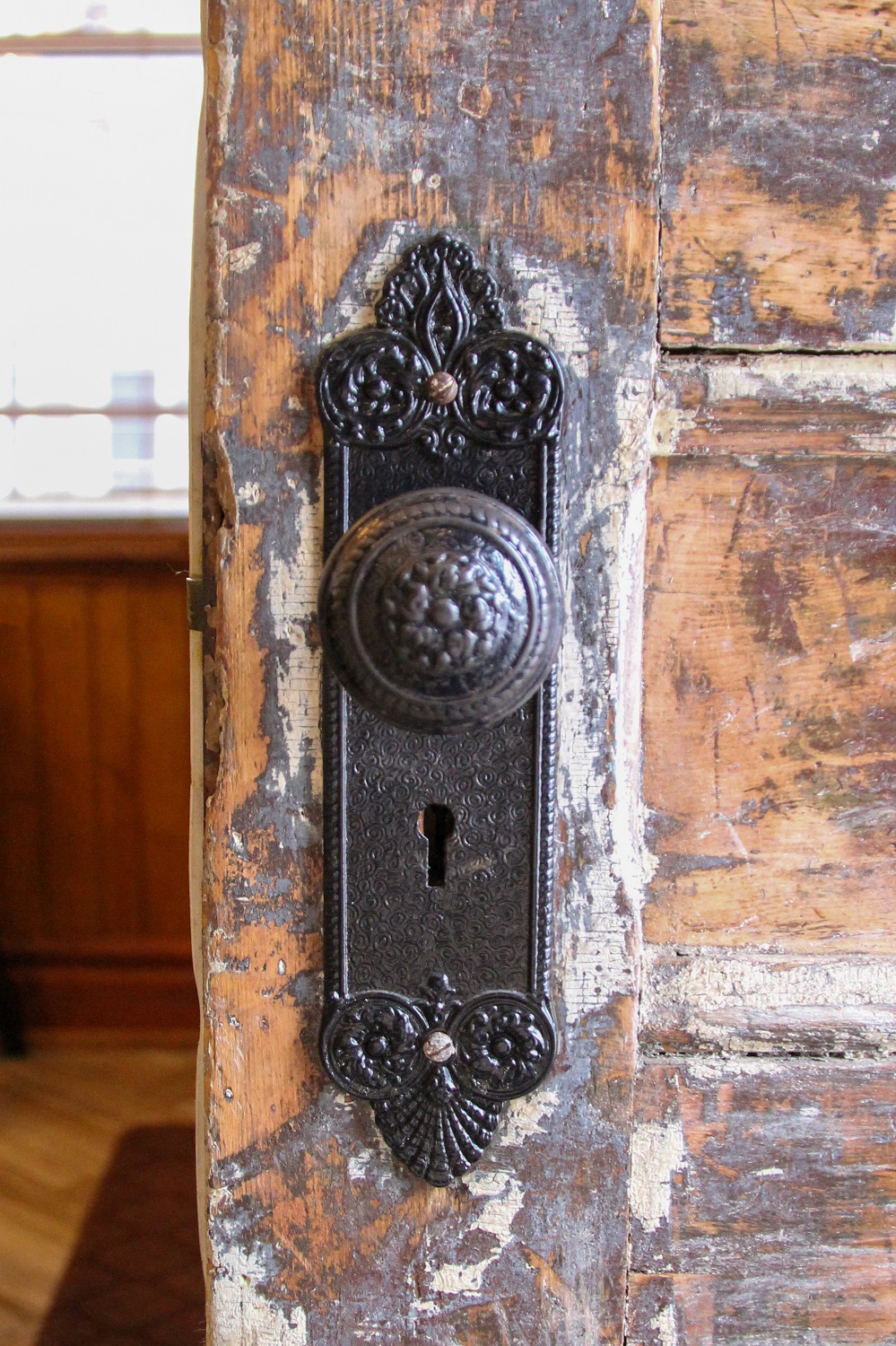
- Original door latches, hinges, switch plates and register grates
- Exterior unpainted brick finish and the accompanying wood trim as well as the side porches (upper and lower) on the north side
- Unobstructed view of eastern, northern and southern sides to maintain the building form and envelope
- Roofline and chimneys, including the detailed brickwork on the south side
Q&A with Property Owner Linda Minduik
Q. How long have you owned your property?
I bought the property in 2008; the closing date was July 31, 2008.
Q. What is your favourite thing about owning a heritage property?
I think the house itself is what I fell in LOVE with. It's so grand and has so much character in every space. It is definitely not a cookie cutter build—it is one of a kind. The size of each room was large and I was moving from a house that was open concept, so I needed lots of space in each area. It was so nice from the outside and I could not wait to see the inside when I booked a showing. I LOVE old things, so much history! Honestly, I like the fact that the Heritage Advisory Committee checks on the house annually to make sure we are maintaining all the wonderful features. It gives me an opportunity to meet more members of this wonderful small town.
Q. What drew you to this type of property?
I am from a small town and worked at RVH thus the location was great! The important necessities such as schools and grocery store all with walking distance was a big plus for me. I honestly, LOVED the look of the house! It was almost Love at first sight.
Anten Mills Community Centre
Date of Official Heritage Designation: June 2, 2021 as per By-law 2021-058
The Anten Mills Community Centre is located at 3985 Horseshoe Valley Road West, in the former Township of Vespra. It was originally built in 1882, as a one room school house to educate children in the village. With much of its historical characteristics still in place and evident, the Township of Springwater designated the structure a historic site in 2021.
The school ceased to operate in 1968 as the children of the community were bussed to Minesing to attend school there. In the fall of 1971, it was suggested by a new resident that there should be a rink for the children of the community to skate on. A meeting of 18 local interested people took place on October 17, 1971 in the schoolhouse which had been temporarily reopened. The then Township of Vespra encouraged local residents to form a community association and on October 27, 1971, the first executive was selected. In November 1972, the Simcoe County Board of Education officially conveyed the land and the school to the Township of Vespra for the purpose of using it as a community centre.
Since that time, the community association has actively supported recreation and social events and activities in the community. The original ice rink was later transformed into a multi-use pad with a rink house. A baseball diamond was built, swings and slides were installed and a major addition was added to the original schoolhouse. To this day, the Anten Mills Community Centre remains a place where residents and neighbours gather and celebrate throughout the year.
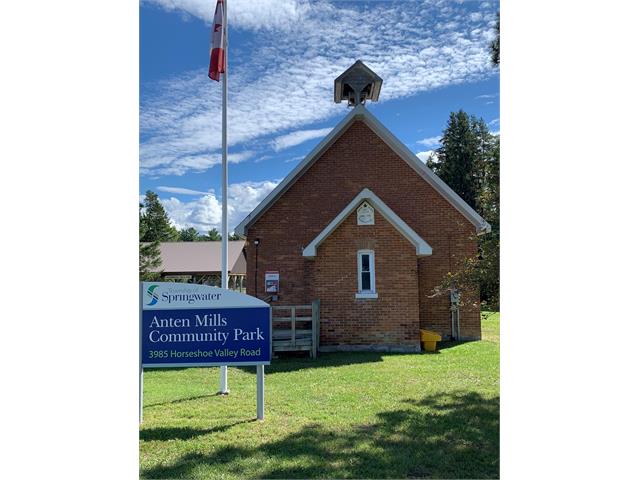
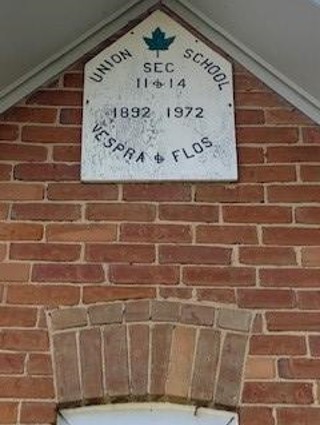
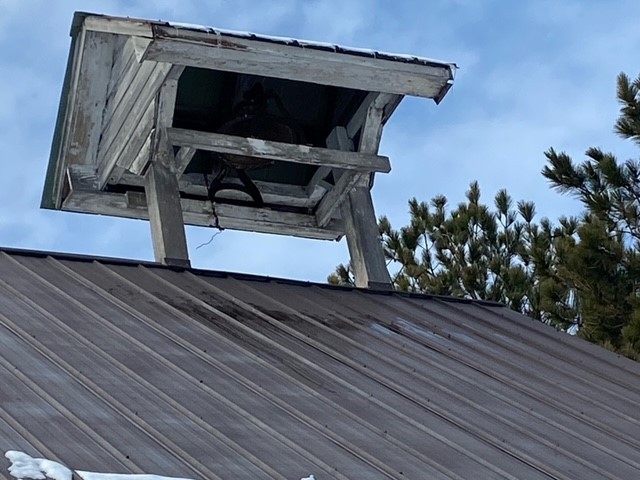
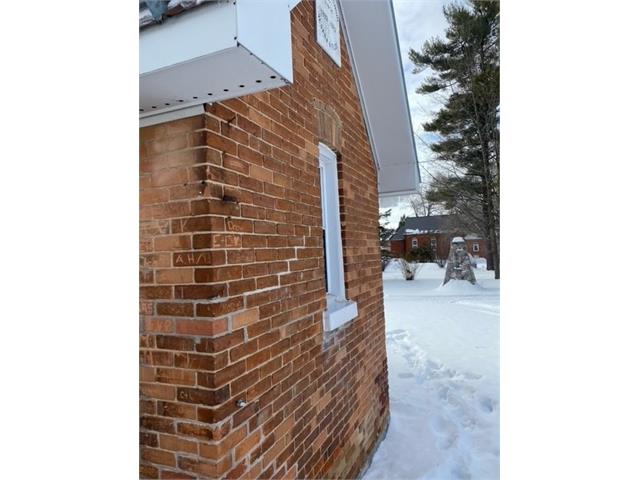
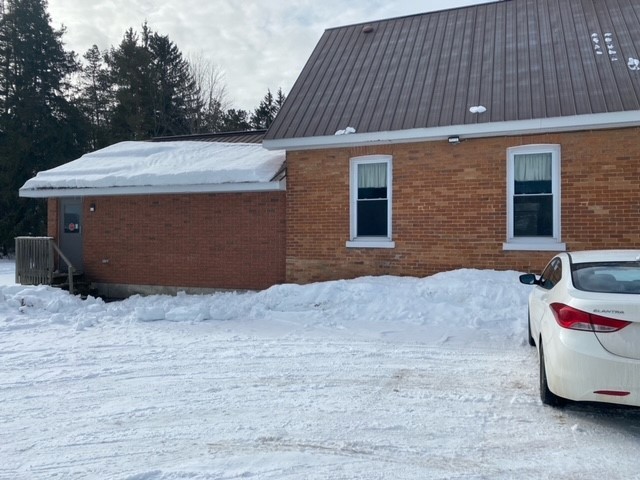
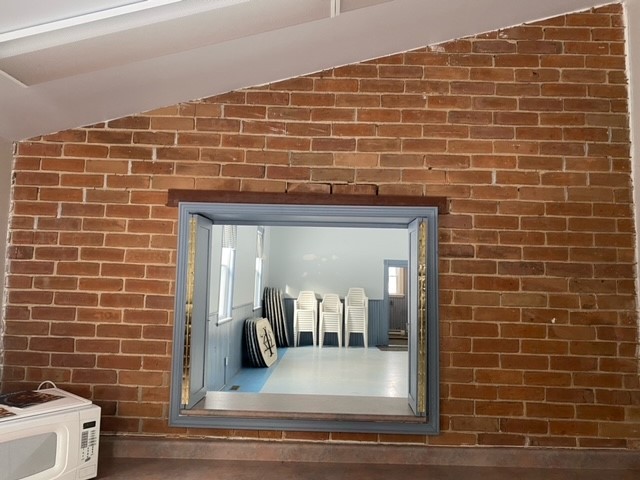
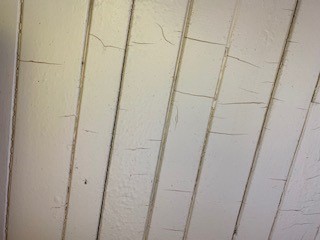
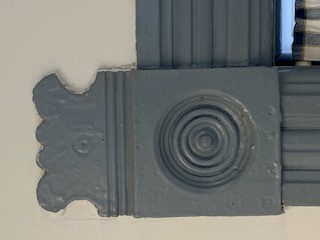
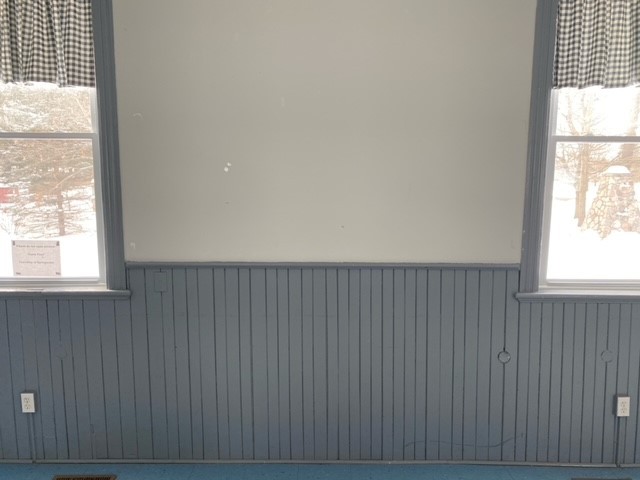
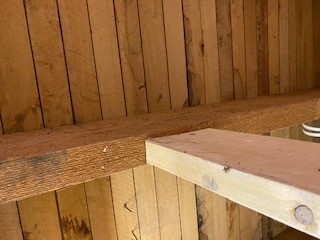
The principal features and characteristics that together characterize the core heritage values of the Anten Mills Community Centre are:
• Anten Mills School Bell Tower
• Original exterior unpainted brick façade and finish
• Original wainscotting and window trim in original schoolhouse portion
• Exposed brick wall in the kitchen
• Original hardwood floor underneath the tile
• Original tongue and groove ceiling underneath the drop ceiling
Hillsdale Lock-up
Date of Official Heritage Designation: February 5, 2021, per By-law 2001-007.
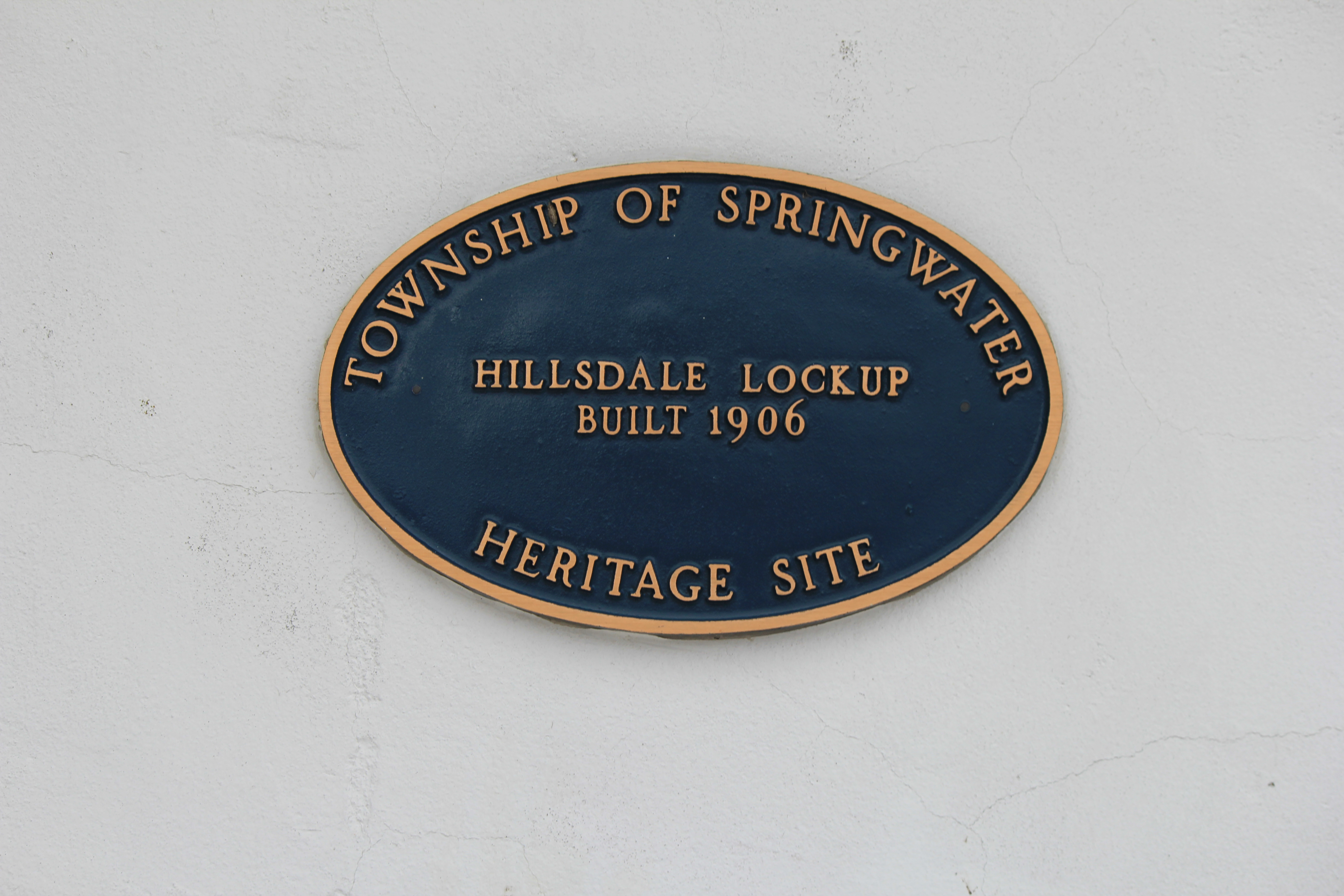
The Hillsdale Lock-up is located at 4552 Penetanguishene Road, Hillsdale. Constructed in 1906, this building initially served as a justice administration center and a temporary holding facility for offenders within the Medonte Township and Hillsdale jurisdictions. By the 1920s, it evolved into a vibrant community hub, functioning as a shelter for transients, a meeting venue, an electoral polling station, and a storage site.
In the mid‑19th century, Simcoe County’s first lock‑ups anchored a fledgling local justice system, doubling as short‑term jails and hubs for municipal business. On June 24, 1900, Simcoe County Council approved a $400 grant for a new lock‑up to be built in Hillsdale, Medonte Township. However, five years of Medonte Council inaction followed, chronicled by the Elmvale Lance’s complaints about the “long talked of Lock‑up” and its sidelined constable. The stalemate finally broke on December 15, 1905, when County By-law No. 812 made Hillsdale a self‑governing police village, reviving the project. A resolution in January 1906 promised the dormant grant would be released upon Medonte’s compliance with construction mandates, and on July 12, 1906, Medonte finally took action by paying William Campbell $200.00 to build the Lock-up, sparking community excitement.
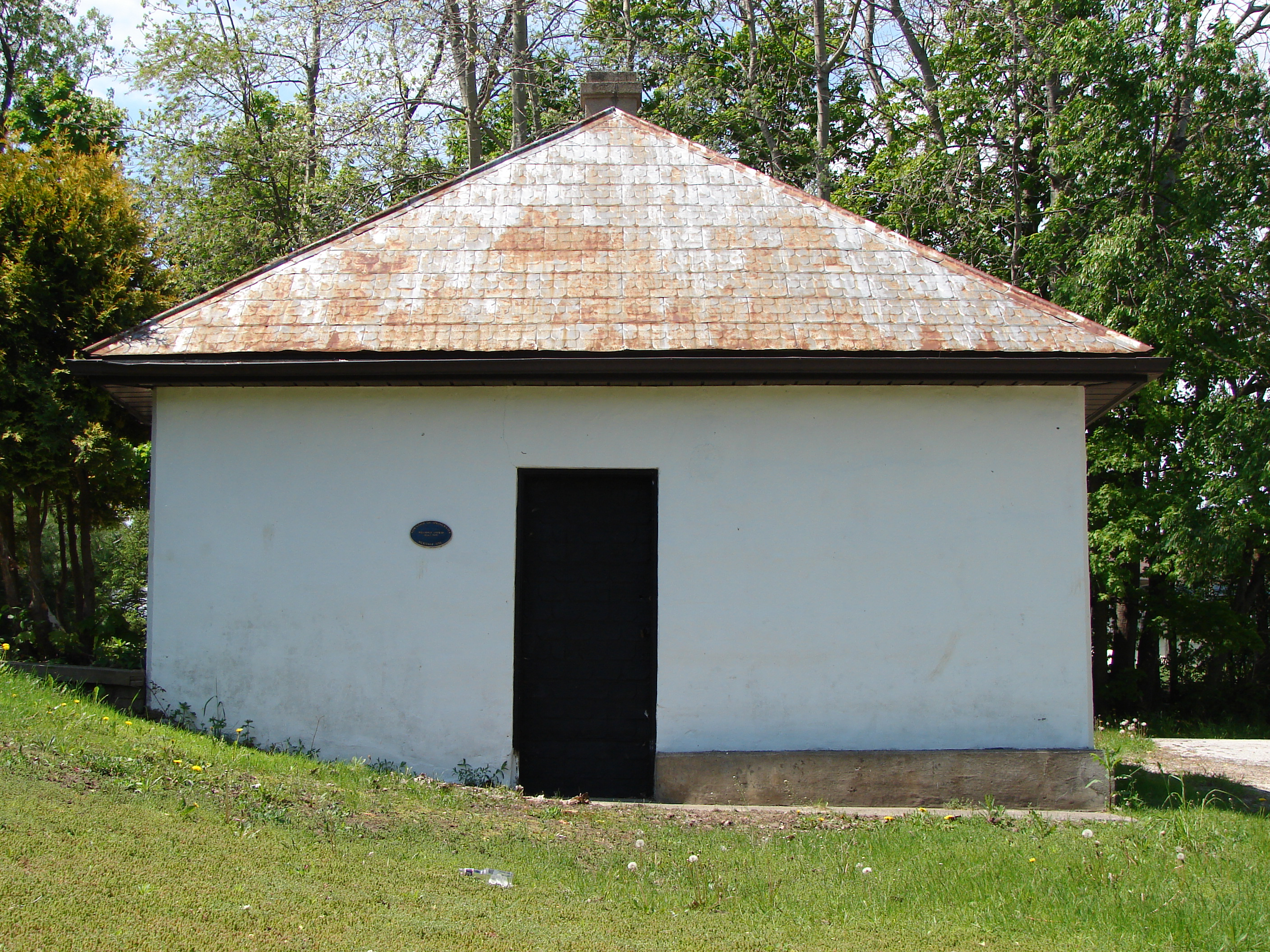
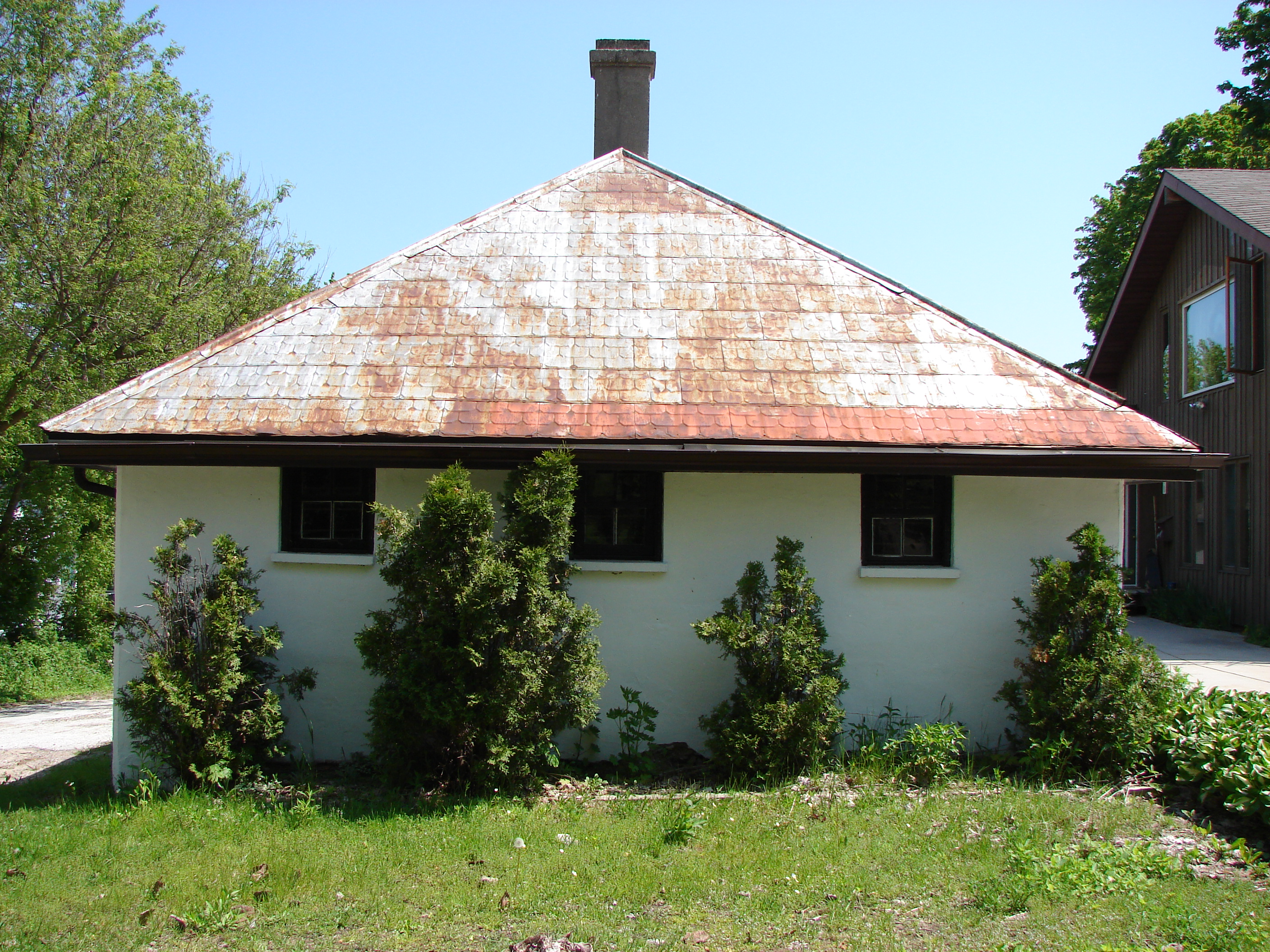
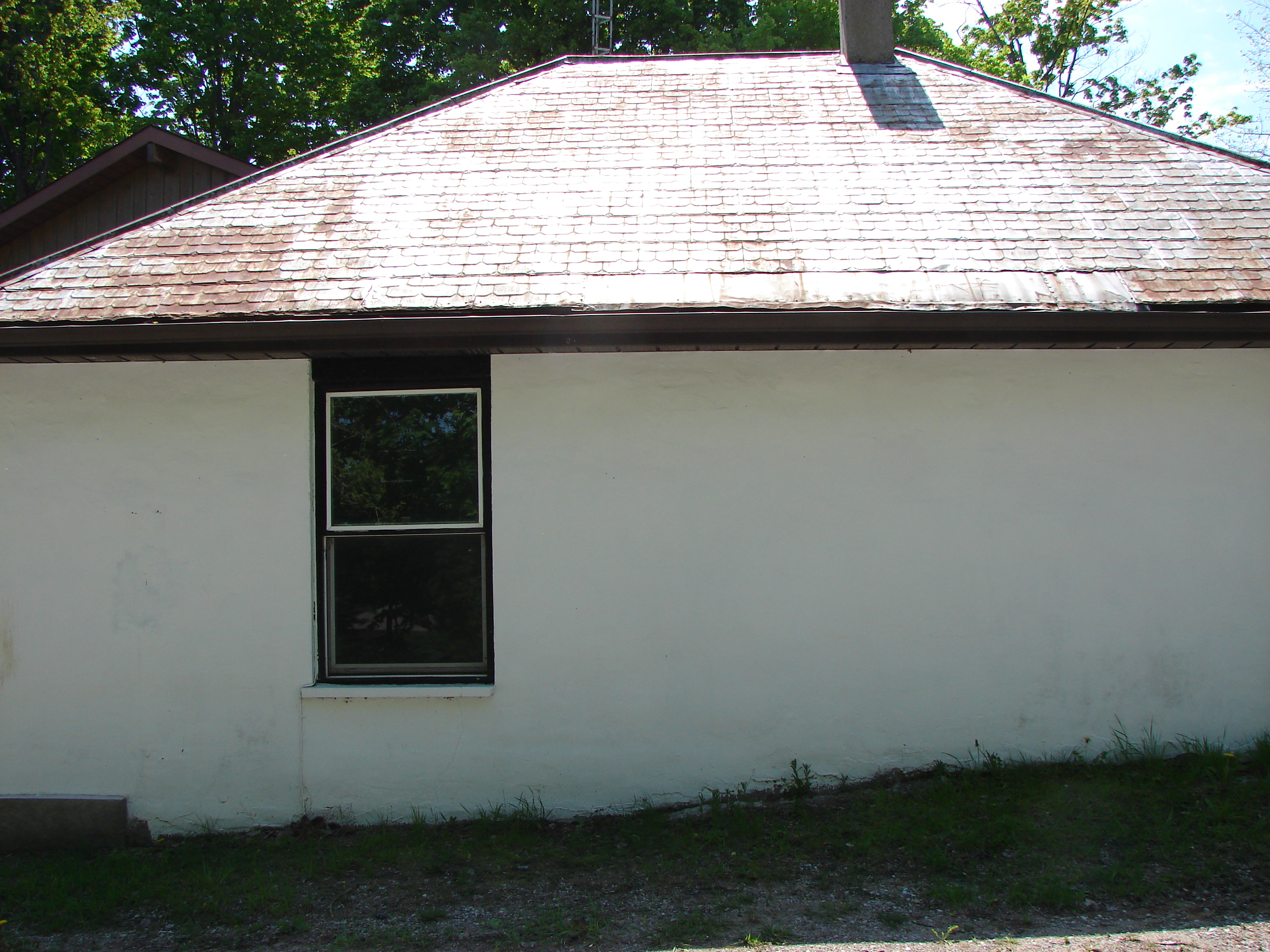
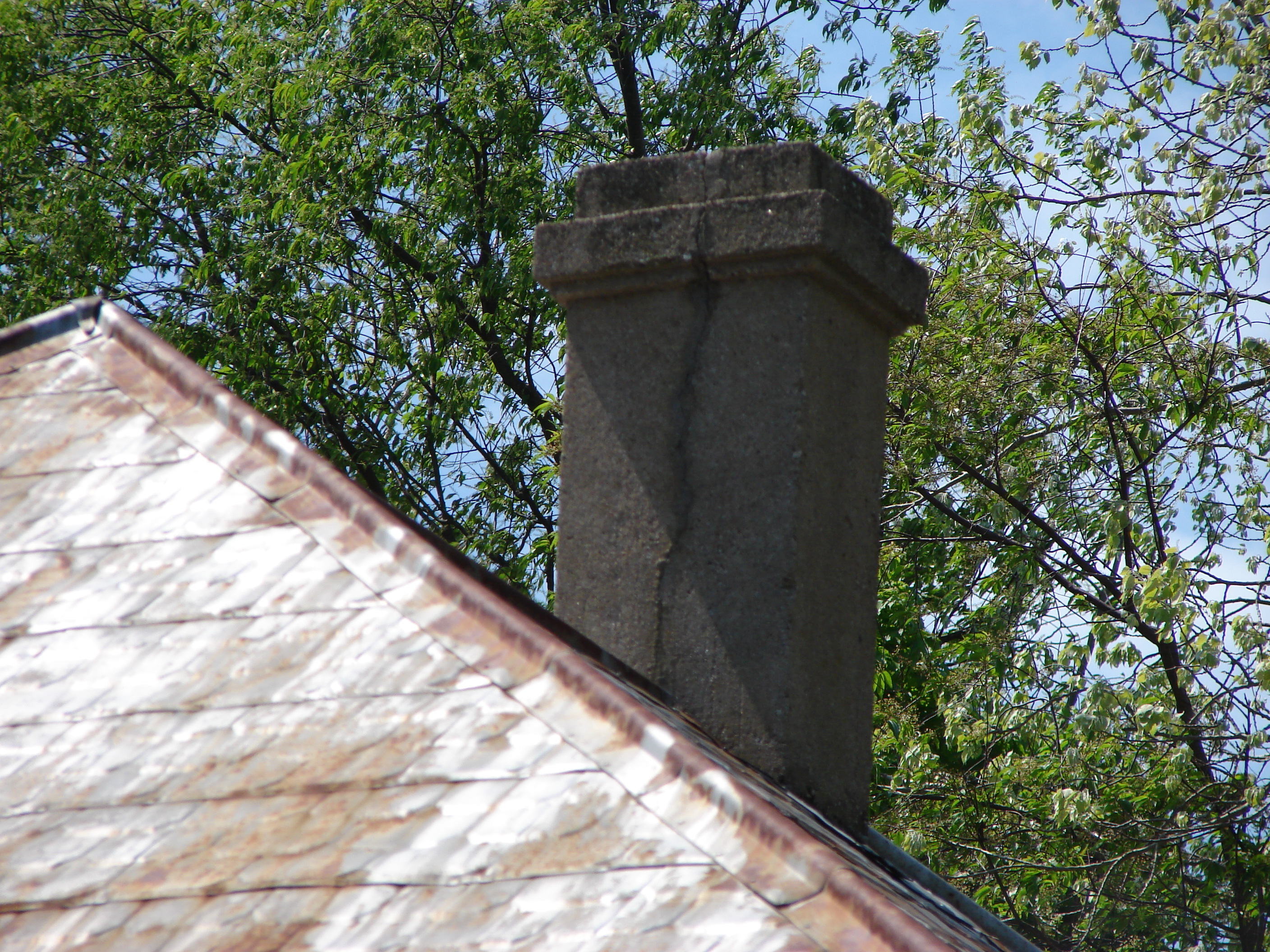
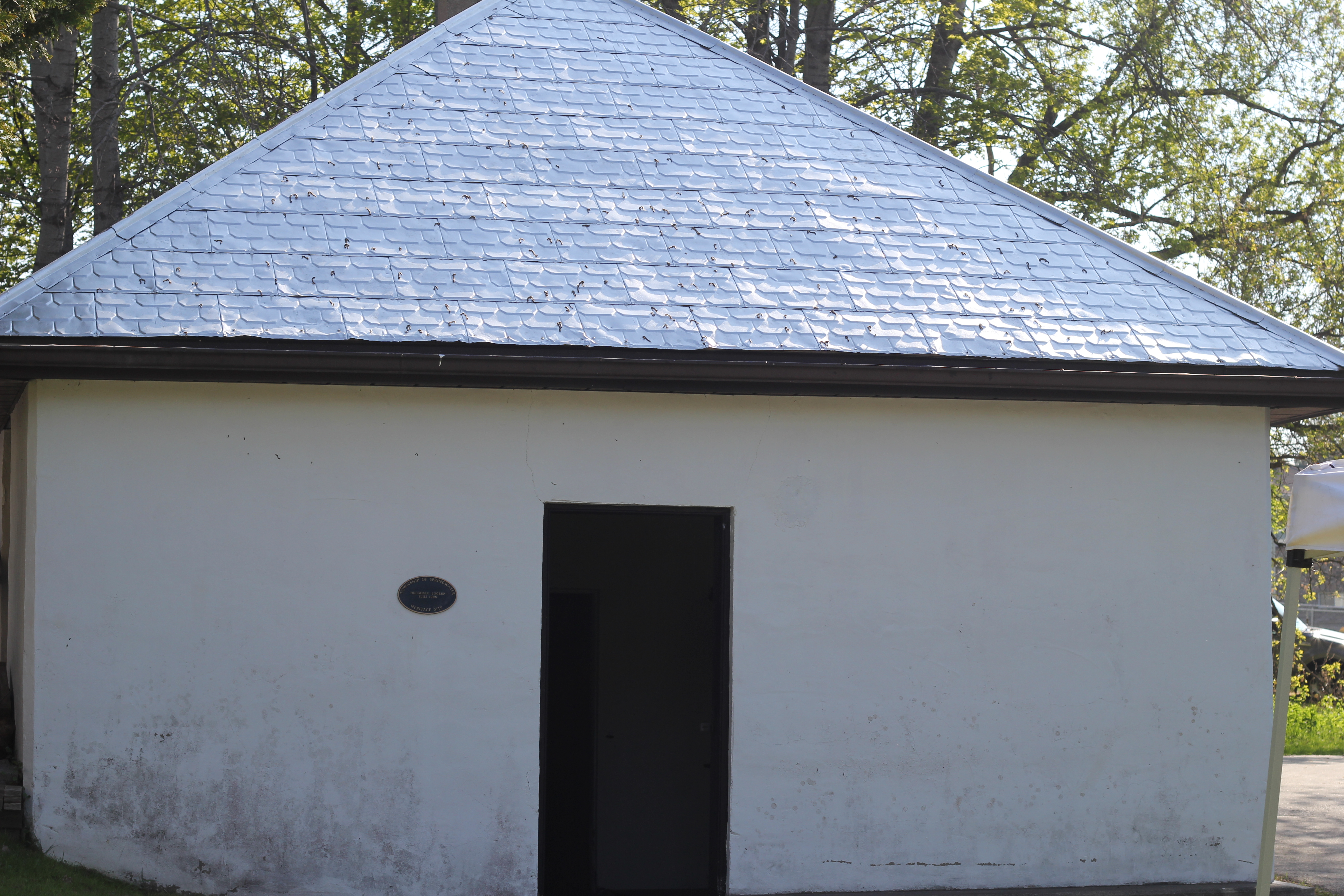
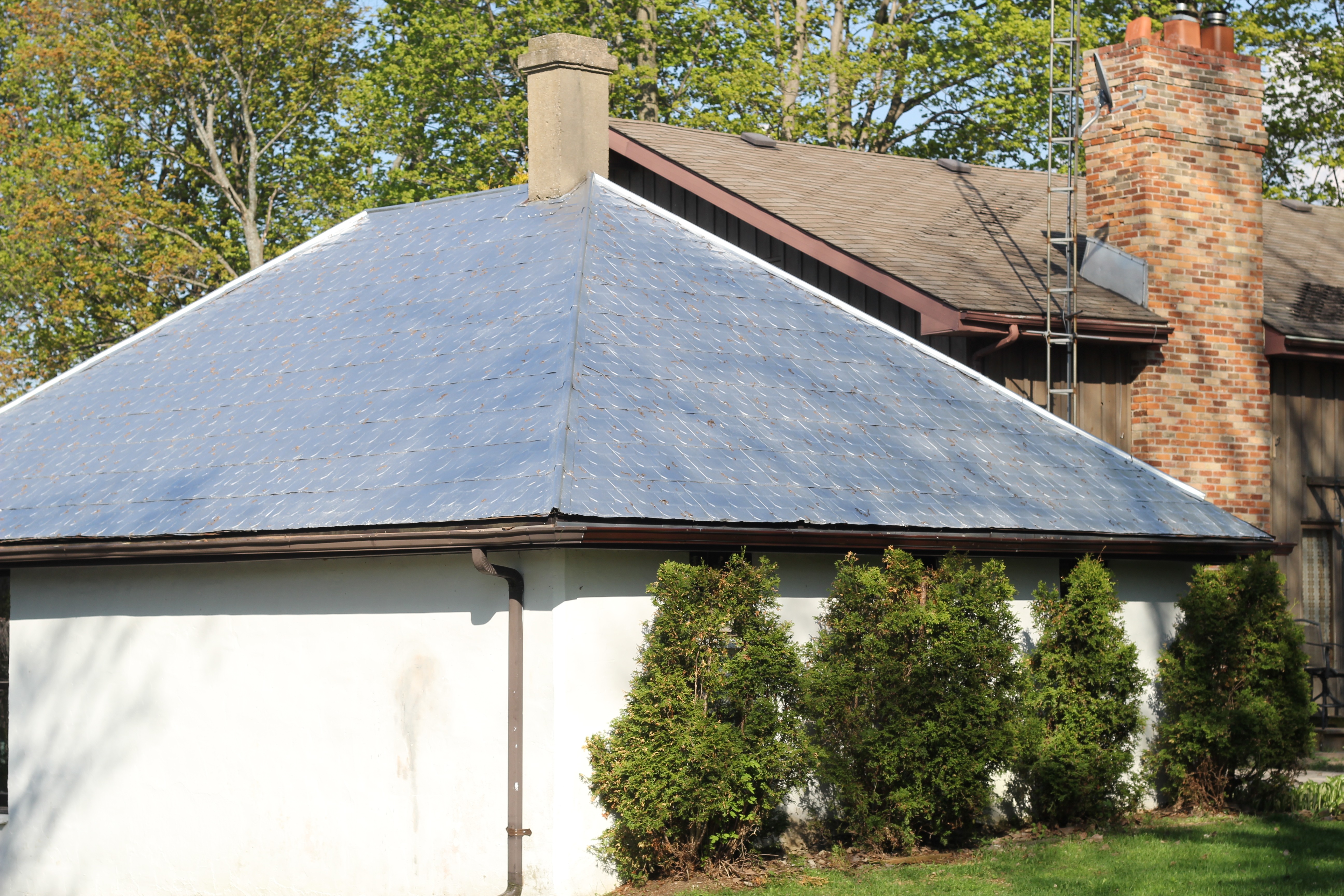
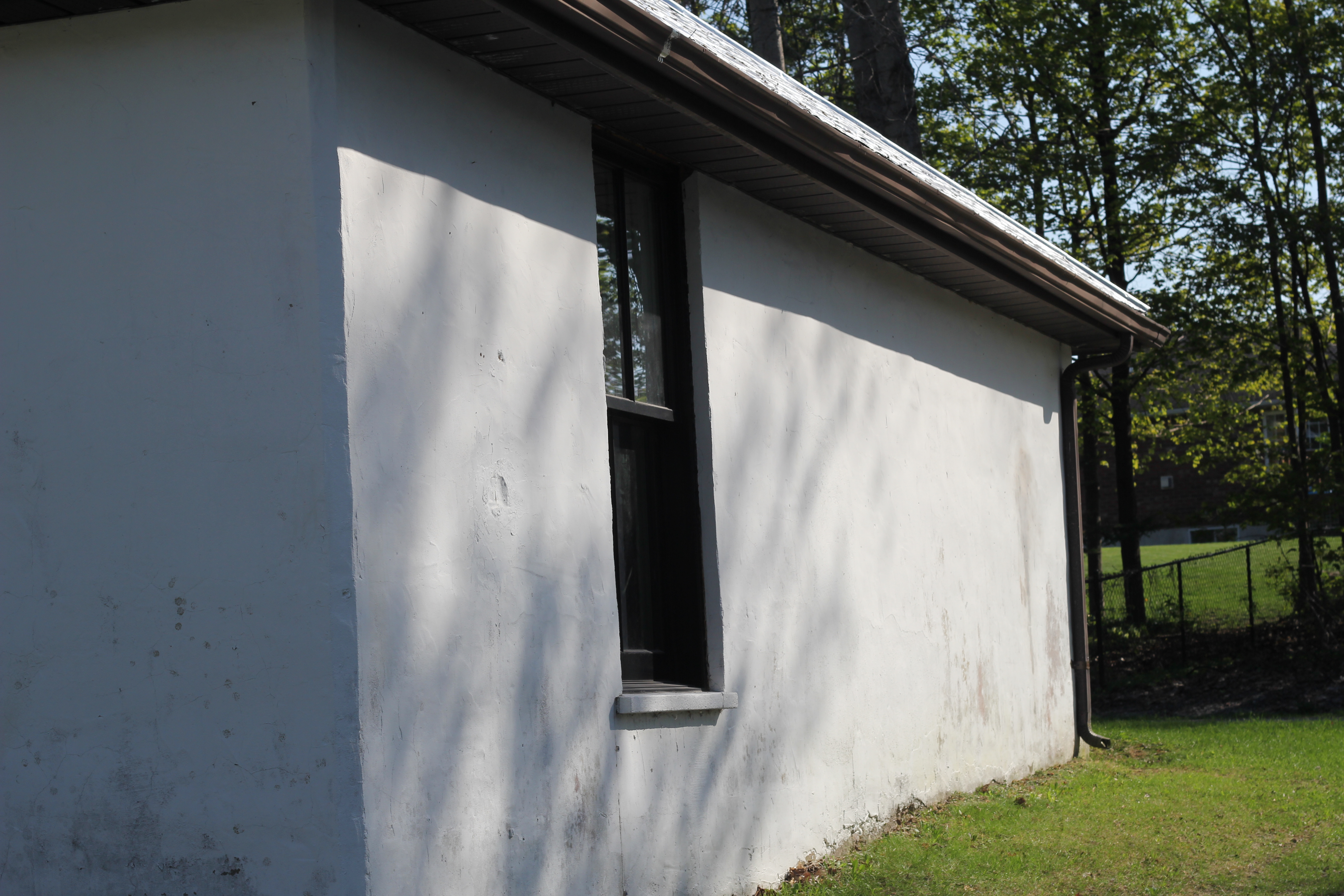
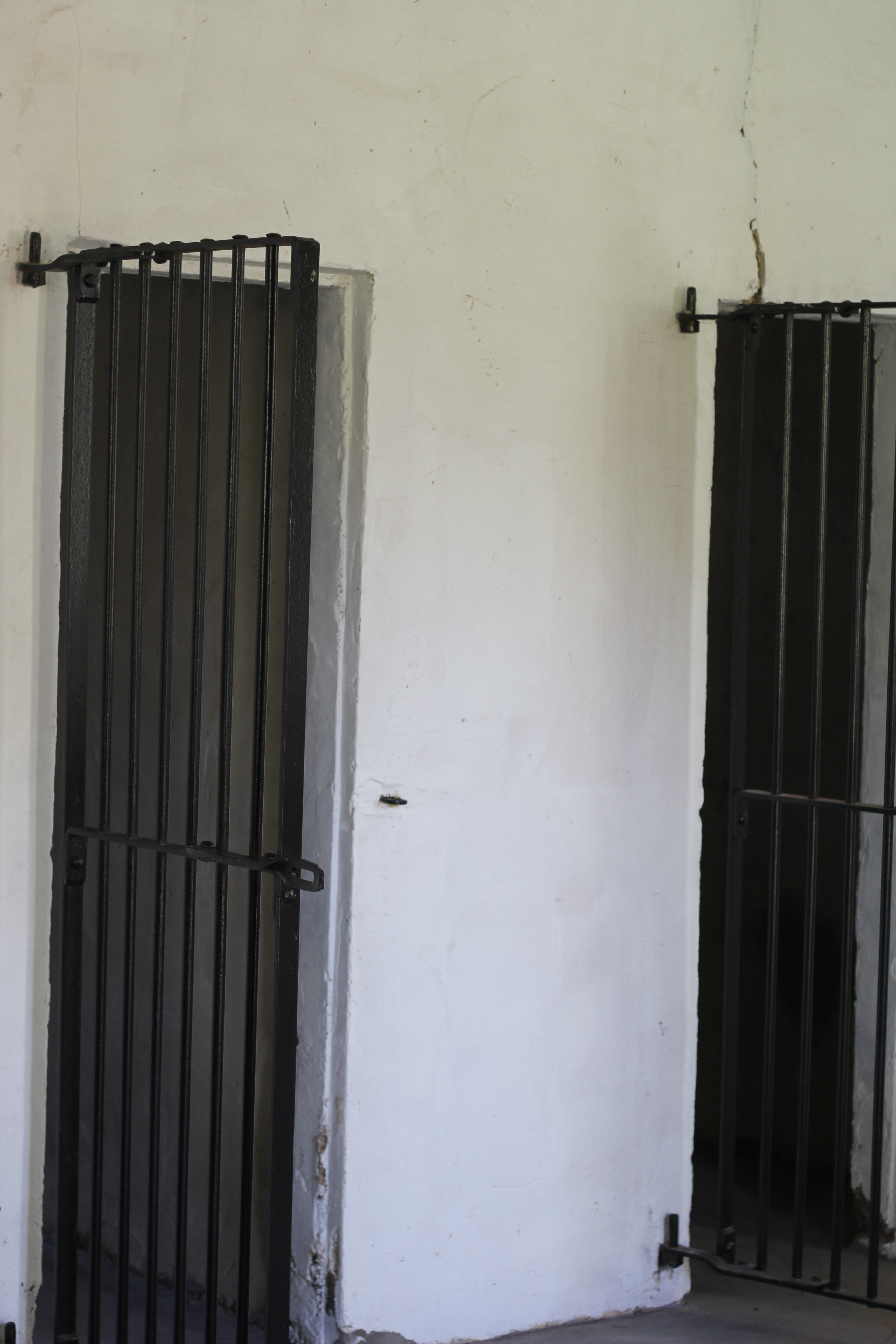
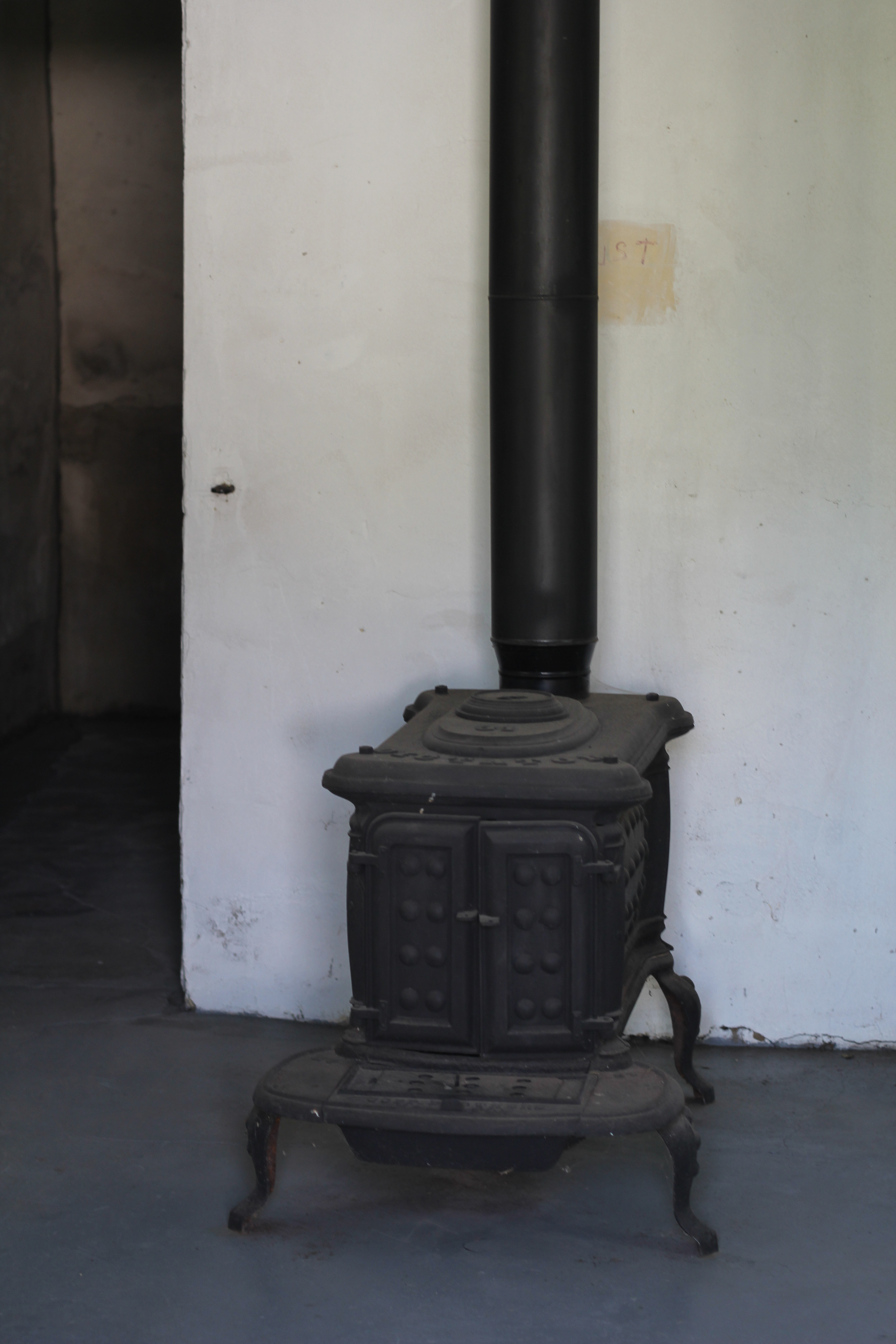
The Lock-up adheres to the 1904 County of Simcoe By-law No. 761 specifications, constructed with stone, brick, and concrete, measuring approximately 20 by 28 feet. It features a hip (cottage) roof made of pressed metal sheets with raised ridges and a chimney stack placed slightly west to the centre for a wood stove. Modern aluminum soffits and gutters have replaced the originals. The exterior is plaster-clad and has been periodically re-coated and painted. The main entrance, centrally located on the east side, comprises a tongue-and-groove, v-jointed wood door, metal-clad on one side and secured with an external lock. The building has two windows: a north-facing one with an original 1x1 double hung sash and a south-facing one with a replacement sash. Inside, the space divides into an administration area and three cells. The walls are solid masonry with a plaster finish area showcases a ceiling of decorated metal panels with a diamond and floral motif, connected to the walls by a metal has a concrete floor, with a small, raised wood platform in the northeast section. The three cells on the west side each measure about 8 by 6 feet, featuring windows with 2x2 double hung sashes barred with horizontal iron bars and exterior lugsills. Securing each cell is a solid iron-barred gate, operated by a sliding metal bar. The cell ceilings match the administration’s metal cladding but lack the cornice.
In 2013, the Township of Springwater’s Heritage Committee initiated the restoration of the Lock-up to its original state in an effort to preserve its historical significance in the community.
Restoration repairs included removing an electrical panel, replacing side windows with historically accurate replicas, refinishing the tin ceiling, and completing parging along the front of the building.
In spite of these maintenance measures, the Lock-up is in a near original condition and presents a significant aspect of the history of justice administration in the County of Simcoe.
Contact Us
Township of Springwater
Administration Centre
2231 Nursery Road
Minesing, ON
L9X 1A8
Email: Contact Us
Phone: 705-728-4784
General Fax: 705-728-6957


